Stretch Developer

Taking urban development into our own hands

  • Home
  • About
  • The Project
    • Finding a Property
    • Design
    • Approvals
    • Financing
    • Construction
    • Performance
  • Blog
  • Contact
  • Rental Suite

Show Me the Money

November 28, 2020 by clove 2 Comments

Back in the spring, I sent the half-duplex listing to my Granny so she could see pictures of the place. “You’ll be a millionaire!” she said in response to the list price. To which I laughed heartily.

It can be hard to imagine where all the money goes. One can look at what was paid for the land, run some rough numbers and conclude that every developer must be raking in the millions. One would be mistaken, perhaps especially in our fair city in which it’s so easy to feel one is being punished for daring to build anything but a standard single family home.

Even as the person in the middle of it, I was ignorant about how much everything was going to cost in the end. While Interactive gave us periodic budget updates, we were continually making choices about products and finishes and there were all these other items like legal costs, interest costs and consultant fees that kept ticking up the total. My final cost guess crept upwards as we neared completion, and eventually, when the end was in sight, I had to tear off the bandaid and assess its totality.

So here it is.

People often ask: how much more does it cost to build a Passive House? That’s actually a very difficult question to answer because there are so many choices made along the way that affect the final cost and only some of them are directly related to Passive House. Do we go with a cheaper laminate flooring or spend more to refinish our old hardwood floors? Cheap toilets or fancy toilets? Vinyl of fiberglass windows? And to truly know the difference, for every “Passive House” choice, you would also need to cost the code minimum option. This is difficult to do in practice as there is often not just one alternative. There are also elements that could arguably cost less, like designing a very simple building shape, or installing a smaller heating system – again, very difficult to cost an alternative. So I’m not going to answer this question.

People also often ask what it costs per unit area. This I can answer, at least for our project.

When we toss around $/SF construction costs, we are usually talking about hard construction costs, which is what it costs for the builder to create the structure and its finishes. It excludes things like landscaping, design costs, permitting fees, borrowing costs etc. which can all vary widely.

Hard construction costs include everything we paid Interactive for (including all materials, labour and contractor markup of 10%, less GST), plus owner supplied items like appliances, windows, vanities, and mechanical equipment.

Total floor area of the building (including all three suites) is ~4270 SF (not ‘conditioned area’ but actual built square footage).

Here we go:

ItemTotal cost Cost/SF
Hard construction costs, including contractor markup, less GST$1,380,000 $323
Landscaping (approximate)$40,000 $9
GST on hard costs$71,000 $17
Soft costs (city fees, structural, architectural, surveying,
insurance, legal, etc)
$121,000 $28
Cost of borrowing (progressive mortgage interest
(which rolled in our original mortgage), lines of credit, family loan)
$97,500 $23
Total (*totals do not add exactly due to rounding)$1,711,000 $400
Less extra unnecessary costs from stop work order,
and special costs like existing house deconstruction + hazmat and rezoning
-$82,000 -$19

So about ~$400/SF all in. Factoring in the original mortgage on the property, we were $2M in debt come the end of the project. No wonder I’d been feeling so anxious.

Folks in other regions may gasp at these numbers, but it’s actually pretty middle of the road around here. Altus Group’s 2020 Canadian Cost Guide pegs the low end of regional hard construction costs for custom built single family at $430/SF and we’re well under that benchmark.

I’m not even going to mention my original budget estimate because it was embarrassingly naive, but I do recall at one point aiming for $300/SF including soft costs. Local construction costs have reportedly increased 10% every year for the past 5 years, and Interactive definitely got some surprisingly high quotes in our hot construction market. So there were some external factors influencing the change over time, along with our choices and changes along the way. I would say that reconciling the cost for the level of finish we expected with the lowest end option was one of the biggest areas where our early estimates diverged from what we actually did.

I wheeled and dealed with my industry friends as much as I could to get good prices for owner supplied items and Matt put in a ton of labour, but balancing these savings were higher costs for some discretionary items, for instance:

  • Higher end finishes (e.g. solid core interior doors) – nothing extravagant but everything is solid and durable. I didn’t price alternates here, but I think one could easily shave off $50k in finishes if one needed to go cheaper. Although having said that, Matt is constructing most of the millwork on our side using our old wood and that ‘cost’ is not included.
  • Refinishing the original fir floors – this was $$$ even though the material was “free” (i.e. Matt’s labour to pull it all up, stack it, store it, move it multiple times). About $9k in expert labour for relaying and refinishing. Sure looks beautiful though, with avoided embodied carbon benefits to boot.
  • Fiberglass vs vinyl framed Passive House windows and exterior doors – this was a difference of about $15-20k. We went with the fiberglass because the material is more durable, has a leaner look and is (as far as I can tell) less damaging environmentally.

So after my hearty laugh with my Granny, I told her that we would simply be less in debt after selling the other half. Which is OK. We have a great new home that is built to last and to perform extremely well, in our ideal walkable location surrounded by incredible neighbours. We accomplished what we set out to do – it just cost more (and took longer) than we’d hoped. Par for the course in the construction world, right?

Matt’s workshop ever closer to completion (costs not included above)

Filed Under: Featured, Financing Tagged With: Passive House construction costs

A Couple Big Things

September 26, 2020 by clove 6 Comments

With the caveat that “big things” are entirely relative in the context of our current global apocalypse, two big things happened in the past several weeks to signify that we’re (actually, maybe) almost done with our project.

Big Thing #1

We got this coveted piece of electronic paper:

Yes, we’ve been living here since last Christmas, but we wouldn’t be able to complete the sale of Suite 3 until we had the official Occupancy Completion Permit.

This was one of the weirdest non-events of the whole project. Our neighbours Len and Gail spent 18 months attempting to get this for their character rebuild. The city inspector we had for most of our project – and who we also shared with Len and Gail- seemed to revel in making us do more and spend more. Even if his demands seemed unnecessary or were even incorrect, we had to weigh the time and expense of fighting versus just swallowing the pill for the sake of carrying on.

By the time we got to the end, this inspector was on medical leave; we got a new one and subsequently sailed through the last few inspections, including the final.

Of course, though, it being the city, it could never be quite that simple. I had sent our inspector’s final emailed report, which said that all units were safe to occupy, to our lender in order to close out the progressive mortgage. It was only after they asked for the official permit that I realized we needed something different. I called the City and learned that someone had decided not to issue the official document because our accessory building permit was still open. No one communicated this to me; it just sat in limbo for a few weeks until I realized it was missing. Fortunately, a phone call to our new favorite inspector cleared that up (yes, they had withheld it in error) and our permit was emailed within about 30 minutes.

On to big thing #2!

Now this was an event. We reached an accepted offer at the end of August, with 7 business days to remove conditions. On the last day on which conditions could be removed (and we could therefore be confident the sale would happen), I made a triple chocolate mouse celebration cake. But because it takes all day to make this thing, I had to start well before knowing whether conditions would in fact be removed. Worst case it would be a pity cake.

When our realtors Ally and Dennis shared the news as the final layer was setting in the fridge, I thanked them and said “phew”. It would be a celebration cake after all. As amazing as this news was, though, our initial reaction was subdued. Surely, this couldn’t actually be the end. The natural inclination of a body in motion is to remain in motion. A body in a state of anxiety is inclined to remain in a state of anxiety.

The financial uncertainty of the project has been the predominant source of my underlying anxiety. The sale is relief to this anxiety. We didn’t do as well financial as we’d initially hoped, but hey, we didn’t go bankrupt! A couple blocks away is a house for sale that is half reconstructed. Presumably they ran out of money – which I’ve learned, probably means that they didn’t have the money when they needed it – regardless of how good the end-game looked. It happens more often than we might think, to developers big and small.

There are so many externalities that impact the financial outcome of a project that have nothing to do with one’s ability to solve a problem or wield a hammer. Construction costs have reportedly increased 10% per year over the past 5 years in Victoria. So to have our final cost inflate to 150% of what we’d initially planned for is not surprising (full financial debrief coming soon).

Now that I allow myself to think about it, the fact that we didn’t lose our shirts may have simply been the result of working with people who were invested in helping our project succeed. I’m not sure what would have happened if we had chosen a builder who insisted (or needed) to be paid immediately on invoicing. Or with a lender who was not willing to be flexible. Or extended family who were not able to help out.

Development is difficult and risky. I completely understand why many people working in this field are not actually spending their own money. More typically, there is an investor in the background who has the means to spread their risk across multiple ventures, and then pay someone else to actually do the project so they don’t have to think about it too much.

—

So we’ve sold to a couple (+labradoodle) we’re excited to have as neighbours, at a price that is in the range of what I had expected. We’ll still be left with a giant mortgage, but we can handle the payments and we’ll be able to pay off our other debts. And as we begin to emerge out the other side of financial purgatory, the air is noticeably lighter, and the laughter and silly dances are enjoying a welcome resurgence.

Filed Under: Construction, Featured, Financing Tagged With: Passive House construction

Tears Were Shed

November 30, 2018 by clove 5 Comments

Tears were shed. By me. Not for the first time during our project, but for the first time because of our project. And not due to frustration or anxiety, although I’ve felt plenty of those emotions as well.

In our latest project hurdle, we took the first steps of requesting a draw from our progressive mortgage provider. Having hustled and fanangled to get our mortgage approved in the first place, all the hard work on the financing front was now done, right?

Wrong. Good luck getting access to those funds when you need them. We’ve learned that a common problem is that a project’s first draw is likely to be insufficient. Bank appraisers apply a very standard formula for determining progress and hence the amount of the loan they will release. For instance, below grade work is often assessed at 11% of the total project value. So regardless of what you’ve actually spent to reach that point, they will only release 11% of the total loan amount. They also assign zero value to demolition, hazmat and deconstruction costs. So never mind all that careful upfront work. And never mind that we have also wrapped everything below grade in 6″ of insulation. This only adds to the discrepancy between the formula and the real world.

But even that is not the real kick in the pants. The most unpleasant complication is our discovery that the bank assigned a fairly high percentage of our project value to the existing structure. Remember that lovely little box that we ended up deconstructing and whose component parts are now piled up under tarps? Those parts are worth nothing in the bank’s eyes in their disassembled state. Less than nothing in fact.

It doesn’t matter that deconstructing and rebuilding is financially better for the project. Something about a hole in the ground makes banks really nervous about their investment risk. Until we’ve at least surpassed the point of construction that the bank thinks we started with – walls, roof, floors – we don’t even want their appraiser to see the project.

What this all means is that we have to effectively get to lock-up – walls, roofs, windows, doors all installed – before we even call the bank. Yet Interactive and their sub-trades have done a ton of work until now and it’s only fair that they be paid.

Nope, no tears yet. Just that ball of anxiety settling into my gut and haunting my early morning dreams while Matt and I ran through all the possible scenarios. One thing was clear: we needed to bridge a significant shortfall of cash in the very short-term. I had known, or at least suspected,  that we’d have a shortfall (it’s surprisingly hard to pin down all the little things like architect fees, city fees, legal fees etc), but I’d hoped we could push it to the very end and squeak by on our lines of credit.

Our options to bridge this shortfall included family loans, additional lines of credit (how many of these things can one person get anyway?), and high interest private loans. The latter would surely sink us and our project with minimum 10% interest plus several more percents in fees. A low-interest family or friend loan would be ideal but neither of us has immediate family or friends with such means. We’d have to branch out further. Matt bought a lottery ticket for good measure; then we assembled a small list and started making calls.

We all have patterning we’ve learned from childhood traumas big and small. Part of growing as an adult is recognizing and breaking those patterns. My learned assumption was that I couldn’t count on others, so I’d approached many past challenges in terms of what I could accomplish entirely on my own. I’d do everything I could to avoid finding myself in that vulnerable position of needing help – especially financial help.

I am learning. While I’ve long wanted to do a project like this, I wouldn’t have started without having Matt as a partner, supporting me, challenging me with his worst case scenarios, and making all the big decisions with me. It turns out I can solve almost any problem if I can talk it through with someone I trust.

Making those phone calls was extremely difficult for me. But I couldn’t let this project fail and we would get zero help if we didn’t ask. So when my extended family responded quickly and supportively (thanking me for the opportunity to help! Am I the only one who finds this exceptional?), I had to further dismantle those old beliefs that I don’t need help and that others won’t help.

Queue the tears. They were tears of gratitude, relief and hope and I couldn’t contain them. They just poured out. Yet another unexpected gift from our project. It’s given us an incredibly generous and engaged community, built friendships, and shown us what we can accomplish with the support of others. And it’s proven that when you aim a little bigger, it gets pretty hard to do it all on your own.

So…

Thank you! Thank you all!

Filed Under: Financing

An Historic Moment in our Small Project’s Life

March 10, 2018 by clove 1 Comment

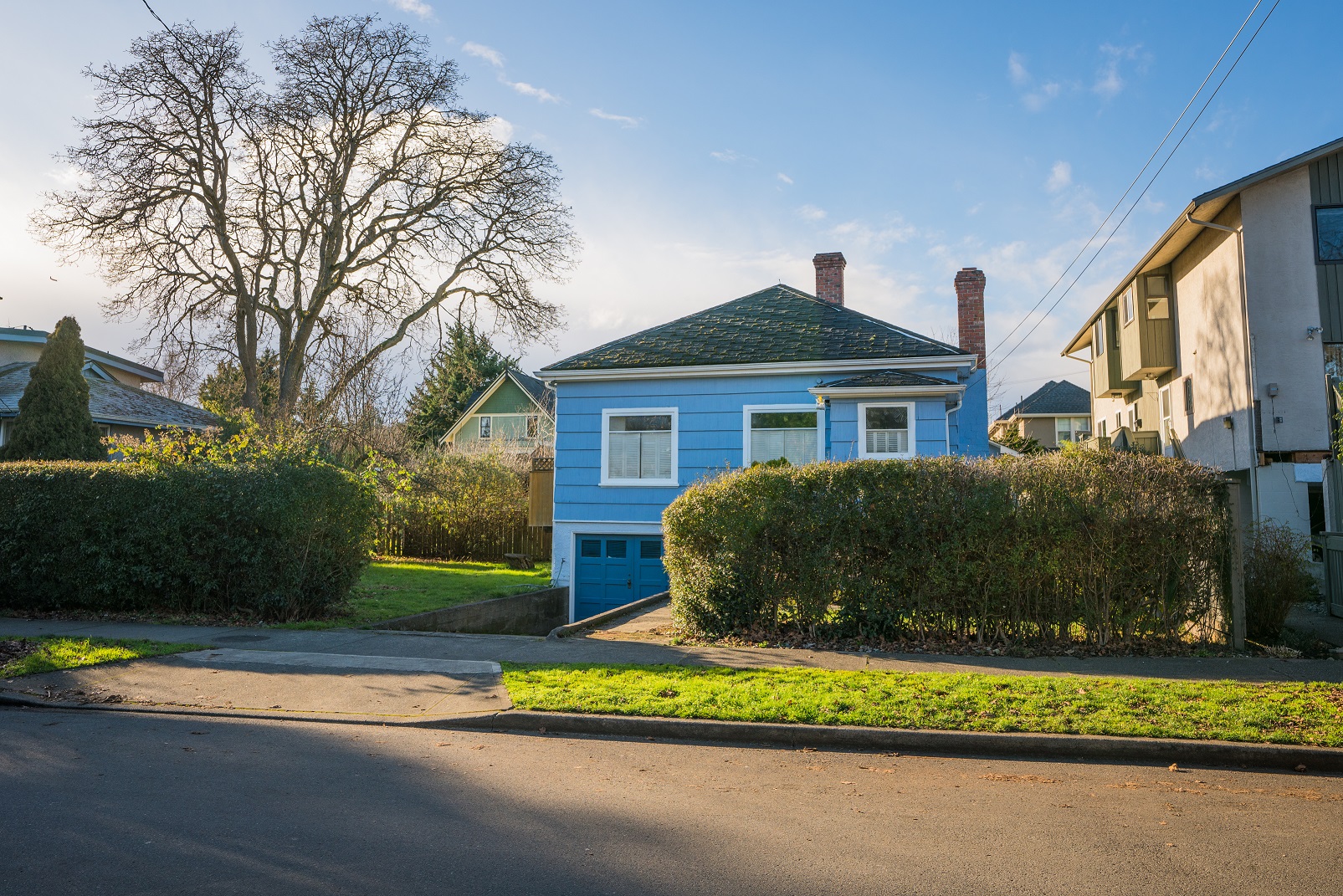
front view

On Monday we finally heard the news we were hoping for: our financing is approved (!), nearly four months after we initiated our application (read the whole story). Then on Wednesday, I successfully submitted for our Building Permit (our second attempt after being turned away on a number of formatting technicalities).

It’s beginning to sink in that our vision may actually be realized in bricks and mortar – or, in our case, mostly wood and insulation. It will become even more real when construction starts within the next month.

2 years and 8 months after we closed on our property, it feels really good to have arrived at this moment. There are many things that could hinder us from finishing construction, but there is now nothing that will prevent us from starting. And as we’ve grown accustomed to overcoming challenges every step of the way – from losing out three times before finally landing the winning bid on our house, to facing combative neighbours, to being denied financing (to name a few!) – I’m feeling confident that we will be able to resolve the ones to come as well.

In the spirit of pretending we’ve just won a big award, I’d like to take this opportunity to thank the many wonderful friends and co-conspirators who have helped us get this far: our many supportive friends and neighbours; our creative design team (Mark, Kate, Jonathan, Ian), our enthusiastic and flexible builder, Russ; helpful city staff and a progressive City Council; our friends in the mortgage business pointing us in the right direction, and our dogged mortgage specialist (thanks Paul!) who was willing to keep working with us despite our early setbacks. Thank you thank you thank you!

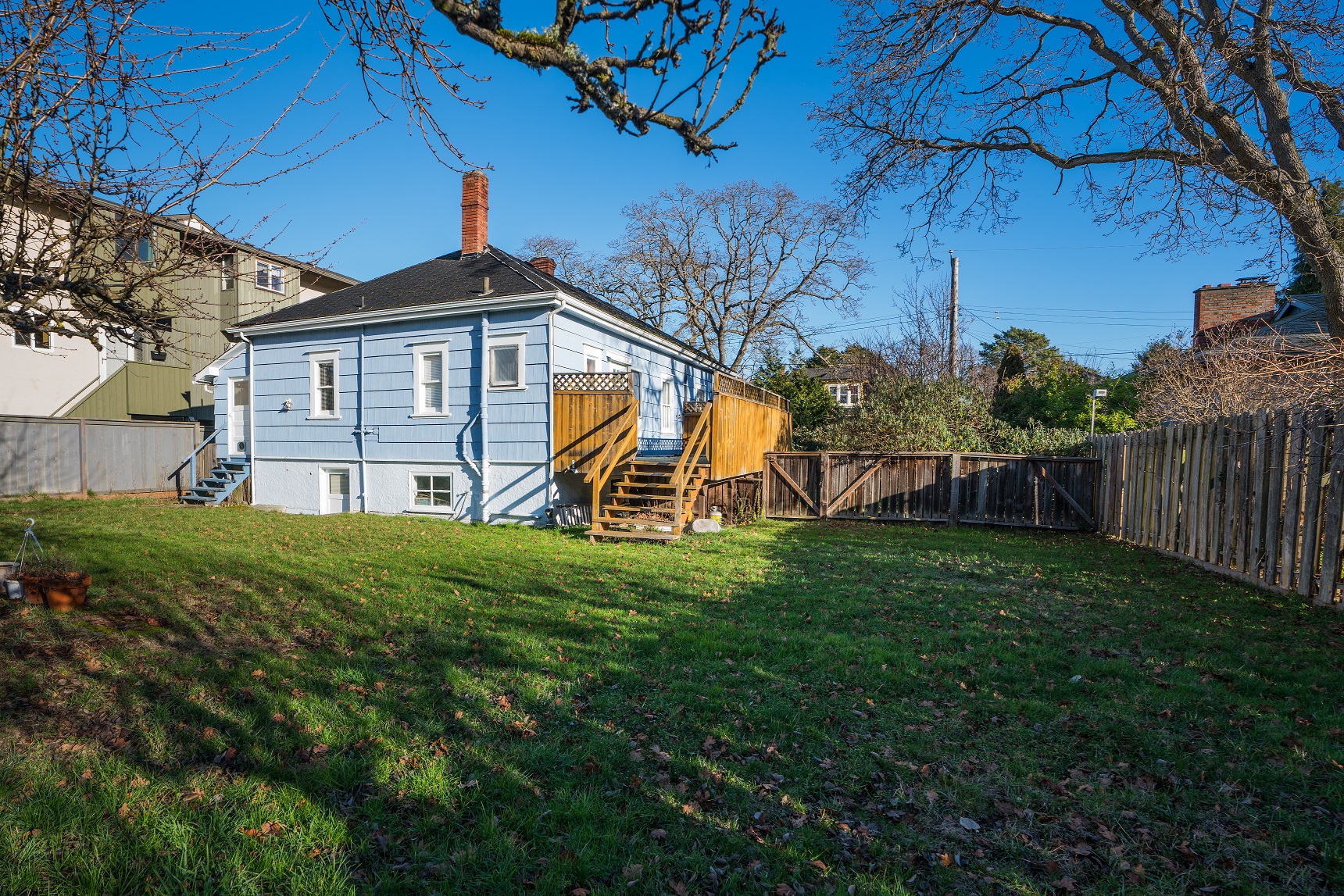
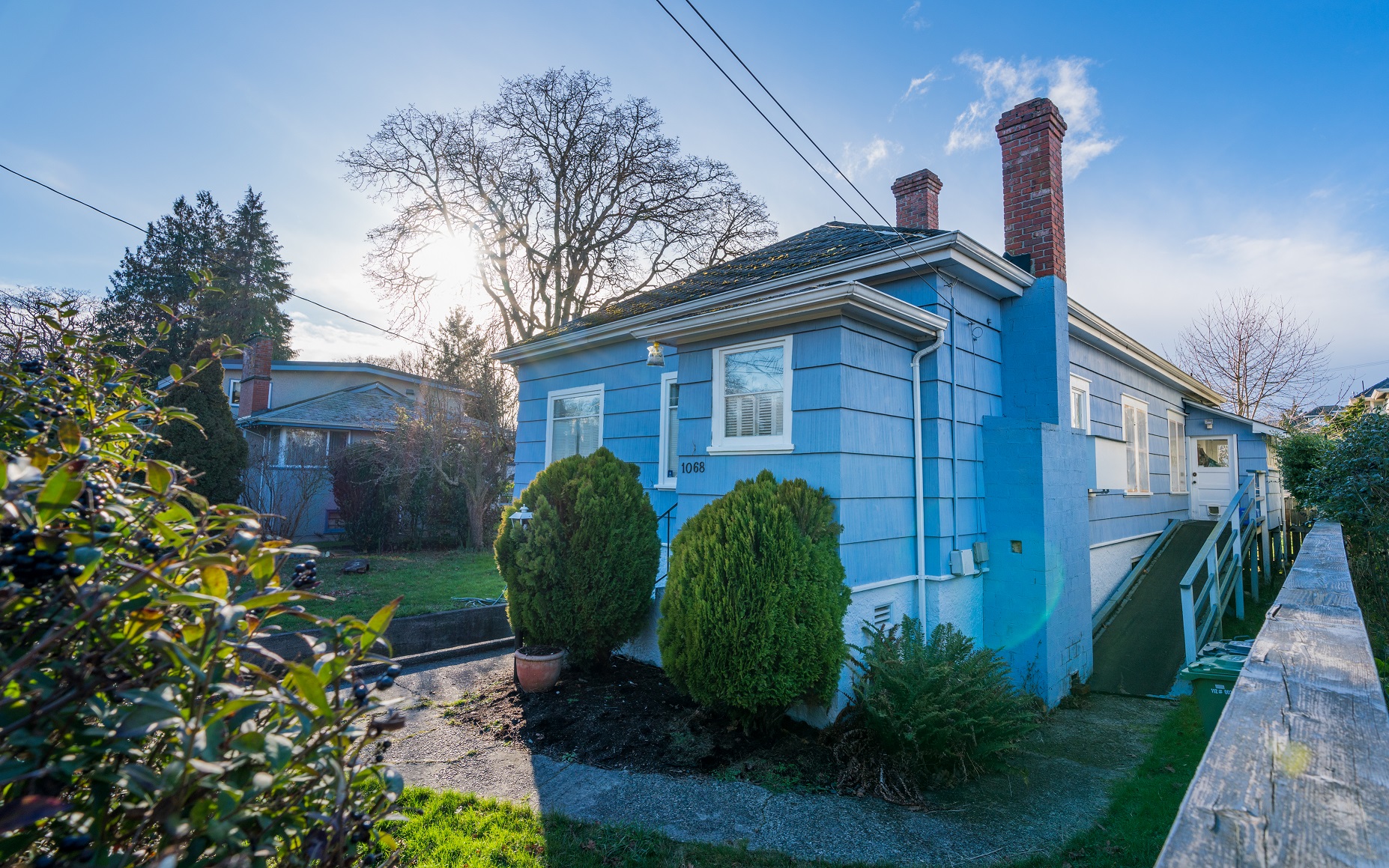
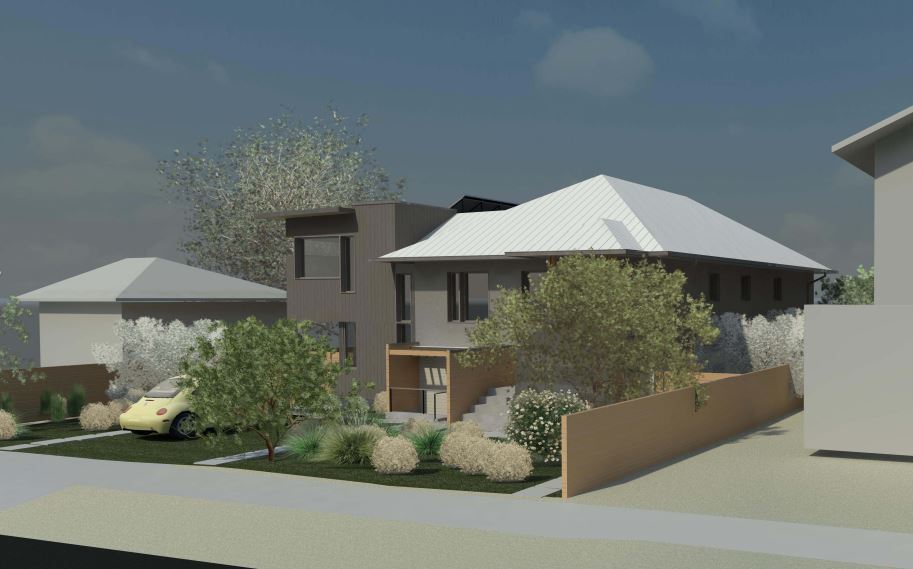
To mark this moment before steeling ourselves for what’s to come, I thought I’d shared some last photos of our house in its current form. Thanks to my friend and co-worker Chris George for snapping these beauties.

rear view

front corner view

what’s to come

Filed Under: Featured, Financing Tagged With: infill, passive house

Financing School of Hard Knocks

March 1, 2018 by clove Leave a Comment

Several weeks ago, I drafted a post proclaiming that I felt like a million bucks. I’d just talked with our mortgage contact at our preferred lender, who had said things were looking good and our loan application just had to get past the analyst. A couple of days after that, in the midst of last-minute prep for moving out of our house, I got an email listing all the reasons our application was being rejected.

My heart sank. You have got to be kidding! Dreaded visions floated through my head: paying rent + mortgage for months…moving back into our frigid house immediately after moving out…cancelling our contract with our builder…redesigning the whole thing. This was my worst case scenario: someone who doesn’t even know us, hasn’t even had a conversation with us, has decided our project – and by extension, *we* – are not good enough.

Why we were rejected

After I got over the shock (and our move, ugh), I revisited the email, made some phone calls. Time to get analytical and solve this problem. First order of business was fully understanding the reasons they were rejecting us.

We’d specifically gone to this lender, not only because we are members and heard they have the best program for residential construction loans, but also because they’d financed most of the Passive House builds in town. So imagine our surprise when one of the reasons we were given for rejection was the fact that it was a Passive House!

Hang on, what now?

In analyst words, the project was “overbuilt” because it cost more to build than the appraiser gave it value for, and there is a “limited market” for Passive House. Despite me sending along precedents for both rent and sales prices for very similar products now out in the market, the appraised value came in too low. As a result, the assessed value was less than the value of the land plus the cost to build. Hence our project was “overbuilt”.

Given these risk factors, the analyst wanted to reduce the percentage of the final assessed value they were willing to lend (the loan-to-value ratio, or LVR) from 80% to 70%. These things together meant that to even consider moving forward with them, we had to come up with a $234k gift letter (not a loan – specifically a gift) from a rich relative (specifically a close relative, not just a rich friend – sorry, rich friends), because we had insufficient equity/liquidity to pay for the amount exceeding the assessed value. With me so far?

All lending is not created equal

An important distinction: this is a residential construction loan we are talking about here. This type of mortgage is evaluated in the same way as a normal residential mortgage. They qualify us based on our ability to carry the full cost of the mortgage long-term. The interest rates are the same as a traditional residential mortgage and therefore attractively low, but the rules for qualifying are also more rigid and prescriptive than a commercial loan.

While we would really like to fit into this category due to its low cost, our project is a bit of a round peg fitting a square hole. It’s a residential project in the sense that we will renovate the one half and live in it as our primary residence, but it’s also part spec build for the new half (which we will either sell or rent).

Further complicating things, one of the quirky requirements of the residential construction mortgage is that we have to have a certain percent equity (say, 25%) in the final appraised value of the project. So we’re in this delicate situation of wanting the appraised value to be high enough to be more than the land value + cost of construction, but not so high that we don’t have the required equity.

A commercial lender will consider the final appraised value and our cost to build, but is less concerned with our long-term carrying capacity. So in the commercial lending scenario, we need to have a certain percent equity (say 25-30%) in the land value + cost to build, but not in the final appraised value. In their world, the higher the final appraised value, the better.

Now what?

In the weeks since, we met with our wonderful mortgage broker, Scott Travelbea, who helped us brainstorm a few new ideas, but agreed that if we could make it work with this lender, it was really our best bet. He also gave us the name of a private lender he liked, so I gave him a call. I had a great chat with Len, who was very generous with his time and knowledge. He said he could find any number of investors who would be willing to finance our project at any stage and in any amount (he actually googled me. I’m more than just a number on a screen!). That was encouraging to hear. The scary part is that we’d be looking at an interest rate of around 10%, plus these mythical fees that add several more percentage points. Len summed up his lending options as: “incredibly convenient and outrageously expensive!”

Len also agreed that our current lender was our best bet if we could make it work, but also suggested I call our lender’s commercial side, and gave me a name. So I did that too.

Mark in commercial lending was also very generous with his time and expertise. Turns out it’s only the commercial lending side that’s aggressively supporting Passive House at the moment. The good news, though, is that, as a result of my prodding and our mortgage contact’s persistence, the commercial side has now shared what it has learned about Passive House with the residential side and I’ve heard rumour that a residential policy is now in the works.

I talked through our project with Mark and he thought it sounded viable, but he also agreed that if we can make it work on the residential side, it would be the cheapest and easiest way to go. The commercial lenders have more leeway and generally more risk tolerance, but that comes at a price, namely higher interest rates (prime + 1.25% for example); each side needs a lawyer; more thorough appraisals are required (which we pay for), etc. So, feasible, but more expensive.

The differences in interest rates result in non-trivial project costs. In the best case scenario (conventional residential), we’d be in the range of $27-30k in interest charges over the course of construction, plus nominal fees. For commercial lending through a major bank or credit union, $47-50k plus legal and appraisal fees. For private lending, assuming (a probably optimistic) 11%, $100k. Yeowch! The private lender could be a great option to make up a very short-term shortfall, but not at all viable for the whole project. We’ve also heard stories of predatory investors who actually want your project to fail and set up terms that are difficult to meet.

Piling up those lessons learned

To sum up this roller coaster in a few pithy lessons learned, I offer the following:

  1. Construction financing is harder to get than a typical residential mortgage. I.E. plan for more time. Three months has proven to not be enough. Four might be if we are lucky. Which means that we needed to plan for a longer gap between when our drawings were ready to submit for Building Permit (i.e. far enough along for our builder to put together a budget) and when we wanted to start construction.
  2. Construction financing is not really conducive to shopping around to multiple lenders at once. There is more pitching and back and forth and getting to know one another. Hence my first point. If one lender falls through, we’re starting from scratch with our next option.
  3. The less cookie cutter the project, the harder it will be and the longer it will take to secure financing. Our project is definitely not your typical cookie shape. Part retrofit/part new build; part primary residence/part spec build, and Passive House.
  4. The best lender today might not be the best lender tomorrow. When I talk with others who have done several development projects, they say things like “Scotiabank is good right now.” Tomorrow it could be someone else. They get rejected by all but one big bank. And that one is like, yeah, no problem! I’ve also heard many people say that the financing world is just “strange” right now. Whatever that means! Again, refer back to lesson 1 and build in extra time.

Throughout this process (and now well-informed by it), we have continued to work with the residential side lender to revise the scope, reappraised, and resubmit the application in terms that the analyst is comfortable with. Fingers crossed round two will be successful!

Filed Under: Financing Tagged With: financing, financing passive house, passive house

We’re Moving!

January 19, 2018 by clove 2 Comments

We have neither our Building Permit nor secured financing, but we are moving February 1!

Because we are raising our existing house and renovating most of the interior, we have to vacate during construction. Plan A was to move to the end of our block and rent our neighbours’ newly created garden suite for a 10-12 month experiment in tiny house living. We were actually very excited about this idea, as well as the fact that we would be a short walk away from our house during construction. But given that our neighbours are also rebuilding their entire house, they’ve encountered enough of their own roadblocks and schedule extensions that our timing no longer aligns.

Plan B, which is really a bit of a miracle given the 0.7% rental vacancy rate in Victoria right now, is to move back into the house we rented when we first returned to Victoria almost 4 years ago. It’s currently empty because it’s part of a whole-block redevelopment proposal inching its way through the public process. It’s a great little house that will fit all our things and it’s literally around the corner from my mom. We also got a discounted rate on rent in exchange for the risk inherent in only being guaranteed tenancy through May 31. I am pretty certain we’ll be able to stay beyond May, but it is possible that we’ll have to move again before moving back into our completed home. Better to not think too much about the prospect of moving 3 times in one year, though. Willful denial can be a very useful strategy to keep us progressing from one step to the next!

Our Building Permit application is ready to be submitted, save for structural drawings that are now being drafted (our structural engineer was sadly delayed due to a personal emergency). I’ve been down to the city a couple of times to check that we’ve included what they want to see, with the intent that once the application is submitted, it will quickly pass through the various departmental reviews. And since we’ve already been through rezoning, I am confident that the Building Permit is a formality. It will happen, it’s the when that could throw things off. The city aims to respond within 4 weeks to a building permit application, but if there is any back and forth over the details, this could stretch out. There is some prep work we can do on the existing house and site in the meantime, though, so I remain optimistic on that front.

The financing is the last big piece of the puzzle that still has me nervous, as it’s really the last point at which someone outside the project can say No and delay it until we find someone else who says Yes. It’s only coming together now because, in order to get financing, the credit union needed an appraisal of the existing house and proposed project. To do the appraisal, they needed a construction budget. For Russ to give us a reasonably accurate construction budget, we needed close to complete drawings. We have all of those things now, and the appraiser has what she needs. All we can do for the moment is pack up our house and have faith that the stars will align!

Filed Under: Financing, Uncategorized Tagged With: building permit, construction, financing, passive house

How Much We’ve Spent So Far

December 8, 2017 by clove 4 Comments

We have arrived at our first moment of financial reckoning. I’d budgeted $30,000 of self-financed work to get us through rezoning.

Here’s what we’ve actually spent:

  • Building & Landscape Design: $14,000. This includes two early concepts and a redesign; a full set of architectural drawings suitable for rezoning, plus Landscape Plan.
  • City Fees and Associated Costs: $4,500. This includes the rezoning application fee, the public hearing fee, plus a lot of printing – $787 worth of paper and signage! Forgive us, trees.
  • Site Survey: $1,350. Required for the application, as well as for our architect Mark A to create the Site Plan
  • Tree Preservation Plan: $500. Required for the application, completed by an arborist.
  • Existing House Stuff: $1,900. Includes hazardous materials survey so we don’t unwittingly poison anyone, plus a fee to get rid of our above-ground oil tank. Good riddance!

Total spent through approval of rezoning = $22,500

So, we are currently under budget for the items I had accounted for – woo, party!

Hold the phone, don’t send the invitations out just yet. There are a few asterisks and things I plain neglected in that innocent early budget.

The biggest of my omissions is the Building Permit fee at 1.25% of the construction budget. I’d thought somehow that this fee would be much smaller. Russ our builder is working on the budget as I type, but with my current, ever-escalating working number, we are looking at $11,000-$12,000. Half is due when we apply for our permit and the other half is due when we pick it up.

A few others:

  • Landscape Deposit – this one was a surprise. It’s required of any project that needs a Development Permit (determined based on location of the project from what I understand), and is equivalent to 120% of your landscape budget. Ouch. It’s a way for the City to ensure we follow through and finish up the landscaping. We’ll get the deposit back, but it hurts to have to come up with this at the front end.
  • Design package for Building Permit. The design drawings need to be fleshed out in more detail for our Building Permit application and for construction.
  • Builder Deposit. This goes toward actual construction costs, and provides assurance to Russ before he starts ordering stuff for our project. A reasonable expectation, but something that must be planned for.

For the sake of completeness, there are also some items that I handled myself but would have a real cost if we hired someone else to do them:

  • My general project development time, which I did not record consistently enough to provide a meaningful total (perhaps better not to know?). Let’s just say a lot of hours – planning the concept, coordinating with the team, consulting with neighbours, coordinating with the city, putting together presentations etc.
  • Passive House modeling costs. So far, I’ve spent 45 hours on the model. This includes a fair chunk of learning time, reworking, and remembering what I’d done when I put the model aside and came back to it several months later. The model still needs to be updated before we start construction, again after we change anything significant, and then finalized after construction is complete. As the project Passive House Consultant, I will also need to document the construction to show that we built what we modeled. Actual certification requires that we hire someone independent who is qualified, and we’re expecting to spend $5,000 for this piece.

So, overall we are doing OK budget-wise. We are not completely blowing the budget, but I missed a couple of key items in my first pass. This is nothing if not a learning process after all!

We’re working on financing now, so we hope to answer very soon whether this is all going to fly – stay tuned and thanks for reading!

Filed Under: Financing Tagged With: budget, financing, infill, passive house

Financing 103

July 1, 2016 by clove Leave a Comment

When comparing our small lot vs. attached duplex development options, I’d heard that financing would likely be more straightforward for a small lot subdivision because we’d have a legal bare lot as security for the lender. With the attached option, we wouldn’t have much until the building is finished.

I’d found a private lender who was not scared off by a duplex/existing building reno; with more flexibility than a bank or credit union, but at a higher interest rate (8-10%). For our project, they would loan one (big) amount to cover our current mortgage and the construction financing. We’d only pay interest on the amount spent, but from day one we’d be paying 8-10% on our current mortgage. With a 10 month construction period, that translates to about $38,000 in interest just for our existing mortgage, and we’d be paying interest in the realm of $50,000 for the whole build. Ouch.

I talked with some other people who have more experience with this stuff, and they suggested we talk with the local credit unions. They will be more conservative than a private lender and more flexible than a big bank, but with interest rates more in line with big bank rates. So I called up a couple of local ones.

The first thing that caught my attention were their rates. Prime + 2% for the construction financing. So, more like 4.7%, which is a heck of a lot better than 8-10%.

Generally speaking, this is how a credit union would structure the lending:

  1. We would terminate our existing mortgage (paying the penalty that is stipulated in our terms – in our case, 3 months’ interest).
  2. We would take out a standard residential mortgage for the existing house, at standard mortgage rates (say 2.8%), which will always be kept separate from the construction loan.
  3. We would take out a construction loan for the new build/major reno. They will charge a 1% construction financing fee and will lend 75-80% of the project’s appraised final value. The 20-25% we need to put in can be a combination of cash and equity.
  4. Similar to the private lend, we would only pay interest on the money actually spent. The money is drawn corresponding with project construction milestones (as verified by an appraiser) – also the same as the private lender.
  5. We would have to self-finance to a point. That point is AT LEAST after approval of rezoning, but depending on which option we pursue, and who the lender is, may vary beyond that. For the small lot subdivision, it’s likely we’d have to self-finance past rezoning approval and to the approval of the subdivision, which may or may not include completion of the subdivision. This is a pretty big grey area, since the cost to fully service the lot (required to complete the subdivision) was quoted to me by the city as being in the realm of $25,000 – $30,000.

One of the credit union mortgage specialists I talked with got really nervous when I told her we were raising the existing house. She said that in this situation, they might be limited to lending based on land value alone. The other credit union rep I talked with, on the other hand, said they were comfortable with house-raising (and in fact, she enjoyed seeing the pictures of the lift in progress).

In conclusion: The local credit unions offer better rates and a more attractive solution for either of our proposed options. The difference in costs between private lender rates and credit union rates could be as much as $30,000, which is a significant amount of money for a small project like ours. And it’s money that would disappear with no equity coming out the other end. We will be much better off going through a credit union provided we can meet their requirements. Also, the credit unions seemed comfortable with either option: small lot subdivision or attached duplex.

I would recommend calling several lenders as you’re planning your own project – private lenders, big bank, and credit unions. Even among the credit unions, their comfort level with our particular project varied.

And on that note, Happy Canada Day!

Filed Under: Financing Tagged With: budget, duplex, financing, infill, small lot subdivision

Progress toward Continually Adjusted Expectations

June 3, 2016 by clove Leave a Comment

When doing something like this for the first time, I think it’s safe to say that your expectations for the amount of time the project will take and how much it will cost will creep toward longer and more expensive the deeper into it you get.

Take the budget category of “soft costs” for example. I like this term because it captures the malleable, ill-defined edges of a catch-all bin for all the costs you don’t yet fully understand. Things like design costs, engineering fees, rezoning application fees, permitting costs, miscellaneous city fees, site servicing fees, financing costs, and legal costs.

I learned from my latest call to the city that we should budget $25,000 – $30,000 to complete the small lot subdivision. This is only for servicing the lot (water, sewer), providing access (driveway and curb cut), and paying city fees. Yikes!

I laugh at the naïve me who a year ago estimated that the total cost to renovate our existing house would be about $100,000. Since that time, I’ve gotten a quote from a contractor who does interiors, plus a round estimate from our builder who will do the shell of the building (foundation, walls, windows, roof), and it’s looking more like $300,000 to do everything on our wish list.

I also marvel at the optimistic me of only 6 months ago, who thought we’d have our rezoning application submitted by February (which I’d already extended from a previous goal of ‘before Christmas’). The City of Victoria is special in the level of civic engagement it expects for all development projects. But especially so in a case like ours where we intend to continue living here once our project is complete, the amount of time we have invested to meet and listen to our neighbours is important and worthwhile. And it just takes time.

(Read this post to learn what our neighbours have said so far.)

The biggest choice we are currently facing is whether we will continue with our small lot proposal or switch to our Plan B, the attached duplex option (shown below).

Preliminary concept for attached duplex option. Rendering by Mark Ashby Architecture

Preliminary concept for attached duplex option. Rendering by Mark Ashby Architecture.

It’s not as simple a decision as what our neighbours will be most likely to support, although that is an important piece. Financial risk is another big one, as the costs and financing options are different for the two options. What will work best for our family long-term? What is most likely to make it all the way to Council approval and actually be realized?

I’ve been spending my time lately looking for answers to as many of these questions as I can – calling various city departments, calling lenders, calling people who have done this before. Then Matt and I will sit down and evaluate our options against a list of criteria which is starting to take shape:

  • financing risk and financing costs
  • total cost and return on investment
  • maintaining/building positive relationships with our neighbours
  • best fit with the site and its immediate surroundings
  • lowest impact on the environment
  • what will work best for us long-term
  • likelihood of approval

Stay tuned and thanks for reading.

Filed Under: Financing Tagged With: community engagement, costs; financing, design progress, rezoning, small lot subdivision

Financing 102

January 1, 2016 by clove 2 Comments

There is hope for our project yet. I recently met Damian from a mortgage broker firm that also self-finances projects like ours. Their rates are higher than a conventional lender, at 8-10%, but they also offer more flexibility. For example: with 25% equity in our existing house, they could provide us a loan that covers the entire property during the construction phase – the existing house mortgage, the improvements to the existing house, and the new house construction.

A conventional bank will offer better rates, but is likely to lend for the new build only, and only after the new subdivided property is registered.  If we have to move the existing house in order to register, we may find ourselves in a tight spot financially.

I confess that some aspects of the financing still mystify me. I did, however, leave my meeting with Damian feeling confident that we will be able to finance our project with the money we have. Exactly what the financing and construction sequencing will look like remains to be seen.

Here is a snapshot of our current budget. The total number is higher than I want to see, but it is a conservative starting point. It includes both the new house build and the existing house renovation. The larger line items – like General Contracting – are currently very round numbers that will be refined with their own detailed budgets as we move forward.

Pre-Construction Budget:

  1. Site Survey
  2. Preliminary Design
  3. Design for Rezoning Package:
    1. Architectural design and plans
    2. Landscape design and plan
    3. Site servicing plan
    4. Structural engineering (as needed)
    5. Tree preservation plan
    6. Planning guidance
  4. Rezoning Application Fees

Pre-Construction Subtotal: $30,350

Construction Budget:

  1. Hazmat Survey
  2. Additional Site Marking
  3. Existing House Lift
  4. General Contracting (new build + exterior work on existing)
  5. Existing House Interior Renovation
  6. Architect Services During Construction
  7. Legal
  8. Financing Costs

Total Budget: $677,350.

The Pre-Construction subtotal is critical to get a handle on because no one will lend us any money until our rezoning application is approved. This up-front investment is out-of-pocket, and therein lies the risk in a development project.

The “financing costs” item is also an important one, and it ties back to my initial discussion about financing options. We need to understand the total interest we can expect to pay for a construction loan. In our “worst case scenario” the initial draw is high because we would have one loan for everything (existing mortgage, reno and new build) and we’d therefore be carrying the mortgage for our existing house from Day 1. In this case, we are looking at ~$42,000 in interest for a 10-month construction period – not an insignificant amount of money!

Another potential option would be selling the new house after we have received all approvals but prior to construction. In this scenario, we wouldn’t need any financing and we’d pay for the existing house renovation with funds from the sale. An attractive option, but not one that we want to count on just yet.

So we have some options and it feels good to have options!

Filed Under: Financing Tagged With: budget, financing

  • 1
  • 2
  • Next Page »

Who is Stretch Developer?

Stretch Developer is written by Christy Love. In partnership with my husband Matt, we are challenging ourselves to create the kind of homes we want to live in and see more of in our community. Home is the incredible Victoria, BC, Canada.

Sign up!

Sign up to receive email notifications of new posts.

Recent Posts

  • New Uses for Old Wood Part 2 September 26, 2021
  • Ongoing Preparations for the Apocalypse August 13, 2021
  • Things We’ve Noticed – Energy Edition May 29, 2021
  • Passive House Suite for Rent April 17, 2021
  • Things We’ve Noticed – Comfort Edition March 14, 2021

Blogs We Like

Green Building Advisor Blogs

Musings of an Energy Nerd

Treehugger

Talk to ARYZE

Recent Posts

  • New Uses for Old Wood Part 2
  • Ongoing Preparations for the Apocalypse
  • Things We’ve Noticed – Energy Edition
  • Passive House Suite for Rent
  • Things We’ve Noticed – Comfort Edition
  • New Uses for Old Wood Part 1

Tags

budget building permit cabinet construction climate action climate change community engagement construction deep energy retrofit design design progress development permit duplex duplex + suite energy consumption energy efficient design financing financing passive house finding land food security home inspections infill low energy design neighbourhood engagement net zero passive house Passive House comfort Passive House construction Passive House construction costs passive house for sale Passive House performance Passive House performance; Sanden CO2 heat pump Passive House rental Passive House systems passive house testing performance pro forma property search tips reclaimed wood reclaimed wood construction rezoning roof row house small lot development small lot subdivision ultra low energy

Copyright © 2026 · Metro Pro Theme on Genesis Framework · WordPress · Log in


Loading Comments...