Stretch Developer

Taking urban development into our own hands

  • Home
  • About
  • The Project
    • Finding a Property
    • Design
    • Approvals
    • Financing
    • Construction
    • Performance
  • Blog
  • Contact
  • Rental Suite

Duplex Design

October 24, 2016 by clove Leave a Comment

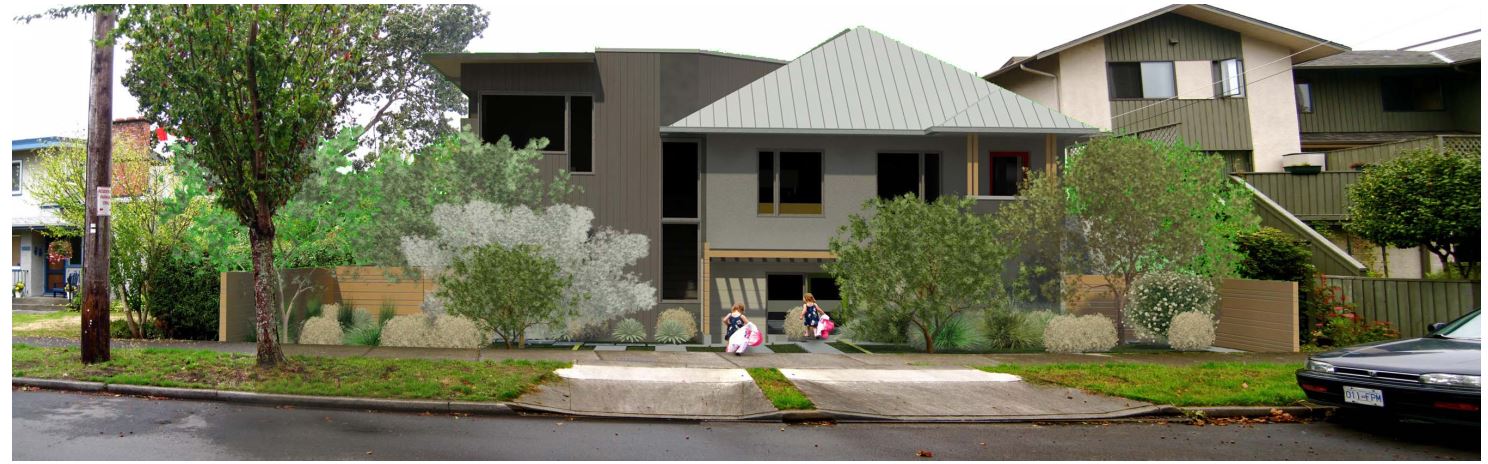
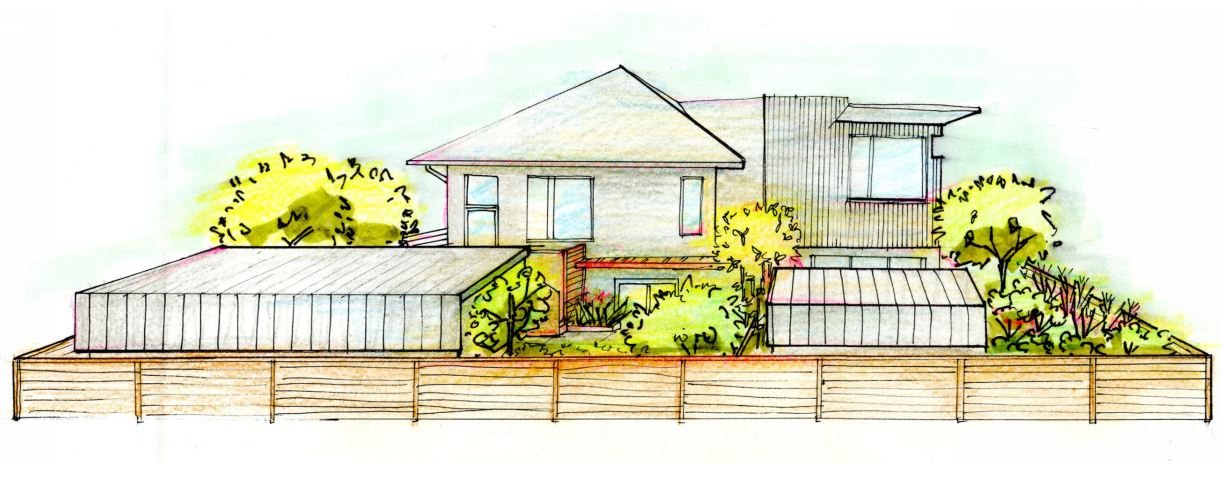
Here is the design that we presented at the community meeting last Thursday. We’re pretty excited by what Mark A and Kate have come up with.

The renovation of the existing house respects and maintains the original form and roof line, while the addition is intentionally contemporary, simple and contrasting. This design strategy highlights the relationship between old and new.

We are using traditional materials, including cedar siding and stucco, that are common throughout the neighbourhood. Deep window reveals introduced by the thicker Passive House walls add visual interest and depth to the facade. The landscaping ties everything together.
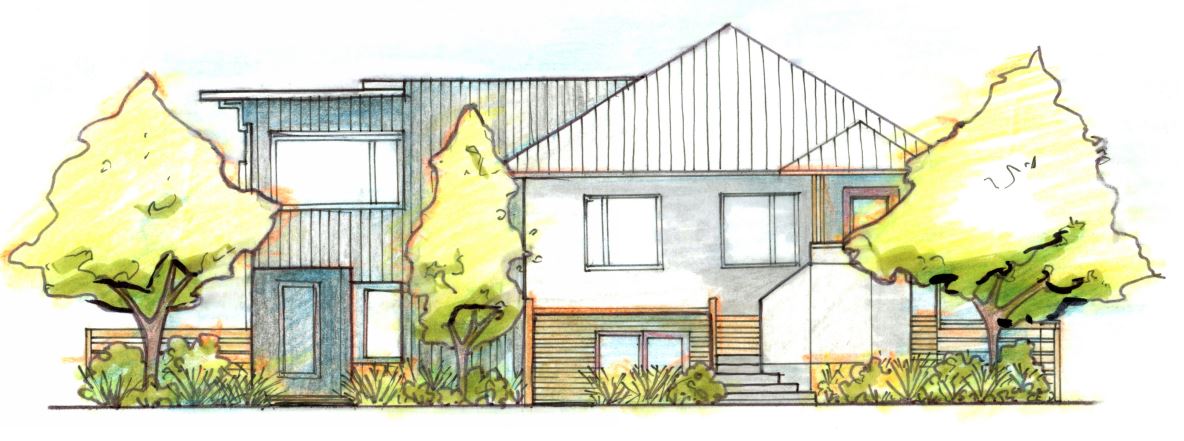
 

Front elevation, sketch by Kate Stefiuk

Front elevation, sketches by Kate Stefiuk
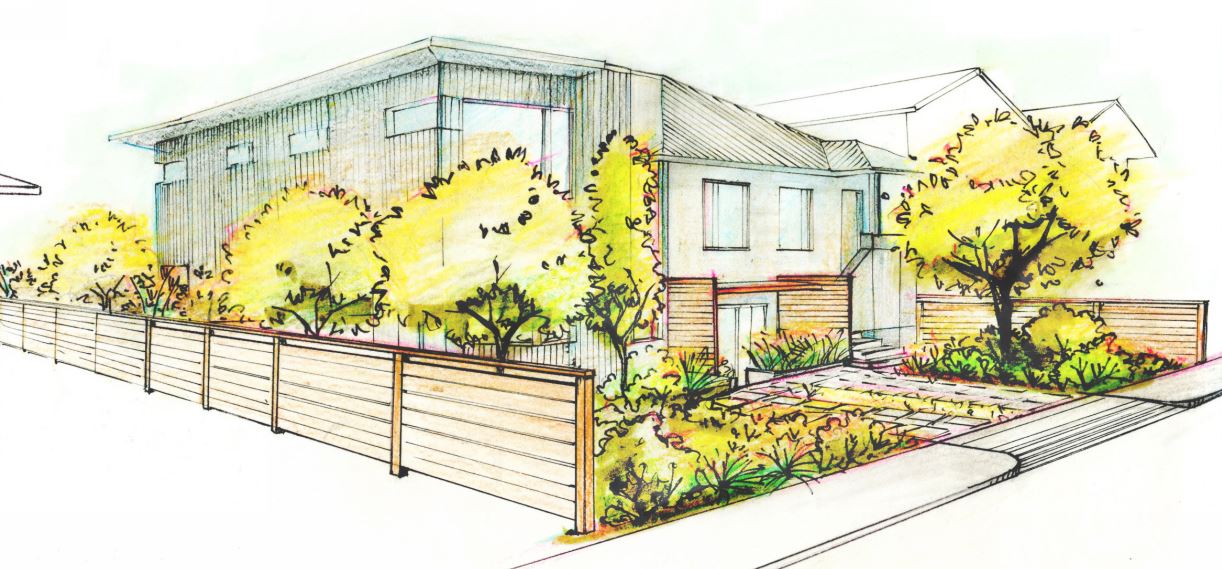
 

Front yard view, sketch Kate Stefiuk

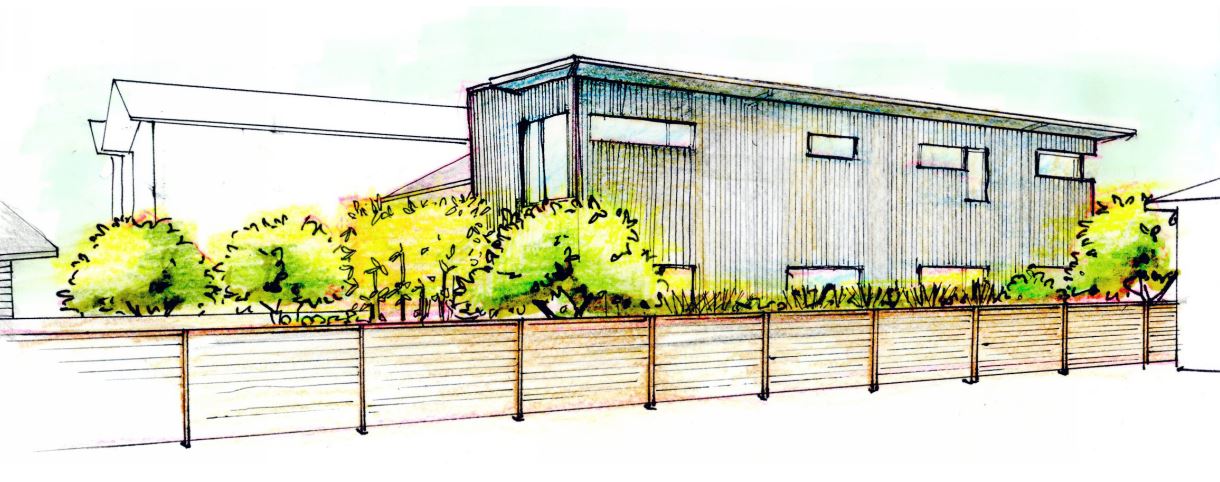
Front yard, side view


Side yard from the south

Side yard from our south neighbour’s back yard
Back yard with sunken workshop
Back yard with sunken workshop


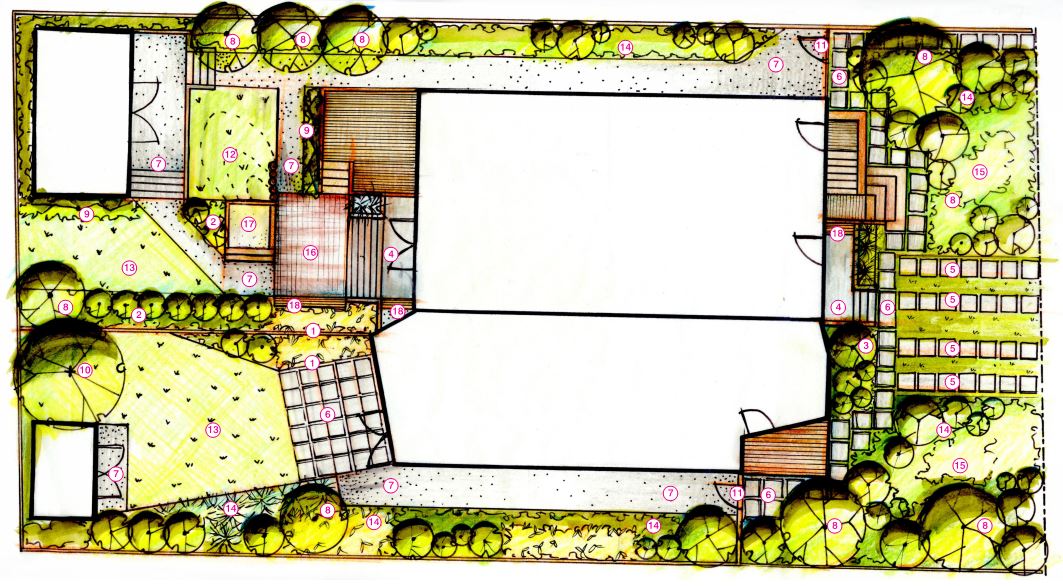
Landscape plan by Kate Stefiuk
Landscape plan by Kate Stefiuk


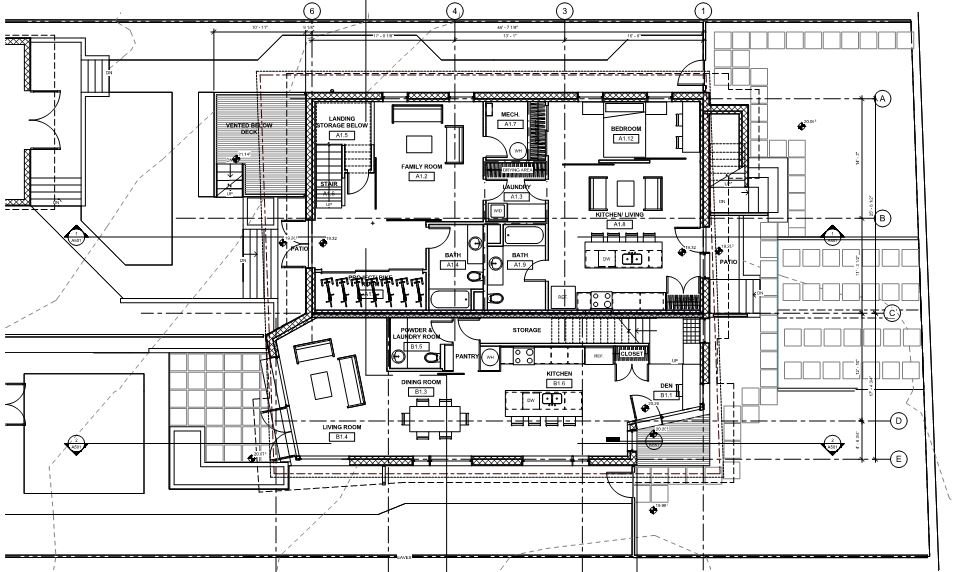
Lower floor plans, by Mark Ashby Architecture

Lower floor plan, by Mark Ashby Architecture
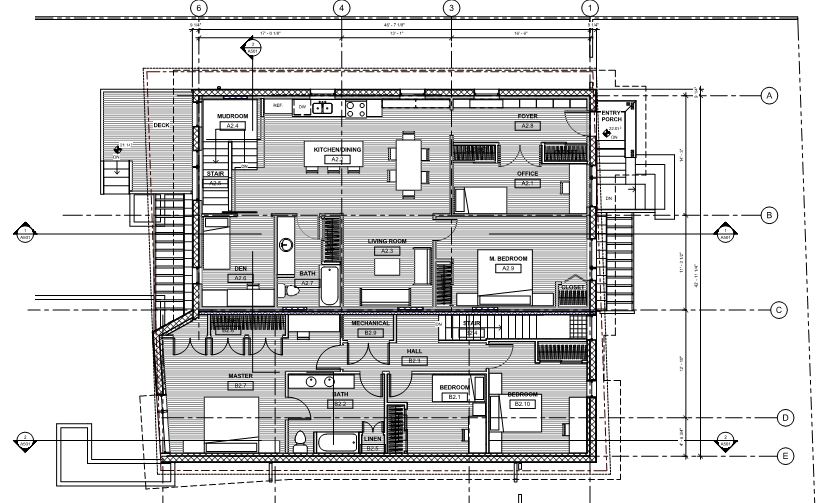
 

Upper floor plans

Upper floor plan


Streetscape, by Mark Ashby Architecture
Streetscape, by Mark Ashby Architecture


Filed Under: Design, Featured Tagged With: design, duplex, energy efficient design, low energy design, net zero, ultra low energy

Financing 103

July 1, 2016 by clove Leave a Comment

When comparing our small lot vs. attached duplex development options, I’d heard that financing would likely be more straightforward for a small lot subdivision because we’d have a legal bare lot as security for the lender. With the attached option, we wouldn’t have much until the building is finished.

I’d found a private lender who was not scared off by a duplex/existing building reno; with more flexibility than a bank or credit union, but at a higher interest rate (8-10%). For our project, they would loan one (big) amount to cover our current mortgage and the construction financing. We’d only pay interest on the amount spent, but from day one we’d be paying 8-10% on our current mortgage. With a 10 month construction period, that translates to about $38,000 in interest just for our existing mortgage, and we’d be paying interest in the realm of $50,000 for the whole build. Ouch.

I talked with some other people who have more experience with this stuff, and they suggested we talk with the local credit unions. They will be more conservative than a private lender and more flexible than a big bank, but with interest rates more in line with big bank rates. So I called up a couple of local ones.

The first thing that caught my attention were their rates. Prime + 2% for the construction financing. So, more like 4.7%, which is a heck of a lot better than 8-10%.

Generally speaking, this is how a credit union would structure the lending:

  1. We would terminate our existing mortgage (paying the penalty that is stipulated in our terms – in our case, 3 months’ interest).
  2. We would take out a standard residential mortgage for the existing house, at standard mortgage rates (say 2.8%), which will always be kept separate from the construction loan.
  3. We would take out a construction loan for the new build/major reno. They will charge a 1% construction financing fee and will lend 75-80% of the project’s appraised final value. The 20-25% we need to put in can be a combination of cash and equity.
  4. Similar to the private lend, we would only pay interest on the money actually spent. The money is drawn corresponding with project construction milestones (as verified by an appraiser) – also the same as the private lender.
  5. We would have to self-finance to a point. That point is AT LEAST after approval of rezoning, but depending on which option we pursue, and who the lender is, may vary beyond that. For the small lot subdivision, it’s likely we’d have to self-finance past rezoning approval and to the approval of the subdivision, which may or may not include completion of the subdivision. This is a pretty big grey area, since the cost to fully service the lot (required to complete the subdivision) was quoted to me by the city as being in the realm of $25,000 – $30,000.

One of the credit union mortgage specialists I talked with got really nervous when I told her we were raising the existing house. She said that in this situation, they might be limited to lending based on land value alone. The other credit union rep I talked with, on the other hand, said they were comfortable with house-raising (and in fact, she enjoyed seeing the pictures of the lift in progress).

In conclusion: The local credit unions offer better rates and a more attractive solution for either of our proposed options. The difference in costs between private lender rates and credit union rates could be as much as $30,000, which is a significant amount of money for a small project like ours. And it’s money that would disappear with no equity coming out the other end. We will be much better off going through a credit union provided we can meet their requirements. Also, the credit unions seemed comfortable with either option: small lot subdivision or attached duplex.

I would recommend calling several lenders as you’re planning your own project – private lenders, big bank, and credit unions. Even among the credit unions, their comfort level with our particular project varied.

And on that note, Happy Canada Day!

Filed Under: Financing Tagged With: budget, duplex, financing, infill, small lot subdivision

Checking in with the City

June 10, 2016 by clove 2 Comments

I met with the City Planner responsible for rezoning applications for a second time. I’d met with him much earlier in the process to present our small lot subdivision concept. This second meeting was to update him on our progress and to establish whether the planning department had a preference for the small lot subdivision or the attached duplex path. I had already poured over the respective rezoning requirements for both options, but I found that the duplex design guidelines were much less detailed than the small lot design guidelines.

The planner confirmed that, in terms of design, a small lot subdivision and duplex application are evaluated similarly. In neither case does his department judge a project based on whether it is a contemporary or a traditional design. They look more at elements like scale, form, variation in materials, and landscaping that reference dominant features in the neighbourhood. So that was good news.

I also followed up with calls to other city departments that will be reviewing our application. Here’s what I learned:

  • For the small lot subdivision, we can either add two curb cuts or one larger curb cut to serve both properties. The city has a slight preference for a single larger curb cut because it takes up less overall street parking space. An attached duplex will need two curb cuts spaced a minimum distance apart. We’ll want to have these details worked out before we submit to minimize redesign work.
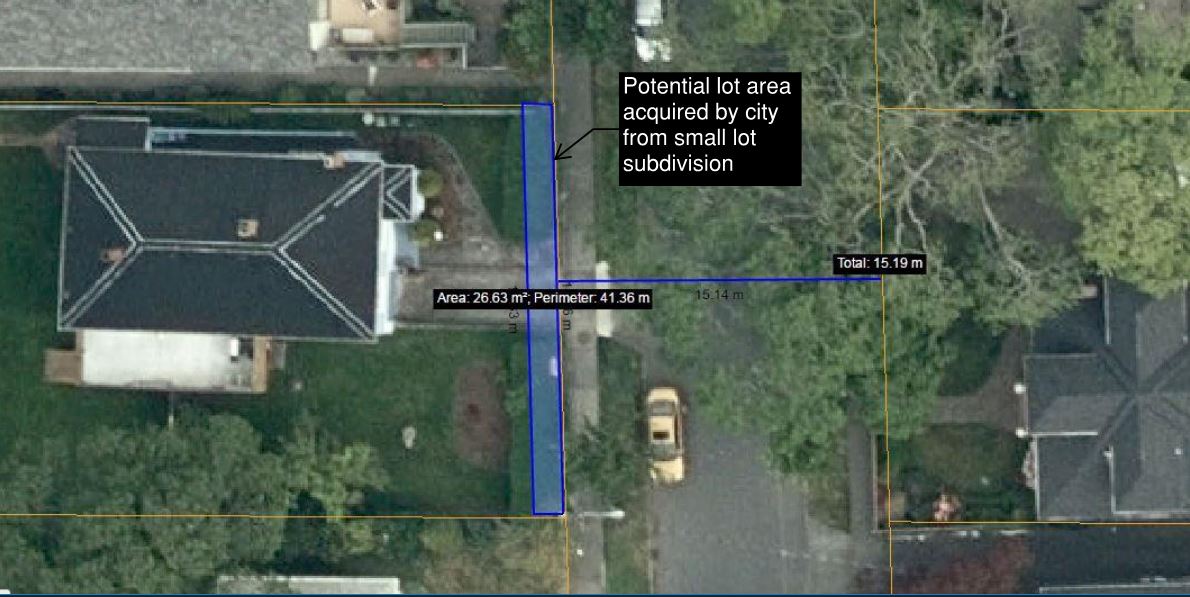
  • Here’s an interesting one: For the small lot subdivision, the city will ask for up to 1.5 meters of the depth of our lot as a dedication for widening the street. This is because our street is only 15 m wide and their standard is 18 m. So the city uses the subdivision as an opportunity to gain back up to half the missing road width, which they can then use to widen the boulevard or plant additional street trees. Here’s roughly what that would look like:

Small Lot Right of Way

  • The takeaway: make sure the small lot meets the minimum 300 sq m area with a 1.5 m swathe removed from it. With the current proposed property line location, one lot would dip below the minimum with that strip removed, and could potentially be rejected.
  • For the attached duplex option, this would not be a requirement. Score one for Plan B.

I hope that I will soon reach a point when I stop learning surprising new things every time I talk with someone about how to make our project happen. What I will say about working with the City of Victoria is that, while the rezoning process is an onerous one, its staff are available and willing to provide guidance. It’s easy to set up a meeting and if I call someone, they call me back within a couple of days. The trick is to figure out what questions you need to ask.

As we find answers and continue to hear input from others, Matt and I are solidifying our plan and feeling confident in our path forward. More to come soon!


Filed Under: Featured, Rezoning Tagged With: duplex, rezoning, small lot subdivision

Who is Stretch Developer?

Stretch Developer is written by Christy Love. In partnership with my husband Matt, we are challenging ourselves to create the kind of homes we want to live in and see more of in our community. Home is the incredible Victoria, BC, Canada.

Sign up!

Sign up to receive email notifications of new posts.

Recent Posts

  • New Uses for Old Wood Part 2 September 26, 2021
  • Ongoing Preparations for the Apocalypse August 13, 2021
  • Things We’ve Noticed – Energy Edition May 29, 2021
  • Passive House Suite for Rent April 17, 2021
  • Things We’ve Noticed – Comfort Edition March 14, 2021

Blogs We Like

Green Building Advisor Blogs

Musings of an Energy Nerd

Treehugger

Talk to ARYZE

Recent Posts

  • New Uses for Old Wood Part 2
  • Ongoing Preparations for the Apocalypse
  • Things We’ve Noticed – Energy Edition
  • Passive House Suite for Rent
  • Things We’ve Noticed – Comfort Edition
  • New Uses for Old Wood Part 1

Tags

budget building permit cabinet construction climate action climate change community engagement construction deep energy retrofit design design progress development permit duplex duplex + suite energy consumption energy efficient design financing financing passive house finding land food security home inspections infill low energy design neighbourhood engagement net zero passive house Passive House comfort Passive House construction Passive House construction costs passive house for sale Passive House performance Passive House performance; Sanden CO2 heat pump Passive House rental Passive House systems passive house testing performance pro forma property search tips reclaimed wood reclaimed wood construction rezoning roof row house small lot development small lot subdivision ultra low energy

Copyright © 2026 · Metro Pro Theme on Genesis Framework · WordPress · Log in


Loading Comments...