Stretch Developer

Taking urban development into our own hands

  • Home
  • About
  • The Project
    • Finding a Property
    • Design
    • Approvals
    • Financing
    • Construction
    • Performance
  • Blog
  • Contact
  • Rental Suite

To Passive House or Not to Passive House (Responding to City Comments Part 2)

February 17, 2017 by clove Leave a Comment

The city asked in their first rezoning review if we were willing to sign a covenant to seek Passive House certification. Good question and the time has come to answer it!

(Read more about Passive House and other approaches we considered.)

There are a couple of good reasons to pursue Passive House certification:

  • Understanding the nuances of the process by going through it.
  • Marketability – it’s becoming increasingly recognized and sought out by savvy buyers around here.

Because of what I do for a living, though, I am inclined to remain certification-system-agnostic. If we go for Passive House, it’s because I want to test it out. We’re not doing it because we think it’s the only way to a good building and to a sustainable future. It is a way. Focusing on passive principles, like airtightness, well insulated walls, no thermal bridging, and effective ventilation – is a very straightforward way to dramatically reduce our energy consumption and greenhouse gas emissions, and I do believe this is a critical approach to building better buildings. A house that consumes 20 kWh/m2/yr instead of the 15 required by Passive House at the end of the day is still miles ahead of a typical one that consumes 100.

I’m also very curious about the impact of occupant behavior. Could we build something slightly less than a passive house and use as little energy through conscious consumption? Would we be more uncomfortable? Is there an ideal balance that is something less than Passive House but right in our mild west coast climate? These are difficult questions to answer on a single project, but interesting all the same.

I’ve had in my mind from the beginning what I believed to be a reasonable but very high performing wall assembly: 2×4 wood frame cavity with batt insulation; plywood sheathing, weather barrier, 6” of mineral fibre insulation; rainscreen and cladding. We’re on board for a high-efficiency heat recovery ventilator (Zehnder, Paul or similar) and we’re set on good triple pane windows. We’re committed to renewables with a goal of net zero energy consumption and zero greenhouse gas emissions.

But I was not sure about other pieces like the amount of roof and below slab insulation. And I wasn’t sure how this would all add up in the eyes of Passive House. There was no way of getting around it – I had to model it in PHPP, the Passive House (giant) spreadsheet software.

In early January, I took the 3-day Passive House modeling course as a follow-up to the 5-day design course I took three years ago. I’ve since been chipping away at the model to give us more confidence about what we are prepared to commit to in our re-submission to the city.

I’m relieved to report that I am *almost* finished the model.

The first time going through a whole model for a smaller house takes at least 3 days, assuming you’ve had some training. I’m 24 hours in so far, and this includes a fair bit of head scratching, learning, looking at other examples, going back and fixing mistakes.

I would recommend to anyone who has the luxury to devote 3 whole days in a row to get your head into it; even half days are wonderful. I found two hours at a time is about the minimum to feel productive. And keep moving – if I got stuck and bogged down by something, I moved on to make progress elsewhere, then looped back after I’d had a bit of time to digest the issues, or could ask someone for guidance.

The modeling tool itself is not difficult provided you are comfortable using Excel, but it does take time to understand the intent of each entry and to follow the protocols where they exist. The most frustrating part of the modeling for me was that there are several key entries that require significant work in the background – for example, calculating total floor area, heat loss area, and domestic hot water pipe lengths – but lead to a single number entered into a single excel cell. The progress is significant but can feel small.

Here is the heart of what you get out of the model:
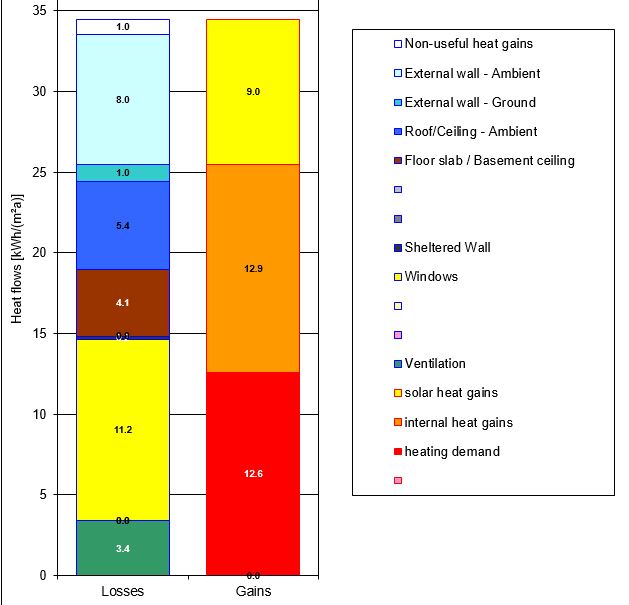
The software is really an energy balancing tool in which your goal is to moderate heat losses (e.g. through your walls and windows), and then balance them with gains (e.g. through people, light bulbs, appliances, as well as solar gains through windows). The remaining imbalance is your heating demand, represented by the red chunk in the ‘gains’ bar above – this is what you have to add to the space, and this is the number that Passive House requires you to keep less than or equal to 15 kWh/m2/year.

I still have a few key inputs to add, but am feeling confident that this is within reach for our project and we are likely to go for it. In the meantime, time to reclaim my personal wellness time and get outside for some fresh pre-spring air! Thanks for reading!
 

Filed Under: Performance, Rezoning Tagged With: energy efficient design, passive house, performance, ultra low energy

Argh, Parking! (Responding to City Comments Part 1)

February 17, 2017 by clove Leave a Comment

Lest you surmise I’ve been idly twiddling my thumbs for the past 3 months, I’m overdue to lift my head and share an update.

Besides shivering through Victoria’s longest cold snap in over 30 years, we’ve been working on 2 big things:

  1. Responding to the first round of city comments on our rezoning application.
  2. Completing the Passive House PHPP model.

I’ll cover the first item here. See this post for the Passive House model update.

We received our first round of comments back from the city on December 22 –  four weeks after we’d officially submitted. When I first reviewed the comments, I felt discouraged, as there appeared to be a long list of issues. But Ian, our planning consultant, pointed out this key sentence at the beginning of the letter:

The application as submitted can be considered with the land use policies relevant to the property.

Ian thought this was an excellent response. It is saying, albeit obliquely, that the city is likely to support our application, provided we address their comments. Great!

Ian and I met with the planner responsible for our project to clarify some of the comments. Nothing earth shattering resulted from this meeting, but it was good to have the face time and confirm that we understood their intent.

There were two major comments that affect our design: parking and roof lines.

Parking:

I long for the day when the level of consideration, money and space we devote to places to put our cars do not vastly overshadow the resources we devote toward places for people to actually live. Alas.

The rules around parking are largely inflexible and at odds with our desire to preserve green space on our urban lot. At the same time, the more we push the rules, the longer the timeline drags out and the less certain our outcome becomes, so we’re working toward a reasonable solution that satisfies city engineering but does not compromise our project goals.

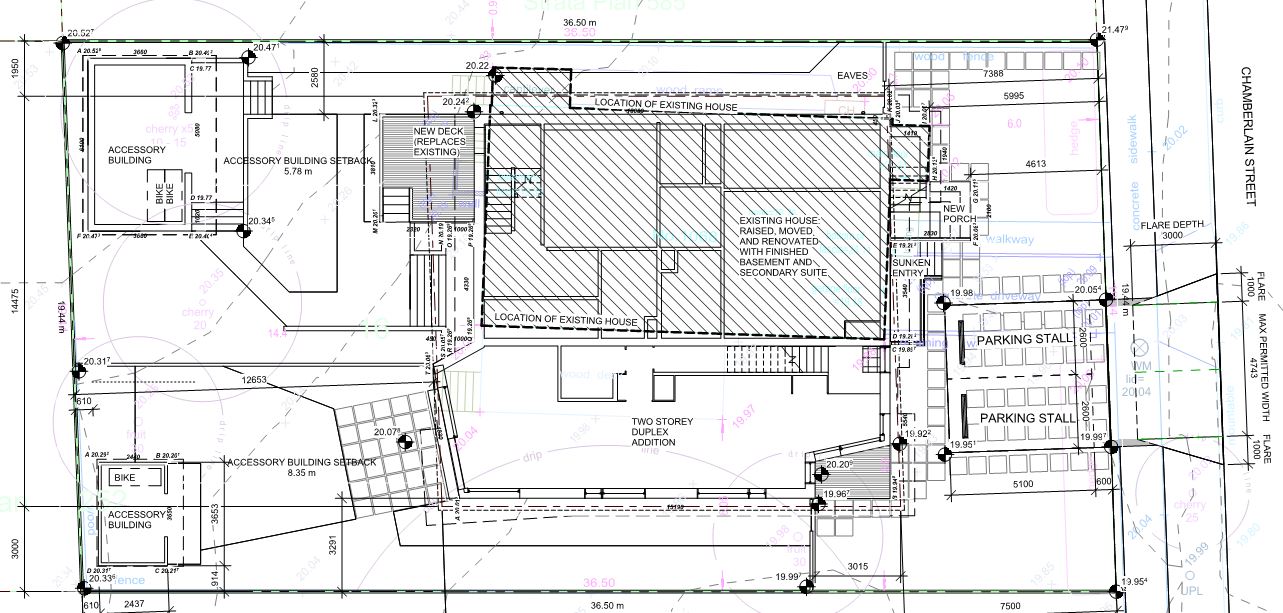
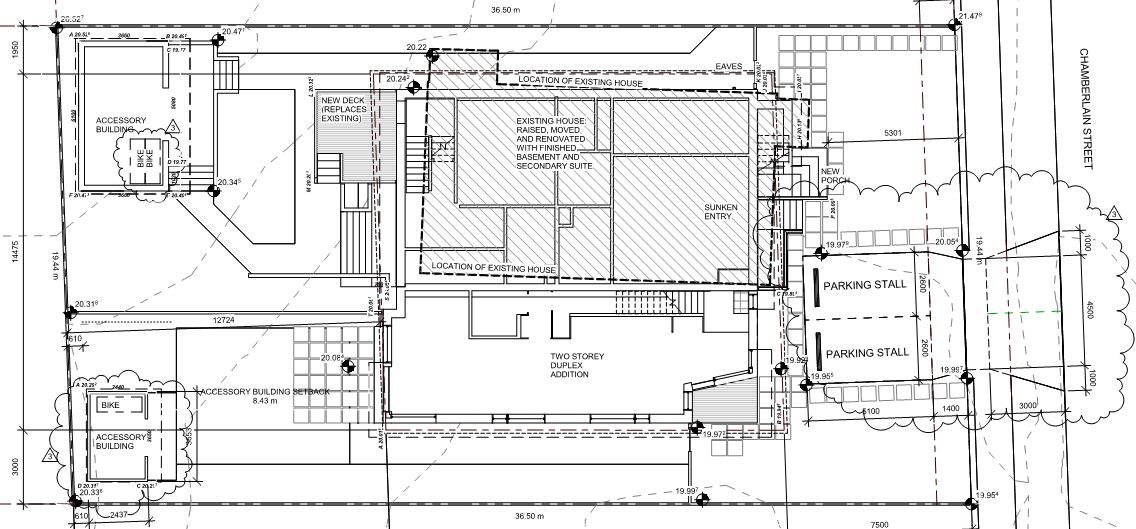
We’re required to provide 2 off street parking spots for a duplex (the secondary suite does not require a third spot thankfully). Our neighbourhood has a precedent to allow for front yard parking, which we are invoking to preserve as much back yard space as possible.

One of the unbendable requirements is a 1.0 m setback from the rear of the parking spot to the property line. In the initial review, the engineering department also asked for an additional 1.4 m right of way in the front yard. Why? Because they might one day widen our entire block from the current 15 m street width to the more standard 18 m. Really? We already have sidewalks on both sides, parking on both sides, and boulevard green space between the sidewalks and street. The narrowness of our street also has the desired effect of slowing vehicle speeds. Sounds OK to me.

We do not agree with this request, nor is there any policy requirement that we grant this request. So we’ve decided to provide 1.4 m total, not 1.4 plus 1.0 m, as a compromise that we feel is likely to be accepted. Here’s how the design has evolved as a result:

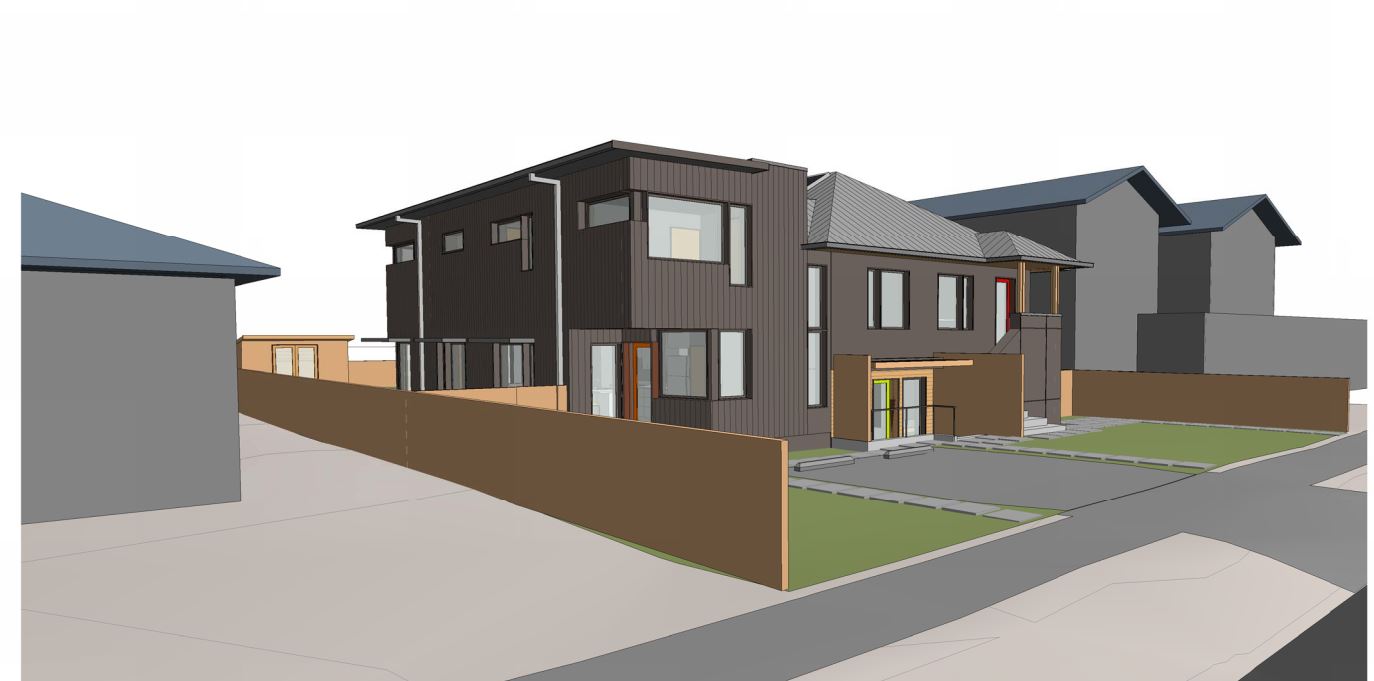
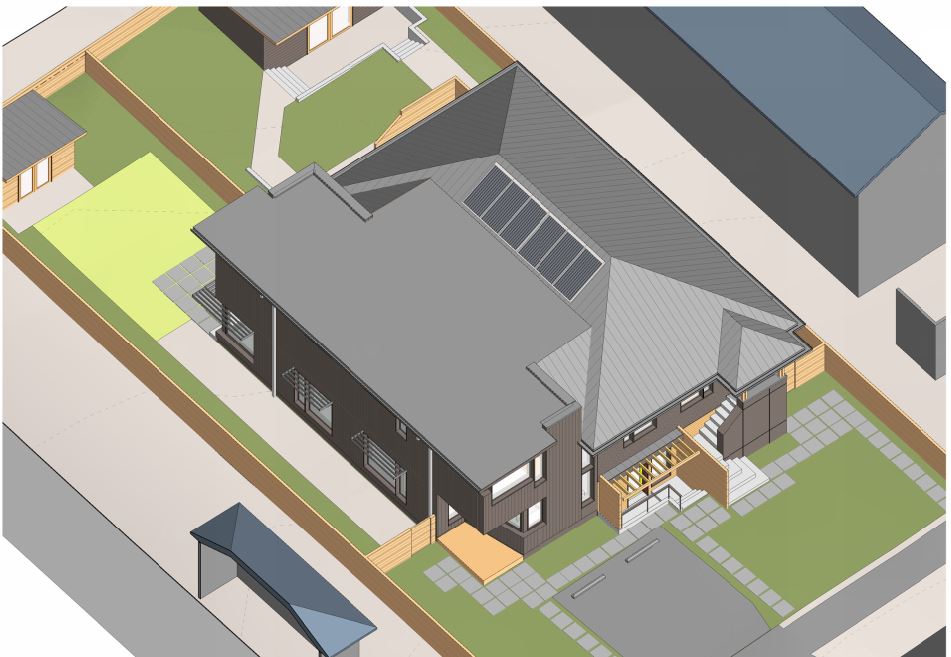
Before: We were just a hair short of the 1.0 m required between the end of the stall and the property line, but thought we’d give it a shot:

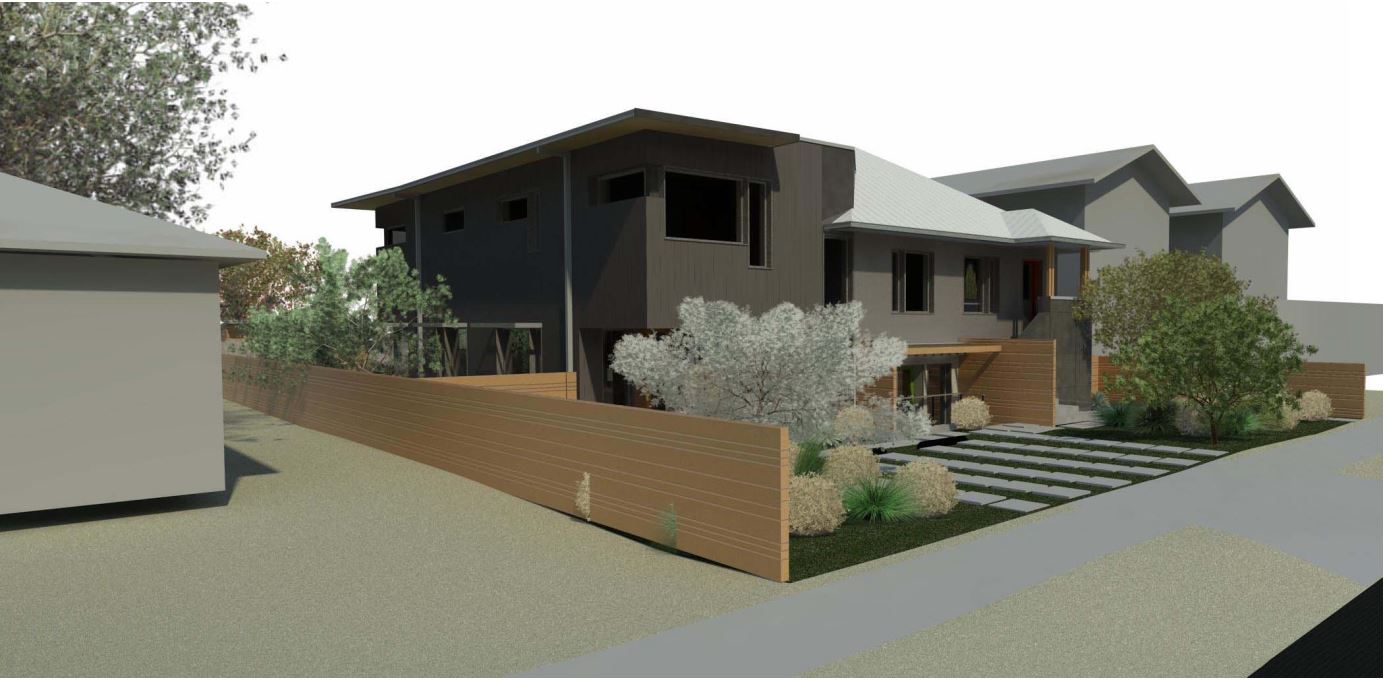
After: We’ve shifted the house back 0.7 m and shortened up the back end of the new addition to achieve the 1.4 m setback at the front without infringing on rear setback limits:

This design change has the added bonus of simplifying the enclosure shape, which is good for Passive House, and we’re pleased with this evolution.

Roof Transition:

The City questioned the transition between old and new roofs. Something wasn’t working, and they rightly pointed out a weakness in our design, if not a simple lack of clarity.

We bandied about the idea of a more dramatic change to the existing hip roof to a gable roof. In addition to being a bolder shape, a gable roof would open up the potential for a loft space, vaulted ceilings and other cool design elements.

But then we thought through the implications – changing most of the roof line, extending the walls up to create the gable; interior redesign to include a stair or other access to the loft space, and potential zoning floor area restrictions we might now bump up against. Besides the fact that our existing house would no longer resemble its original self, there were a whole host of ripple effects that were going to add cost and stretch out the project timeline.

Fortunately, though, as the creative process often goes, this exercise led Mark A to a more elegant solution for the hip roof, which is what we chose to stick with. Here is the before transition from old to new:

And the after:

Renderings by Mark Ashby Architecture

We’ve been working on these revisions for the past six weeks. When complete, we will submit an updated set, a revised letter to Mayor and Council, and an updated narrative. We may get another round of comments, or if all goes well, we will move on to the meeting of the Committee of the Whole – one step closer to rezoning approval, and we’re holding firm on our current goal to be under construction this summer!

Filed Under: Design, Featured, Rezoning Tagged With: energy efficient design, infill, rezoning, ultra low energy

Community Meeting: Success!

November 20, 2016 by clove Leave a Comment

Our community meeting was a success! (At least it felt that way for a while.)

The intent of this meeting, hosted by the local Community Association Land Use Committee (CALUC), is to gather comments from neighbours that will be submitted as part of your rezoning application. The comments may also lead to design changes. While this is the official opportunity to gather community input, you’d be foolish not have at least introduced the project to your neighbours well in advance. In our case, we are over a year into the conversation.

I had sat in on several meetings for other projects, so I knew the general format. Still, I felt a lot of uncertainty before our meeting because I didn’t know who would be there besides our neighbour who had vocally opposed our small lot subdivision proposal.

The meeting started at 7 PM. There were four projects on the agenda, and we were #2. The room was packed and stuffy. I knew a handful of people.

The first project was a proposed 4-storey condo building to replace two single family homes across from Beacon Hill Park. The presentation went for an hour and a half, with a lot of discussion around scale, height, parking, privacy, views, and south-facing light – very typical discussion points from what I’ve seen.

After much of the room cleared out, we taped up our drawings and presented to about 15 people plus 5 members of the CALUC. At least 8 people were there for our project; many but not all were familiar faces.

We heard the full range of comments, from ‘everything about it is brilliant’ to ‘everything about it is horrible’. No kidding! On the whole, though, the feedback was very positive, and we had a thoughtful conversation about how to do creative infill in our city. I hesitate to represent the comments of others, so I will just say that those who supported the project seemed aligned with what we were aiming for, while the ‘horrible’ comment was too vague to draw any constructive criticism from. Our neighbours who were strongly opposed to the small lot subdivision focused on the details – plantings between our properties, the design of the roof line etc, which I took as an encouraging sign.

To get to this point feels like an accomplishment, even though we still face many more steps before we can break ground.

We originally chose this property because it is in a fabulous location and well suited to a small infill project. Early on, I heard a lot of stories from neighbours who had fought off various developments over the years. I wondered whether we had chosen the wrong neighbourhood. And yet we persisted through comments like ‘You’re ruining the neighbourhood’, ‘I’ll fight this to the death’ and ‘We’ll have to sue you’. We clung to the encouragement of those who liked what we were doing, and in talking to as many people as we could, we discovered that opposition was very localized; a minority talking like a majority. Still, we listened. We changed our design. And here we are, ready to submit our rezoning application.

And I actually believe even more strongly now that this is the perfect neighbourhood for our project. The way it has evolved reflects not only our vision and values, but also those we share with our neighbours. It reflects the eclectic and thoughtful character of and characters in our community.

POSTSCRIPT: I since received an email from a neighbour who attended the meeting that was very negative and attacking on our character. Two steps forward…

A friend told me before we started on this path that someone will always hate your project, no matter what you do. Fair enough, but I could do without the personal attacks. Needing a lift, I went for a long walk and checked out a couple of Passive House project tours that were happening around town (the 5th Street Passive House currently under construction and the North Park Passive House, which has been occupied for over a year). I got a few new ideas and my spirit was buoyed by the conversations I had with people who are committed to improving our environment, enthusiastic about learning, open about making mistakes, and hopeful for the future.

To all of you: Namaste!


Filed Under: Rezoning Tagged With: community engagement, energy efficient design, infill, neighbourhood engagement, rezoning, ultra low energy

Duplex Design

October 24, 2016 by clove Leave a Comment

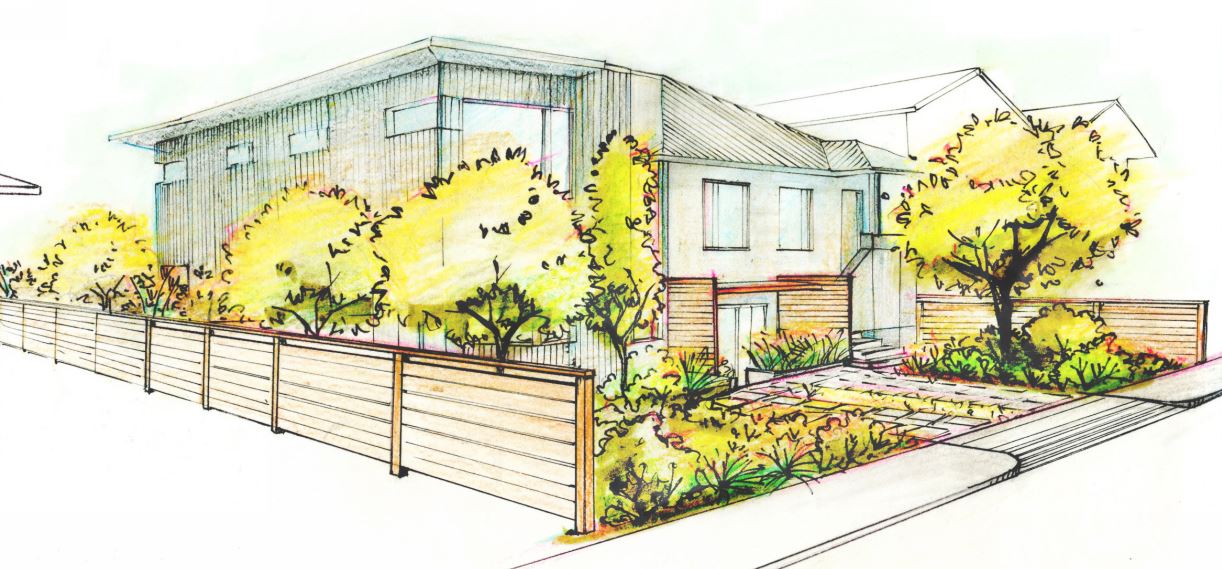
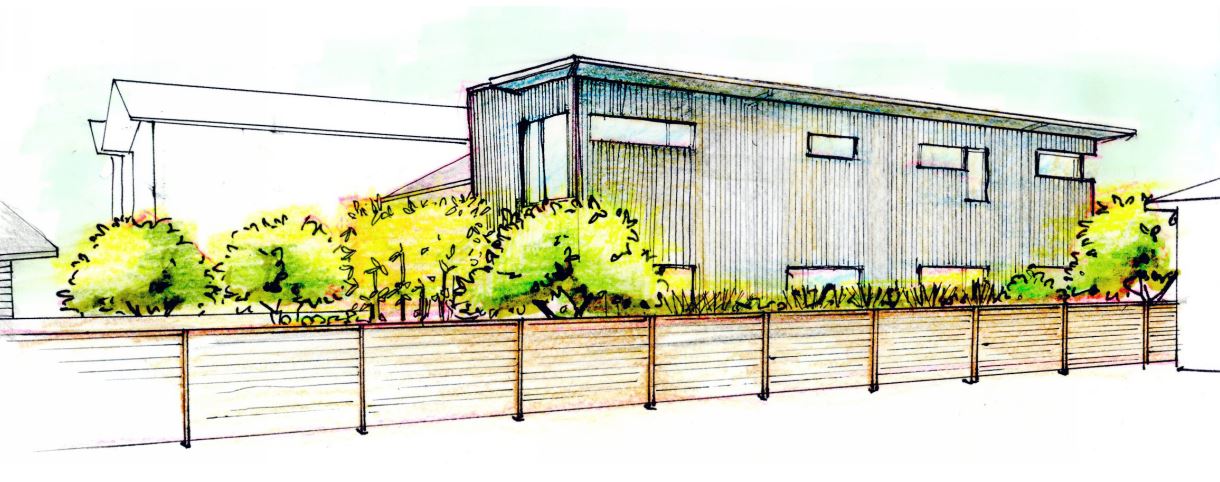
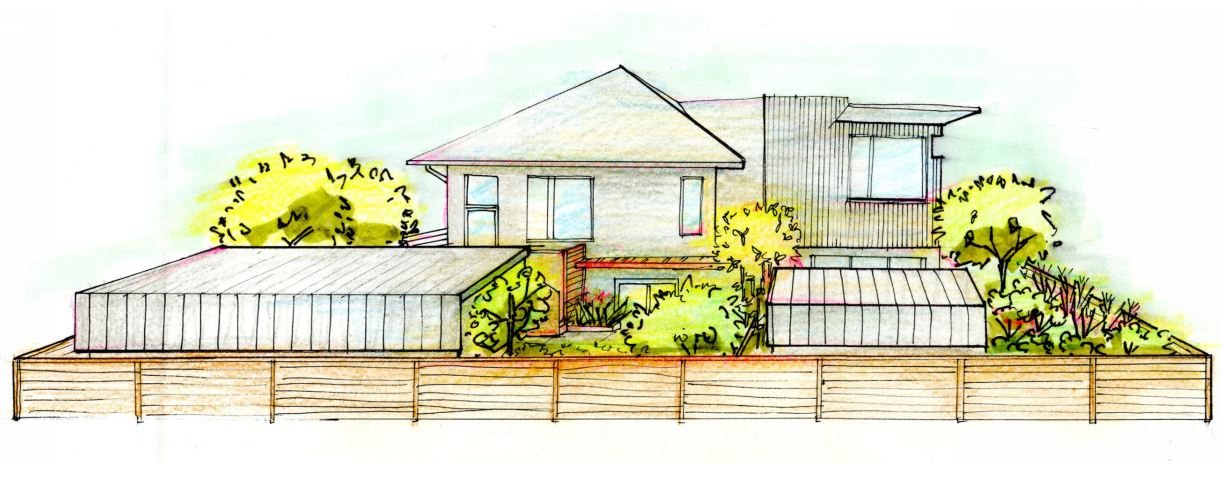
Here is the design that we presented at the community meeting last Thursday. We’re pretty excited by what Mark A and Kate have come up with.

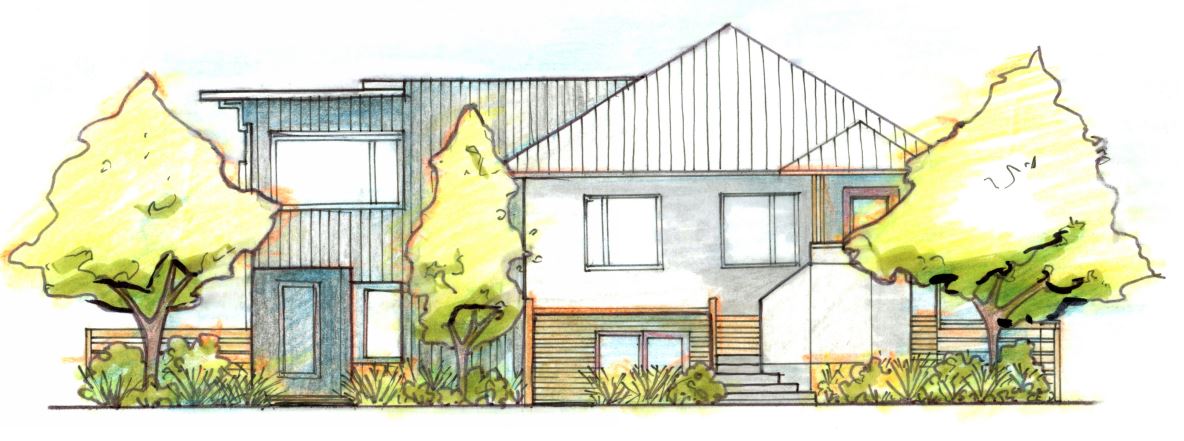
The renovation of the existing house respects and maintains the original form and roof line, while the addition is intentionally contemporary, simple and contrasting. This design strategy highlights the relationship between old and new.

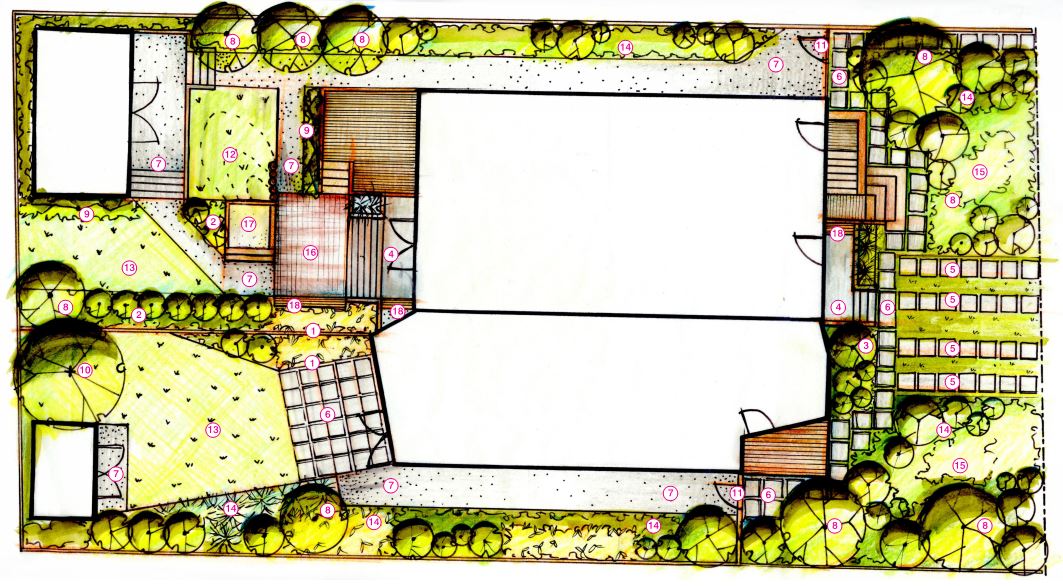
We are using traditional materials, including cedar siding and stucco, that are common throughout the neighbourhood. Deep window reveals introduced by the thicker Passive House walls add visual interest and depth to the facade. The landscaping ties everything together.


Front elevation, sketch by Kate Stefiuk

Front elevation, sketches by Kate Stefiuk


Front yard view, sketch Kate Stefiuk

Front yard, side view


Side yard from the south

Side yard from our south neighbour’s back yard

Back yard with sunken workshop

Back yard with sunken workshop


Landscape plan by Kate Stefiuk

Landscape plan by Kate Stefiuk


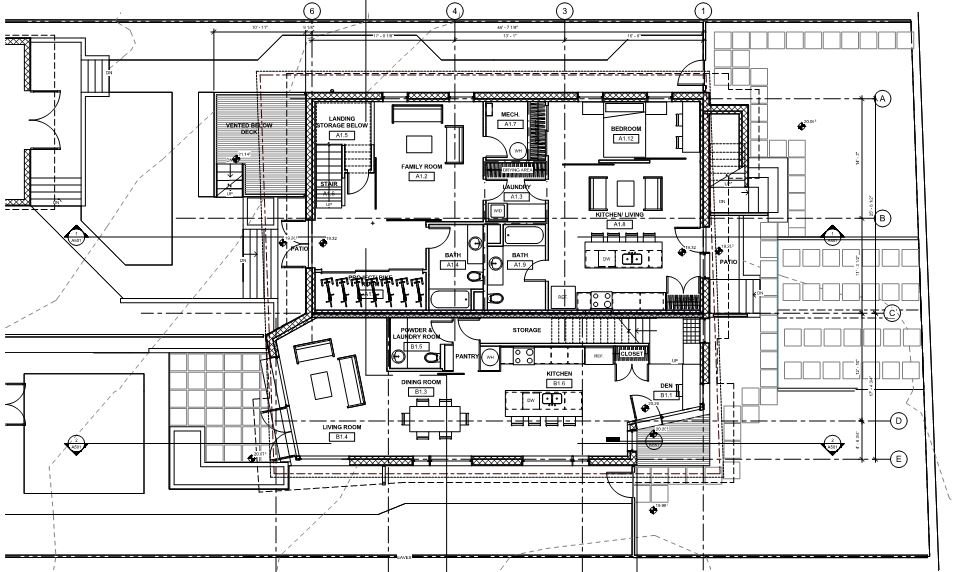
Lower floor plans, by Mark Ashby Architecture

Lower floor plan, by Mark Ashby Architecture


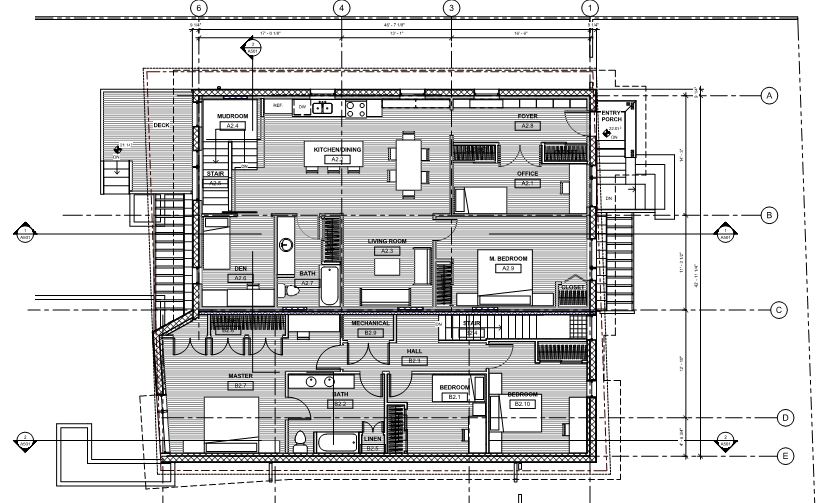
Upper floor plans

Upper floor plan


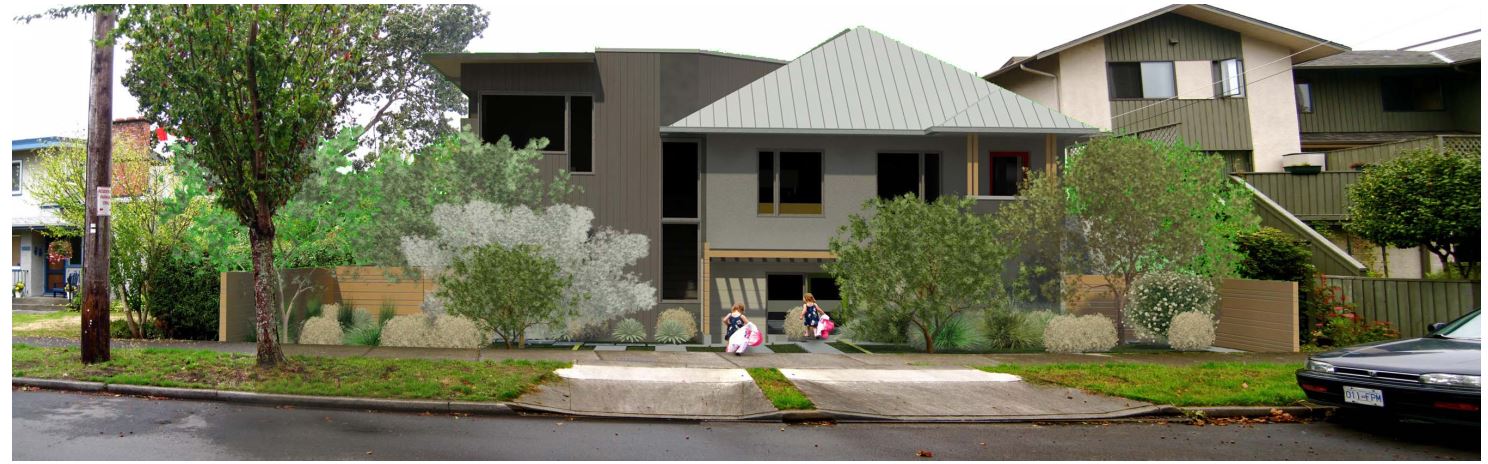
Streetscape, by Mark Ashby Architecture

Streetscape, by Mark Ashby Architecture


Filed Under: Design, Featured Tagged With: design, duplex, energy efficient design, low energy design, net zero, ultra low energy

The Path to Decarbonization and Net Zero Energy

October 13, 2016 by clove Leave a Comment

We’re targeting net-zero energy consumption and zero carbon emissions in the operation of our post-project home. Say what?

Net zero energy means that, on an annual basis, we generate as much energy as we use. So unless we have an oil well on our property, we are drastically reducing both our fossil fuel consumption and our utility grid dependence. Zero carbon emissions simply means that we don’t burn any fossil fuels to operate our home.

A home could use one or more different sources of site-generated renewable energy – solar photovoltaics or solar thermal, for example. I’m keeping things simple for the moment by assuming that we will only use solar photovoltaics to generate electricity. Unless we include battery storage, we will still be drawing electricity from the grid when the sun isn’t shining or when our demand is higher than our panels can provide. But in a place like BC that has a net-metering program, we will also be feeding back into the grid when we’re generating more than we need.

So can anyone just plunk a bunch of solar panels on the roof and viola: net zero energy? Not so fast. With the amount of energy most houses use today, you’d need a much bigger roof than you have. Allow me to demonstrate with our existing house.

In an earlier post, I estimated our current annual energy consumption to be about 13,270 kWh per year, or ~120 kWh/m2 of conditioned floor area, based on our first 6 months of utility bills. This is actually an ok number given that we have three chimneys, single pane windows, and all sorts of leaks and drafts. It’s about 45% lower than the average Canadian home and on par with the Germans. We turn things off when we aren’t using them, but we also shiver through the winter with an inadequate heating system.

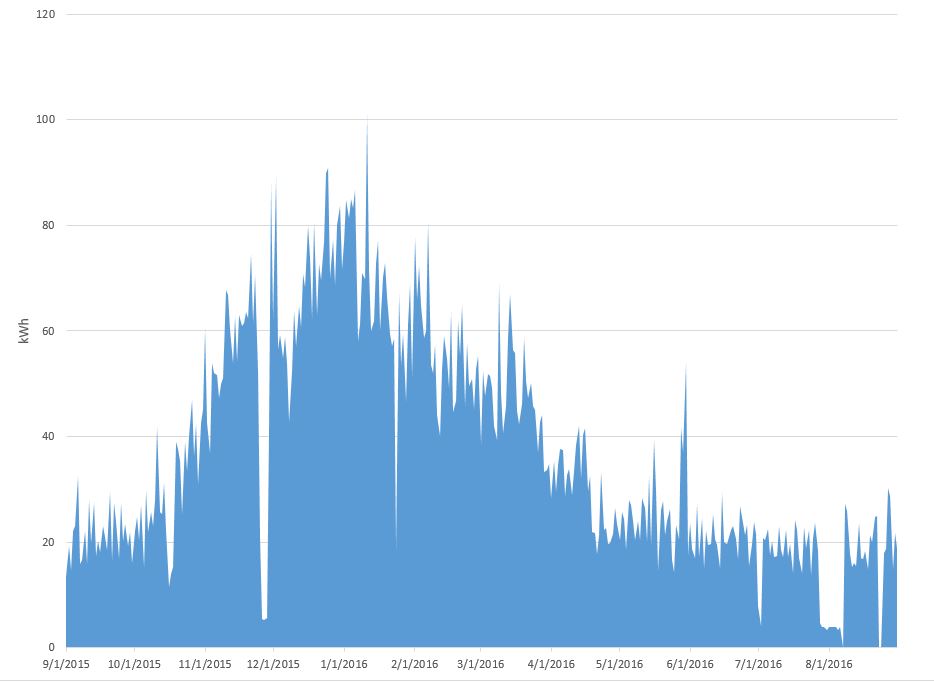
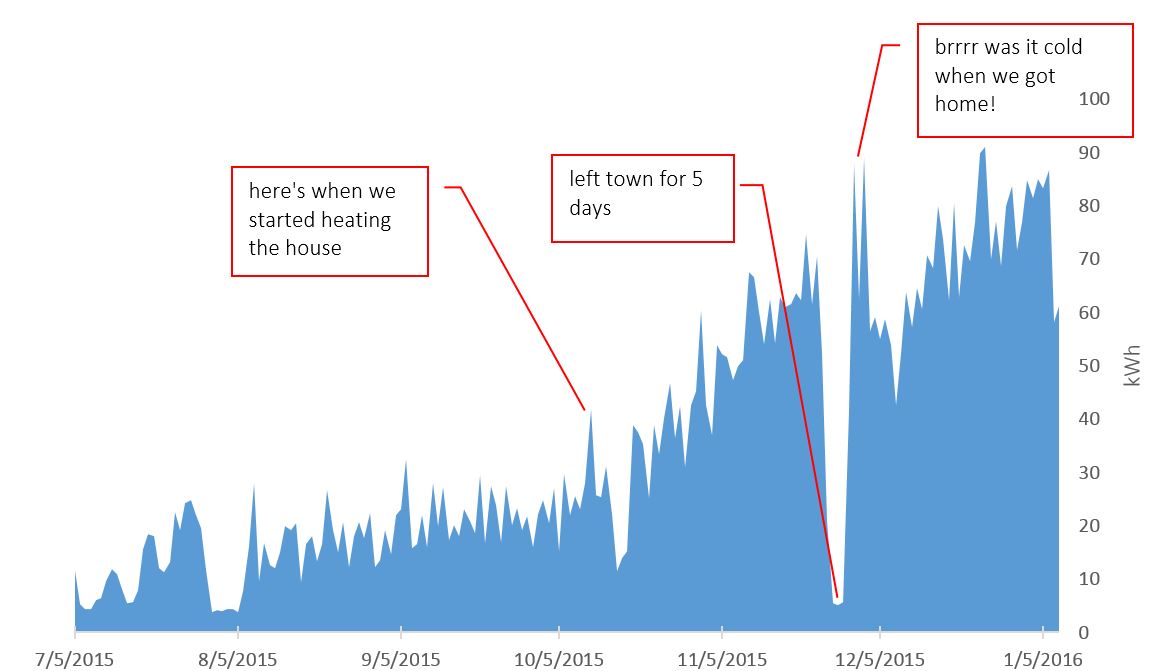
We now have a full year of electricity consumption data to update my earlier guestimate. Our actual one-year consumption was 13,700 kWh, or 123 kWh/m2/year. The daily consumption curve looks like this:

Full year of energy consumption for our existing house

Full year of energy consumption for our existing house

The ‘curved’ part is the energy we used for heating. If you drew a straight line across the flatter portion of the graph, the area below the line would roughly represent our non-heating energy use, which stays relatively constant throughout the year.

So that’s the energy demand side. Let’s now turn to the solar PV question.

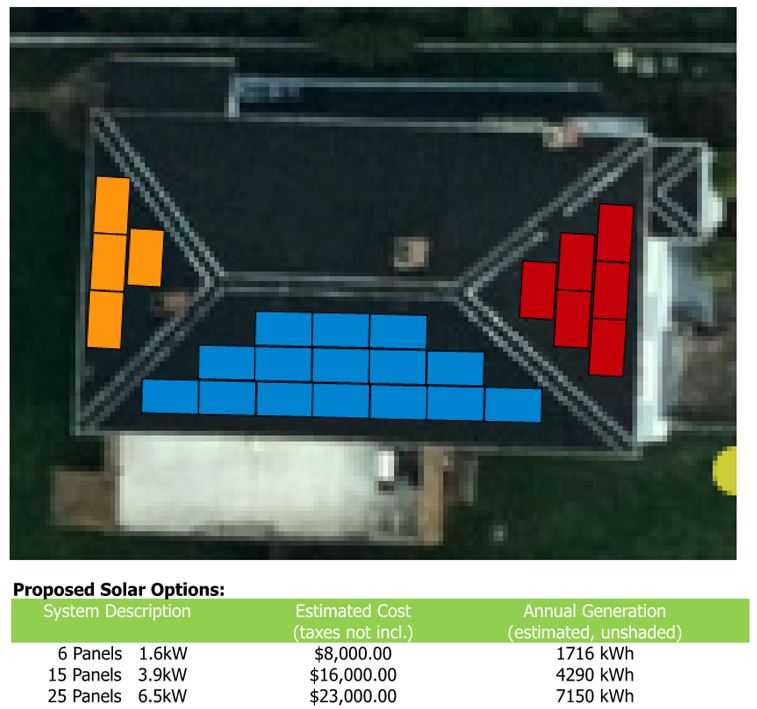
I called up Power to the People, who will do a free, high level evaluation of the solar potential of your house, based on a google earth analysis, some rules of thumb, and an assumption that your roof is not shaded. Here’s what their evaluation spat out for our existing house:

Power to the People Solar PV Analysis

Power to the People Solar PV Analysis

If we covered our south, east, and west roofs with panels, we could generate 7150 kWh annually. This is a little over half of our current consumption. We would have to reduce our consumption by nearly half to achieve our next zero energy vision using only solar PV.

Is this even possible? The Passive House approach promises a 90% reduction in heating demand by focusing primarily on the design of the building envelope. According to my rough estimate, about 50% of our current consumption is for heating.  So it would be doable if we both dramatically reduced our heating demand by improving the envelope and found some additional ways to save. I predict, for instance, that my long hot shower habit will be curbed when our house feels warm and comfortable in the winter. We’ve also heard that people who live in passive houses do not use dryers because the heat recovery ventilator helps clothes dry so quickly.

So we think it’s challenging but doable, and our example illustrates two things:

  1. The first step must be to reduce demand through passive strategies, like extra insulation, increased air tightness, and better windows.
  2. The way you live in your house matters too! Turning off lights and electronics, limiting long hot showers and dryer use etc. The lower you can get your energy demand, the more likely you can meet your annual average with site-generated energy.

One of the most exciting prospects about following the passive house approach is that we can reach our goal while feeling WAY more comfortable and having WAY better air quality. Win win!


Filed Under: Featured, Performance Tagged With: energy consumption, energy efficient design, passive house, performance, ultra low energy

Attached Duplex Design is a Go!

July 17, 2016 by clove 2 Comments

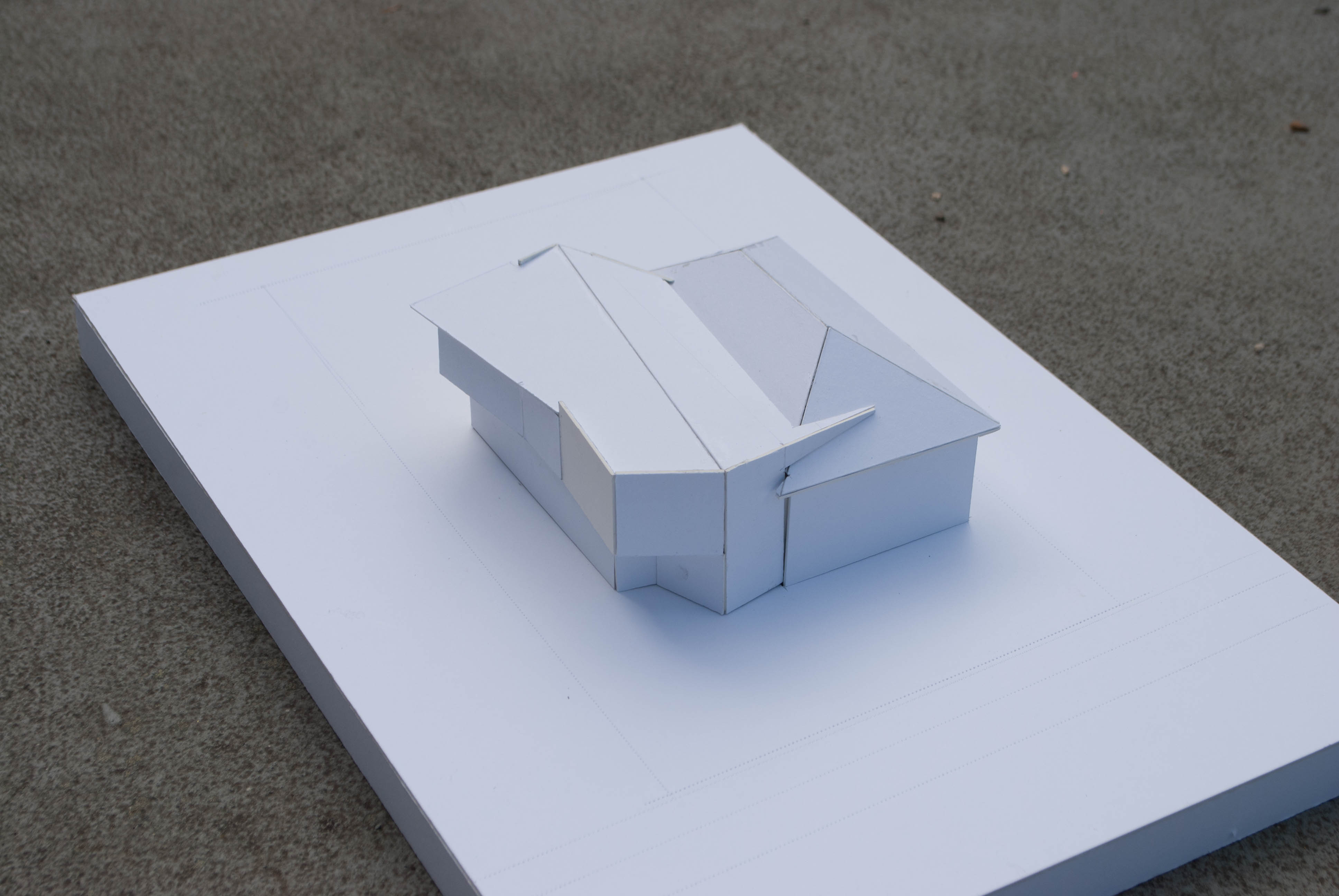
Attached model experiments by Mark Ashby

Attached model experiments by Mark Ashby

We’re going ahead with a new attached duplex design! Here’s why:

  • The attached option addresses some neighbours’ concern that the small lot house would have been too close to our neighbours. The attached option creates more space on the sides and fits better on our lot.
  • The attached option provides more distance to the large Garry oak in the adjacent yard to the south – better for its roots and less shade for our rooftop solar photovoltaics.
  • I’ve identified at least a couple of lending options that are viable for the attached option.
  • The massing is better for energy performance (less exterior walls = less energy lost through the envelope).
  • The approval process is simpler – we can meet the two-family zoning regulations with fewer variances and no longer need to collect petition signatures.
  • The city fees for the rezoning application are lower and we eliminate city subdivision fees (which amounts to savings of $5,000-$8000).

If we were set on the small lot subdivision option and were willing to wait a while, we might have been able to get it through. But the attached option does meet our needs and we do want to get the project going, so it felt like the best solution given the circumstances.

The design in now in progress and we’ll share renderings soon. One of the debates we’ve had is how to design an addition to an old existing house. Do we blend the design so that it looks like one unified whole? I think if we were designing from scratch we would do that. But to make the structure look like a unified whole, we actually would have to change the form of the existing house dramatically – particularly the roof.

We believe that the best way to honour the existing home and to retain as much of its existing structure as possible is to create a marked distinction between new and old. Mark A is taking a sculptural approach to the addition to contrast with the existing form and work with the existing roofline. Not an easy task, and we’re thankful we have an architect like Mark working out the details.

I had hoped to present the design at the mid-August Fairfield Gonzales Community Association Land Use Committee (CALUC), but discovered that the committee has been disbanded. Well, temporarily at least, as the group reconciles its status as a charity organization with its role in land use development issues. I am attending a community meeting to learn more. Stay tuned and in the meantime, enjoy the sun!


Filed Under: Design, Featured, Rezoning Tagged With: design, energy efficient design, rezoning, ultra low energy

On Courage and Cool Projects

April 8, 2016 by clove Leave a Comment

We are (still!) in the midst of neighbourhood consultation, and I will provide an update on that process very soon. Suffice to say that I occasionally wake in the middle of the night feeling anxious and in need of a fresh burst of inspiration. So for this post, I am sharing some big ideas from beyond our small project.

Last month I attended the Passive House Northwest Conference (PHNW)  in Portland Oregon to present the research RDH is doing at the North Park Passive House here in Victoria. I left the conference full of admiration for the people making incredible projects happen on our continent. And it really is about the people. These projects do not just materialize on their own accord. The people who are making them happen display incredible depths of courage and tenacity. Here I introduce you to two of these people and their projects.

Second and Delaware

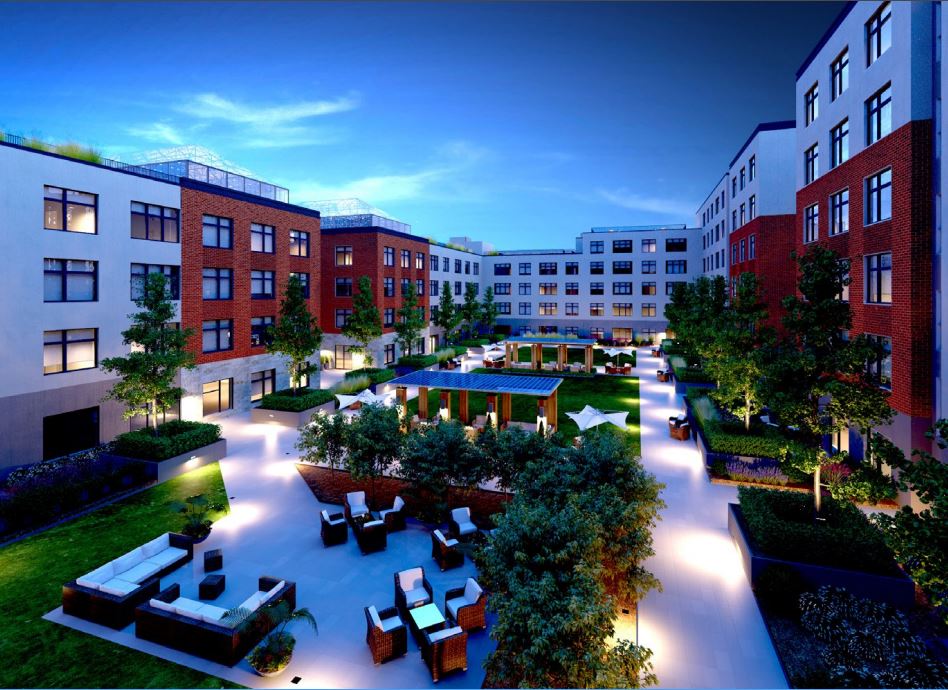
Arnold Development Group’s Second and Delaware project; rendering from Arnold’s PHNW presentation

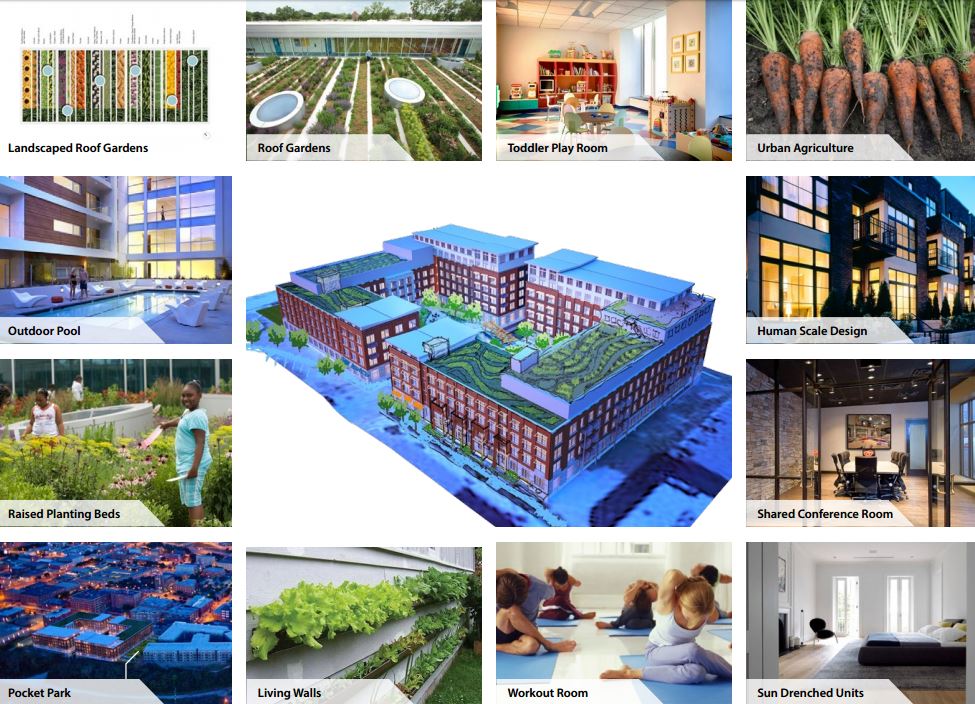
  • Jonathan Arnold, President and CEO of Arnold Development Group, for his triple bottom line development model (one look at his Advisory Board will tell you this is a company committed to doing things differently) and his latest project at Second and Delaware in Kansas City. This project I love because it addresses everything that matters today in terms of development: energy, housing, food and transportation. It is a higher density rental project in the heart of the city that uses a traditional courtyard design. It is walkable and transit oriented. It is designed to meet the Passive House standard. It includes a diversity of housing types, including 20% ‘workforce’ housing. It includes space for urban farming. It is a place where people will want to live, can afford to live, and can do so with a light environmental footprint.

You can download his presentation from the conference here.

Second and Delaware 2

Second and Delaware features; from Arnold’s PHNW presentation

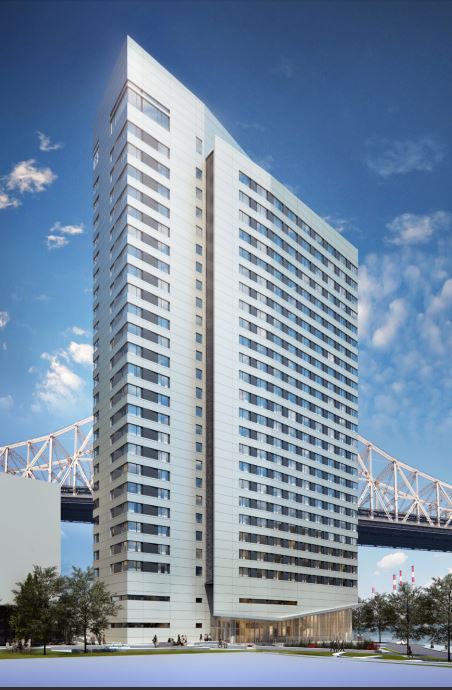
  • Lois B. Arena, Senior Engineer and Passive House Consultant at Steven Winter Associates , for driving the design of the world’s largest Passive House building – the Cornell Tech NYC Campus Residential Building, now under construction.
Cornell U

Cornell Tech NYC Residential Building, rendering from Arena’s PHNW presentation

Imagine that the fasteners that Lois needs to attach curtain wall with no thermal bridging did not exist before her project. She is drawing completely new details and training contractors. She is having to change existing building code to design the mechanical ventilation system. She is the one telling the contractors that they are simply going to have to do things differently – and she’s undoubtedly repeating this message over and over again. She joked about going grey within a couple of months of the start of construction, but what an accomplishment it will be after it’s complete.

Lois’ presentation (which will particularly appeal to the techies in the crowd) can be downloaded here.

When I see the sprawl in the outer edges of our city and the construction practices that focus on short term profit, I lose heart that things will change and change fast enough to have a real impact on climate change. Then I see projects like these. Big projects in big cities. People who are showing that it can be done and that designing for the environment goes hand in hand with fiscal common sense.

Returning to the really big picture, I want to close with an invitation to view Zack Semke’s fantastic keynote presentation at PHNW, which ended with a standing ovation. Zack opened with the worst case scenario: If we burn all remaining fossil fuels, Antarctica will melt and sea levels will rise by 200 ft. He asked: Are we all f****d no matter what we do?

I highly encourage you to flip through his slides – at turns shocking, hilarious, and inspiring as the key messages will shine through without having heard the talk.  Below is an excerpt – a graph of the relative prices of gas, coal, oil, LNG, and solar. The plummeting grey line is solar, and may represent what is called a “Black Swan” event – an event that changes everything and seems to have come out of nowhere. The internet is a black swan event. The plummeting price of solar PV? Could be a black swan event.

Price of PV Black Swan

Price of Solar PV vs gas, coal, oil, LNG.

Zack’s call to action is to resist climate denialism (there is no problem and/or we’re not part of the problem), overcome climate defeatism (we’re all f*****d anyway), and continue to take small local steps toward potentially huge collective change. Three cheers for courage and cool projects.

Filed Under: Featured Tagged With: climate change, community engagement, energy consumption, energy efficient design, infill

How Much of an Energy Hog is Our Existing House?

March 18, 2016 by clove 4 Comments

Our goal is to create housing for 2.5 families that uses less energy than the existing single family house. So how much of an energy hog is our existing house?

Here’s what our daily energy consumption looks like for the first 6 months we’ve lived here, starting in July 2015:

Existing house energy consumption-bigger

So…is this a lot?

Let’s do some very rough comparisons. I’ve doubled our first 6-month consumption to estimate annual consumption; converted to a per square meter metric and then compared against some other references:

  • Canadian average consumption for a household our size, kWh/square meter/year
  • Our existing house consumption, estimated, kWh/square meter/year
  • A typical German house, kWh/square meter/year
  • The first local certified Passive House (Bernhardt Passive House), kWh/square meter/year*

*We’re just talking ballparks here. It’s pretty difficult to find comparative numbers that all use the same assumptions – my intent is to show a reasonable range in potential consumption.

Energy comparison-biggest

Hey! We’re actually doing really well by our abysmal Canadian standards, and pretty average by German standards. Of course, we would expect our consumption to be lower than the Canadian average because we have the mildest winter in Canada, although it’s unlikely to result in this much of a difference on its own.

But wait – this is only part of the story.

The other part of the story is that, boy, were we cold over the winter!

Our house came with an oil furnace and an empty tank. We didn’t want to buy a full tank of oil to heat the house for a winter when we’re getting rid of this system with our renovation, nor did we particularly want to use the existing duct work. The previous owner was a smoker and lord knows what might come puffing out of those ducts. Better to let sleeping dogs lie.

Matt cobbled together storm windows for some of our original single pane wood windows, and we put plastic film on the inside of others. And we shivered through the (albeit mild) Victoria winter, with two wall-mounted electric baseboard heaters and 2 plug-in electric heaters. We moved the heaters around depending on what room we were in and closed doors of rooms we weren’t in.

In conclusion, then, our existing house isn’t an energy hog based on the way we’re currently running it, but it surely would be one if we heated to a modern-day standard of comfort.

This comparison shows very clearly the range of what is possible. I think we can hit our target compared to what a typical house in our climate consumes. And I for one am looking forward to experiencing the comfort promised by a well insulated, airtight, and properly ventilated house!


Filed Under: Featured, Performance Tagged With: energy consumption, energy efficient design, energy performance, net zero, passive house, ultra low energy

Remind Me Again Why We’re Doing This?

January 29, 2016 by clove 3 Comments

I’ve been learning through trial and error about how to communicate our project.

In my early conversations with our neighbours, I focused on sharing the basic information. What do we want to do and what does it look like? I knew I had to keep it short and not throw out too much information all at once. So I showed renderings, gave basic facts, and then somewhere in the muddle of it all, I practically whispered something about energy efficiency and my passion for sustainability – as if I was embarrassed to admit that this was the stuff that gets me up in the morning.

Then last week, I took a course in communication and leadership that convinced me I had it backwards. I need to lead with the vision and follow with the cool pictures and facts!

In other words, we must answer the question ‘why?’ at the very beginning of the conversation. If we answer the question later, it gets lost in the details. If we don’t answer it at all, we leave others to guess, and for many, ‘why’ is that we’re just another developer out to maximize profit.

So I tried it for myself, using the project narrative/letter to Council as my testing ground. Here’s the draft of the introduction:


This proposal is to modestly increase density in one of Victoria’s most walkable neighbourhoods, in a manner that exemplifies efficient design and construction practices, and respects the fabric of the existing established neighbourhood. The project is shaped by the following fundamental values (here comes the ‘why’):

  • We believe that we have the skills, materials, and available technologies – right now –  to build new homes that are significantly more energy and water efficient, comfortable, healthy and long-lasting than most of what is being built today.
  • We believe there is tremendous value in our existing homes and that there is much we can do to improve those as well.
  • We believe that environmental outcomes are at least as important as financial ones.
  • We believe that thoughtfully designed infill is critical to supporting a walking and biking culture.
  • We believe that sustainable design is compact design.
  • We believe that anyone can make a positive difference in their communities and this project is how we want to do it.

Starting with our vision – in a written narrative, a presentation, or an in-person conversation – reminds us what motivates us; what excites us; what pushes us out to knock on doors and jump through seemingly endless hoops. The fact that we have this opportunity to manifest so many of our core values in a real, live, bricks and mortar project is frankly incredible! It makes me want to jump up and cheer. So why in the world would we not start by sharing this enthusiasm?

You may not agree with our vision, and that’s OK. But the beautiful thing about sharing it is that it opens the door to conversation. It leads to questions. It may lead to disagreement.  It may lead to new ideas.

And by being clear about what we care about and where we are coming from, we are opening ourselves to the possibility that others are there with us.

What do you think?

(For a different spin on the same theme, check out architect Steve Ramos’ 7 Essential Public Speaking Lessons I Learned the Hard Way.)

Filed Under: Rezoning Tagged With: community engagement, energy efficient design, infill, neighbourhood engagement, rezoning

Who is Stretch Developer?

Stretch Developer is written by Christy Love. In partnership with my husband Matt, we are challenging ourselves to create the kind of homes we want to live in and see more of in our community. Home is the incredible Victoria, BC, Canada.

Sign up!

Sign up to receive email notifications of new posts.

Recent Posts

  • New Uses for Old Wood Part 2 September 26, 2021
  • Ongoing Preparations for the Apocalypse August 13, 2021
  • Things We’ve Noticed – Energy Edition May 29, 2021
  • Passive House Suite for Rent April 17, 2021
  • Things We’ve Noticed – Comfort Edition March 14, 2021

Blogs We Like

Green Building Advisor Blogs

Musings of an Energy Nerd

Treehugger

Talk to ARYZE

Recent Posts

  • New Uses for Old Wood Part 2
  • Ongoing Preparations for the Apocalypse
  • Things We’ve Noticed – Energy Edition
  • Passive House Suite for Rent
  • Things We’ve Noticed – Comfort Edition
  • New Uses for Old Wood Part 1

Tags

budget building permit cabinet construction climate action climate change community engagement construction deep energy retrofit design design progress development permit duplex duplex + suite energy consumption energy efficient design financing financing passive house finding land food security home inspections infill low energy design neighbourhood engagement net zero passive house Passive House comfort Passive House construction Passive House construction costs passive house for sale Passive House performance Passive House performance; Sanden CO2 heat pump Passive House rental Passive House systems passive house testing performance pro forma property search tips reclaimed wood reclaimed wood construction rezoning roof row house small lot development small lot subdivision ultra low energy

Copyright © 2026 · Metro Pro Theme on Genesis Framework · WordPress · Log in


Loading Comments...