Stretch Developer

Taking urban development into our own hands

  • Home
  • About
  • The Project
    • Finding a Property
    • Design
    • Approvals
    • Financing
    • Construction
    • Performance
  • Blog
  • Contact
  • Rental Suite

Duplex Design

October 24, 2016 by clove Leave a Comment

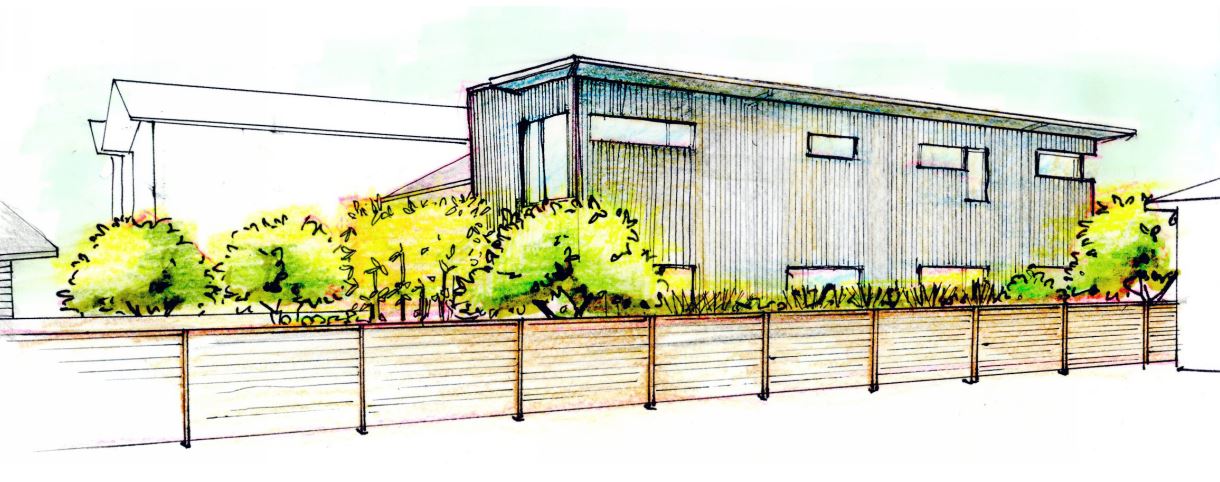
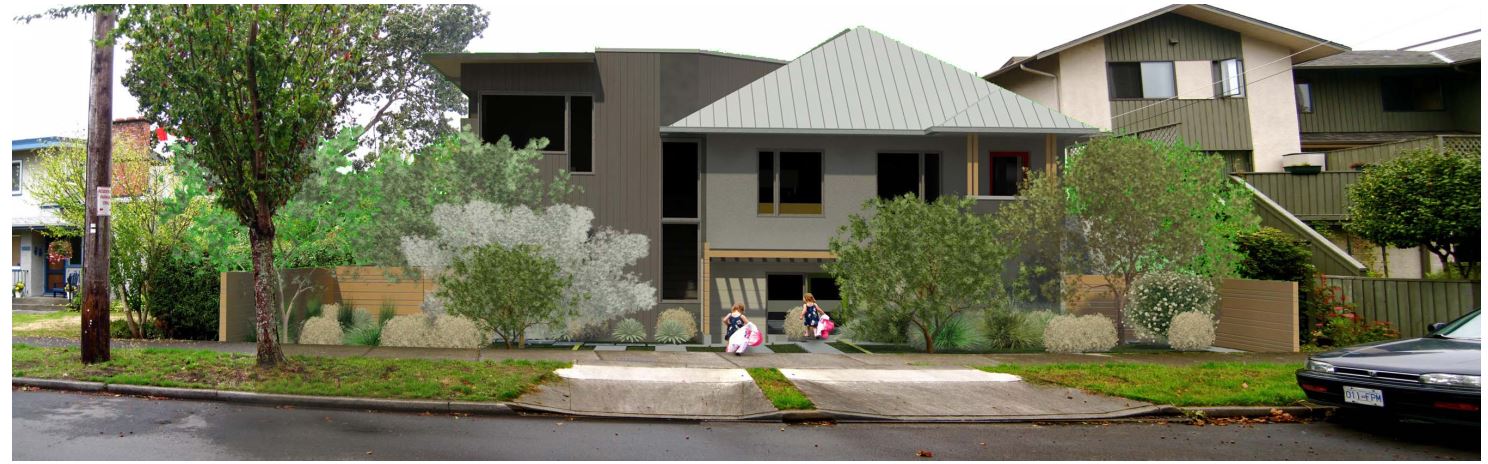
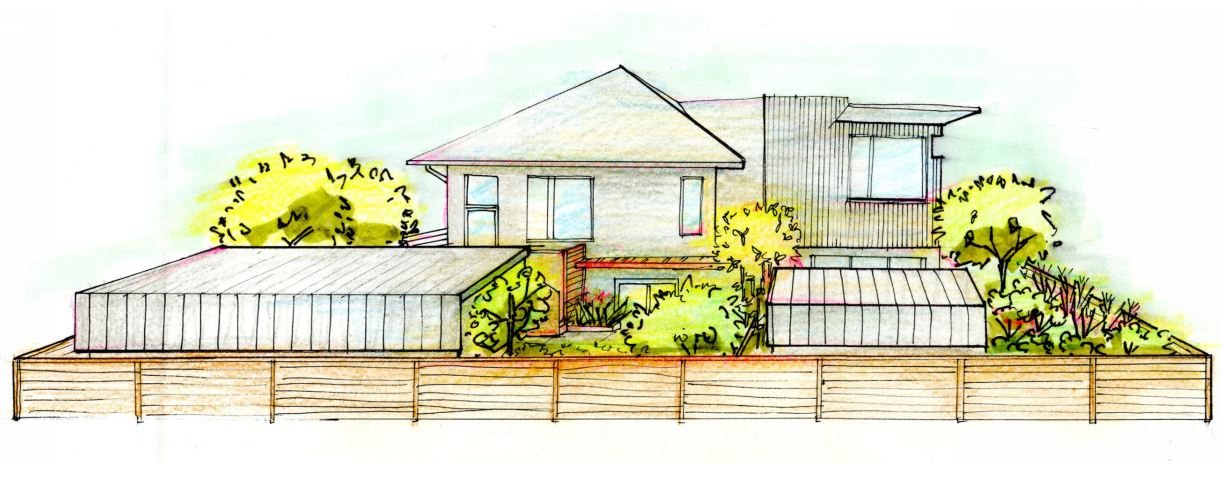
Here is the design that we presented at the community meeting last Thursday. We’re pretty excited by what Mark A and Kate have come up with.

The renovation of the existing house respects and maintains the original form and roof line, while the addition is intentionally contemporary, simple and contrasting. This design strategy highlights the relationship between old and new.

We are using traditional materials, including cedar siding and stucco, that are common throughout the neighbourhood. Deep window reveals introduced by the thicker Passive House walls add visual interest and depth to the facade. The landscaping ties everything together.
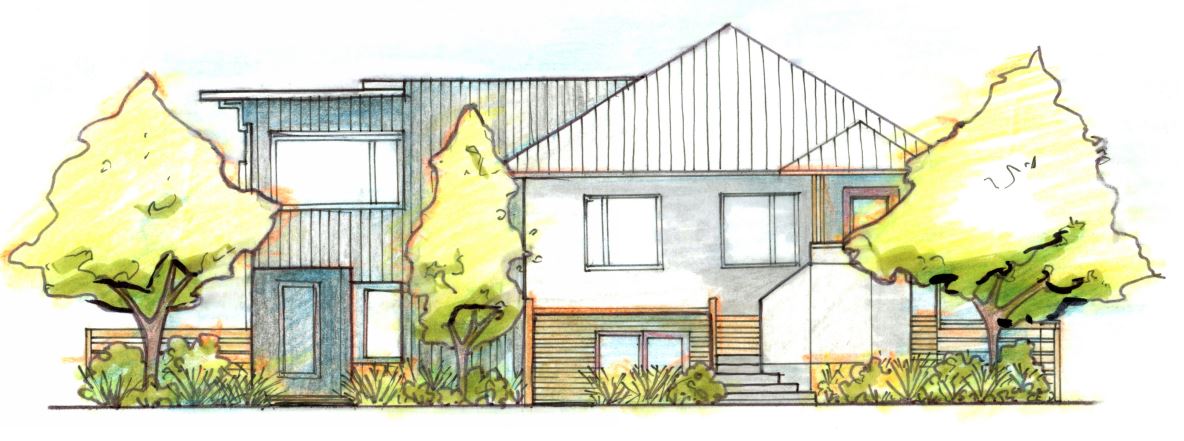
 

Front elevation, sketch by Kate Stefiuk

Front elevation, sketches by Kate Stefiuk
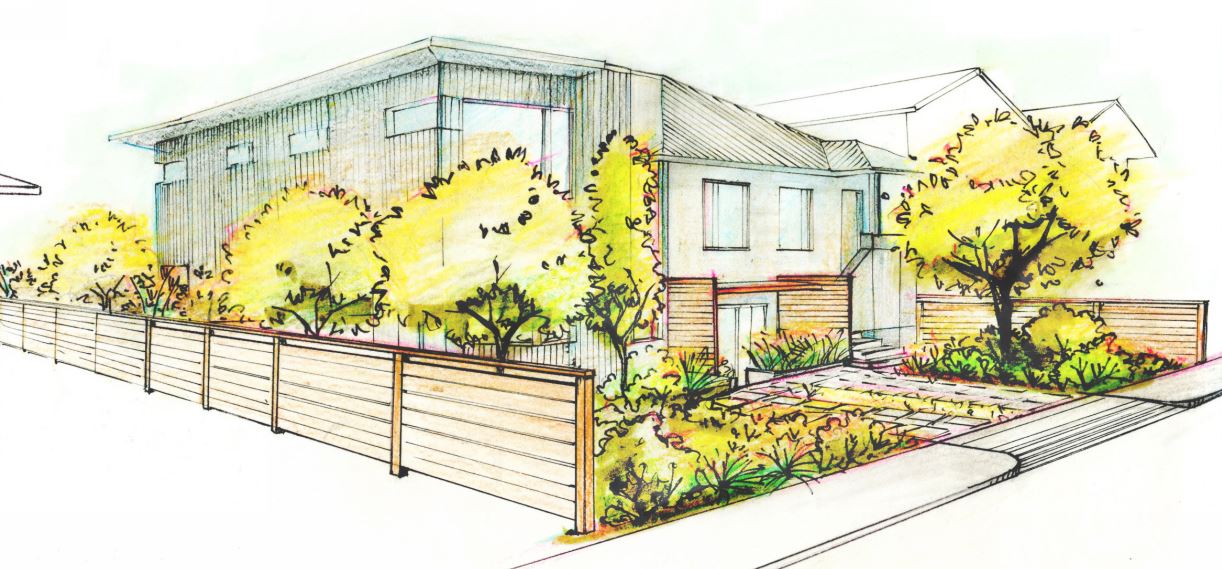
 

Front yard view, sketch Kate Stefiuk

Front yard, side view


Side yard from the south

Side yard from our south neighbour’s back yard
Back yard with sunken workshop
Back yard with sunken workshop


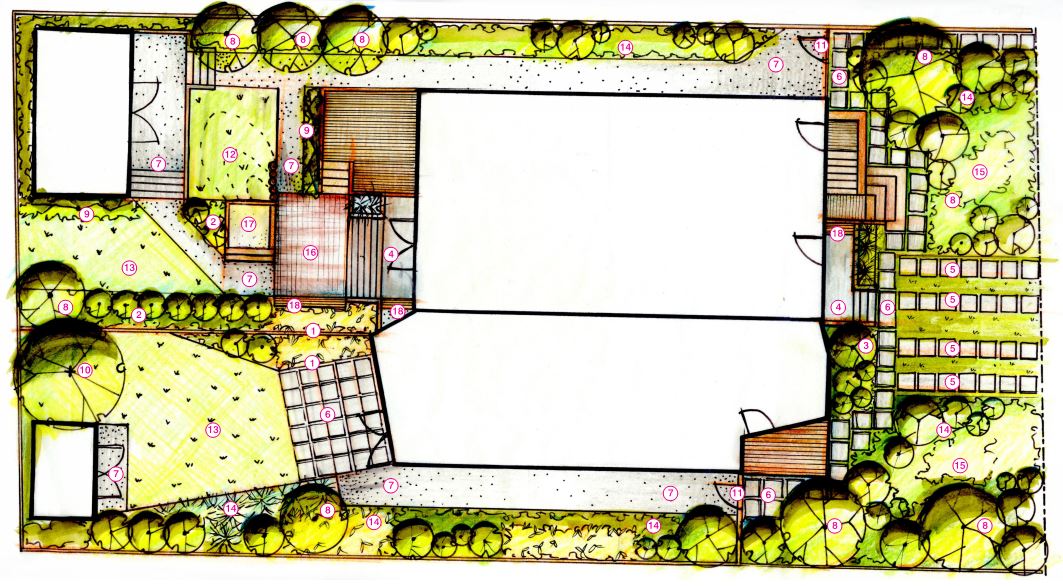
Landscape plan by Kate Stefiuk
Landscape plan by Kate Stefiuk


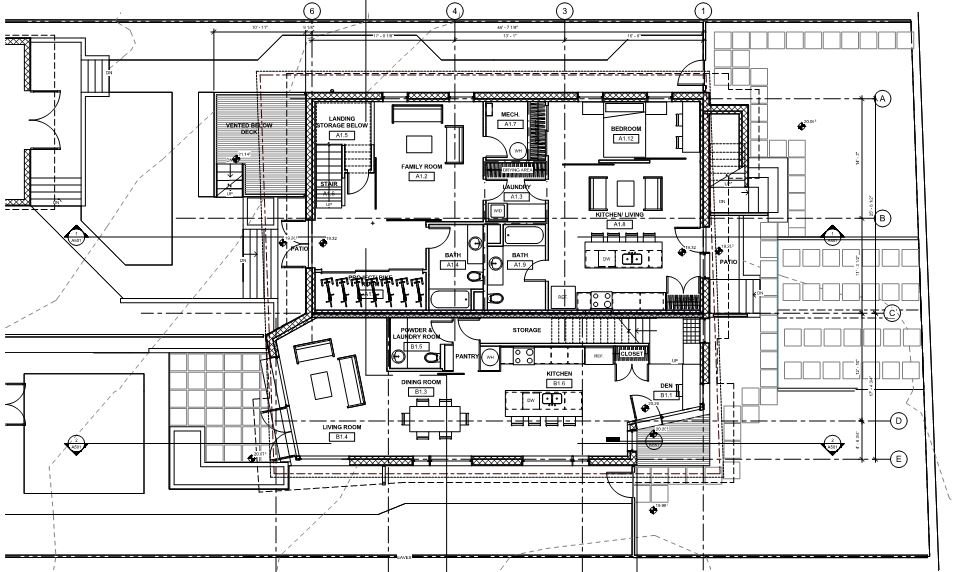
Lower floor plans, by Mark Ashby Architecture

Lower floor plan, by Mark Ashby Architecture
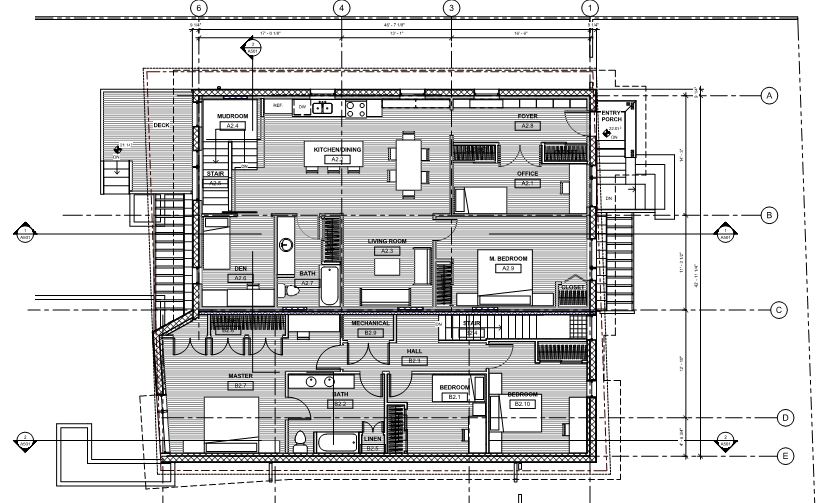
 

Upper floor plans

Upper floor plan


Streetscape, by Mark Ashby Architecture
Streetscape, by Mark Ashby Architecture


Filed Under: Design, Featured Tagged With: design, duplex, energy efficient design, low energy design, net zero, ultra low energy

How Much of an Energy Hog is Our Existing House?

March 18, 2016 by clove 4 Comments

Our goal is to create housing for 2.5 families that uses less energy than the existing single family house. So how much of an energy hog is our existing house?

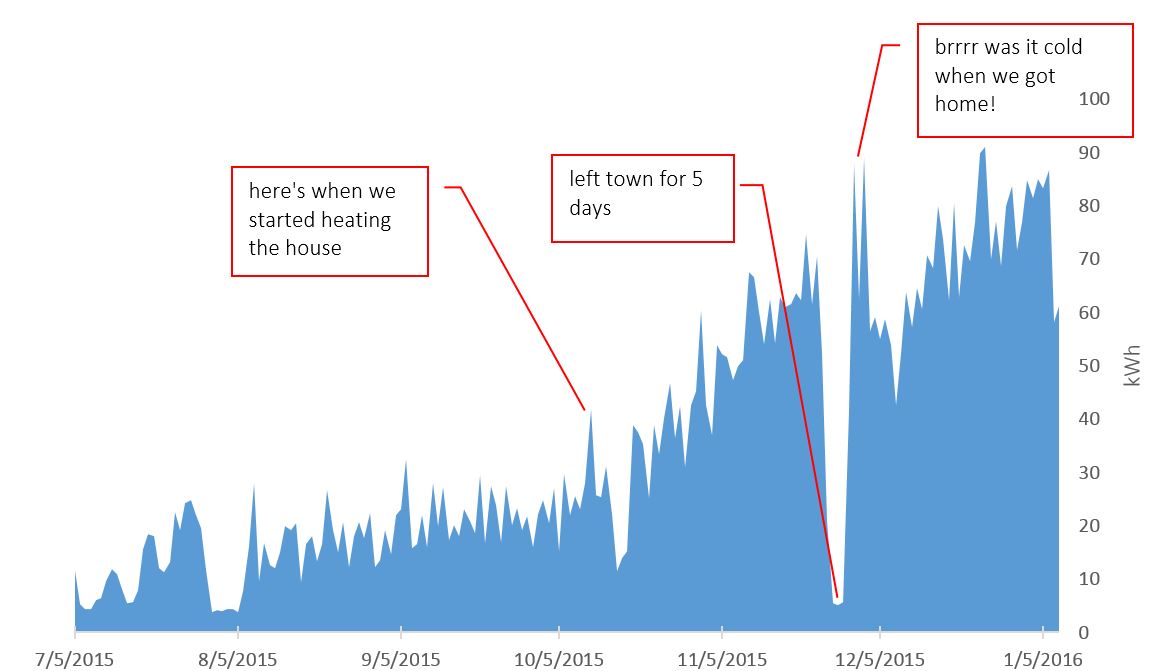
Here’s what our daily energy consumption looks like for the first 6 months we’ve lived here, starting in July 2015:

Existing house energy consumption-bigger

So…is this a lot?

Let’s do some very rough comparisons. I’ve doubled our first 6-month consumption to estimate annual consumption; converted to a per square meter metric and then compared against some other references:

  • Canadian average consumption for a household our size, kWh/square meter/year
  • Our existing house consumption, estimated, kWh/square meter/year
  • A typical German house, kWh/square meter/year
  • The first local certified Passive House (Bernhardt Passive House), kWh/square meter/year*

*We’re just talking ballparks here. It’s pretty difficult to find comparative numbers that all use the same assumptions – my intent is to show a reasonable range in potential consumption.

Energy comparison-biggest

Hey! We’re actually doing really well by our abysmal Canadian standards, and pretty average by German standards. Of course, we would expect our consumption to be lower than the Canadian average because we have the mildest winter in Canada, although it’s unlikely to result in this much of a difference on its own.

But wait – this is only part of the story.

The other part of the story is that, boy, were we cold over the winter!

Our house came with an oil furnace and an empty tank. We didn’t want to buy a full tank of oil to heat the house for a winter when we’re getting rid of this system with our renovation, nor did we particularly want to use the existing duct work. The previous owner was a smoker and lord knows what might come puffing out of those ducts. Better to let sleeping dogs lie.

Matt cobbled together storm windows for some of our original single pane wood windows, and we put plastic film on the inside of others. And we shivered through the (albeit mild) Victoria winter, with two wall-mounted electric baseboard heaters and 2 plug-in electric heaters. We moved the heaters around depending on what room we were in and closed doors of rooms we weren’t in.

In conclusion, then, our existing house isn’t an energy hog based on the way we’re currently running it, but it surely would be one if we heated to a modern-day standard of comfort.

This comparison shows very clearly the range of what is possible. I think we can hit our target compared to what a typical house in our climate consumes. And I for one am looking forward to experiencing the comfort promised by a well insulated, airtight, and properly ventilated house!


Filed Under: Featured, Performance Tagged With: energy consumption, energy efficient design, energy performance, net zero, passive house, ultra low energy

Passive House, Net Zero, or just a Pretty Good House?

August 16, 2015 by clove 2 Comments

Enerphit logoHere’s the lowdown on our current favourite approaches to achieve our project’s energy performance goals. We’re more interested in the principles than checking boxes or getting a plaque, and want to pick and choose what will work best for us. (And yes, there are other important goals like low water consumption, healthy and local materials, and creating something beautiful, but today we’re talking energy.)

  1. Passive House
  2. Net Zero House
  3. Pretty Good House

Passive House:

The Passive House standard has 3 key performance requirements:

  • Annual heating demand <= 15 kWh/M2/year. This is a 70-90% reduction over what most houses use for heating.
  • Total primary energy demand <= 120 kWh/M2/year (this is a measure of total energy consumption, including the energy required to generate and transport the energy from the source, using a single source energy factor for all of North America)
  • Air tightness, as Air Changes per Hour (ACH) <= 0.6 ACH50, as measured by a blower door test. This is about 4 times more airtight than a typical new house.

Here’s a snappy video that explains the fundamentals of the Passive House approach:

The basic concept of the Passive House standard is to focus first on the structure itself: highly insulated foundation, exterior walls, roof; airtight enclosure, and high performing windows – and then supplement with mechanical heating and/or cooling systems. So we reduce demand as much as possible first before looking at efficient ways to provide the remaining energy we need. Mechanical ventilation is also required to maintain air quality.

The requirements are performance based (focused on the end result rather than prescribing certain systems or building elements), but they do lead us to certain choices that we must make in order to meet the requirements, such as triple pane windows, very high performing heat recovery ventilators (HRVs), and thermal bridge-free construction. Equipment and windows must also be tested specifically to Passive House specifications, which can limit the available choices of certain products like HRVs.

Passive House does not require site-generated renewable energy, although it does provide a credit toward primary energy demand for on-site solar PV.

Passive House performance is modeled using PHPP, which is a giant spreadsheet that does a lot of backend calculating based on heat loss, heat gains, and local monthly average climate data.

For smaller buildings like ours, we will have difficulty meeting the standard without good unobstructed southern orientation (although there are a couple of new certification options that offer some hope – post to come). The south side yard is especially challenging because butting up against our desire to maximize south-facing windows are perfectly reasonable zoning requirements intended to protect the privacy of our neighbhours. Depending on the distance of the house to the property line, we are limited in the amount of glazing and the rooms in which we can have glazing facing the side yard.

What we do have going for us is a simple shape: both houses will basically be rectangles, which makes the detailing for no thermal bridging and a continuous air barrier much simpler (the less corners the better).

Regardless of whether we meet or seek official Passive House certification, I think the passive approach is common sense for any building anywhere, and this will form the foundation of our design approach.

Net Zero

Net zero energy means that, on an annual average basis, our project produces as much energy as we consume. Net zero carbon emissions means that we either purchase carbon offsets, or we avoid the use of fossil fuel based energy.

Can we produce on-site as much energy as we consume in a year? This will depend on three key things: the design of our enclosure to minimize energy loads, our behaviour as energy consumers, and the amount of solar PV capacity we can fit on the roof. In our case, BC Hydro allows net metering, so we can feed excess generated energy back into the grid, and draw it from the grid when we are in deficit.

Passive House does not require the use of on-site renewable energy, but it makes net zero energy consumption viable because it significantly reduces demand.

We’ll have to do some modeling to look at the solar potential of our roof in our specific location, as well as take a stab at estimating our energy demand to get a better sense of where we’re at.

I think this is a goal worth shooting for. We will design for an all-electric project with solar PV, since BC produces much of its electricity using “carbon-neutral” hydro electricity.

The Pretty Good House

The Pretty Good House is not so much a standard as a practical discussion happening on Green Building Advisor. It’s about making realistic choices based on the best bang for your buck in your climate, and still, by the way, ending up with something way better than code minimum. So not going quite as far as Passive House, but, say, 80% of the way there.

We’ve also seen a big variation in the actual energy consumption of certified Passive Houses, which reminds us of the critical importance of occupant behaviour. How does the impact of behaviour compare with the impact of a well designed home?

I like the Pretty Good House approach – and I would argue that it can lead us to a Really Good House – but it does require a sound understanding of the fundamentals. This is why programs like Passive House are great, because they work as learning tools.

So in summary, we will be applying passive house principles, striving for net zero energy consumption, and hopefully ending up with a couple of Really Good Houses. I am fortunate to work with a bunch of building science geniuses at RDH, who will help us get the details right.

Our project gives us a unique opportunity to compare an existing house retrofit to a new build on the same site, which is very exciting. There is also a new, slightly relaxed Passive House standard that was just released, designed for small houses on constrained lots like ours, so that might prove a viable option for us.

We will document our before and after energy consumption and share the results here. Stay tuned!

Filed Under: Featured, Performance Tagged With: energy consumption, net zero, passive house, performance, ultra low energy

Who is Stretch Developer?

Stretch Developer is written by Christy Love. In partnership with my husband Matt, we are challenging ourselves to create the kind of homes we want to live in and see more of in our community. Home is the incredible Victoria, BC, Canada.

Sign up!

Sign up to receive email notifications of new posts.

Recent Posts

  • New Uses for Old Wood Part 2 September 26, 2021
  • Ongoing Preparations for the Apocalypse August 13, 2021
  • Things We’ve Noticed – Energy Edition May 29, 2021
  • Passive House Suite for Rent April 17, 2021
  • Things We’ve Noticed – Comfort Edition March 14, 2021

Blogs We Like

Green Building Advisor Blogs

Musings of an Energy Nerd

Treehugger

Talk to ARYZE

Recent Posts

  • New Uses for Old Wood Part 2
  • Ongoing Preparations for the Apocalypse
  • Things We’ve Noticed – Energy Edition
  • Passive House Suite for Rent
  • Things We’ve Noticed – Comfort Edition
  • New Uses for Old Wood Part 1

Tags

budget building permit cabinet construction climate action climate change community engagement construction deep energy retrofit design design progress development permit duplex duplex + suite energy consumption energy efficient design financing financing passive house finding land food security home inspections infill low energy design neighbourhood engagement net zero passive house Passive House comfort Passive House construction Passive House construction costs passive house for sale Passive House performance Passive House performance; Sanden CO2 heat pump Passive House rental Passive House systems passive house testing performance pro forma property search tips reclaimed wood reclaimed wood construction rezoning roof row house small lot development small lot subdivision ultra low energy

Copyright © 2026 · Metro Pro Theme on Genesis Framework · WordPress · Log in


Loading Comments...