Stretch Developer

Taking urban development into our own hands

  • Home
  • About
  • The Project
    • Finding a Property
    • Design
    • Approvals
    • Financing
    • Construction
    • Performance
  • Blog
  • Contact
  • Rental Suite

New Uses for Old Wood Part 2

September 26, 2021 by clove Leave a Comment

We continue to pick away at the beautiful fir reclaimed from our old house. And by we, I mean that I periodically check in on the “things to finish” list and Matt does the actual picking away. What can I say, we manage to our strengths. There would be about as much sense in me constructing things out of wood as there would be in Matt doing our taxes.

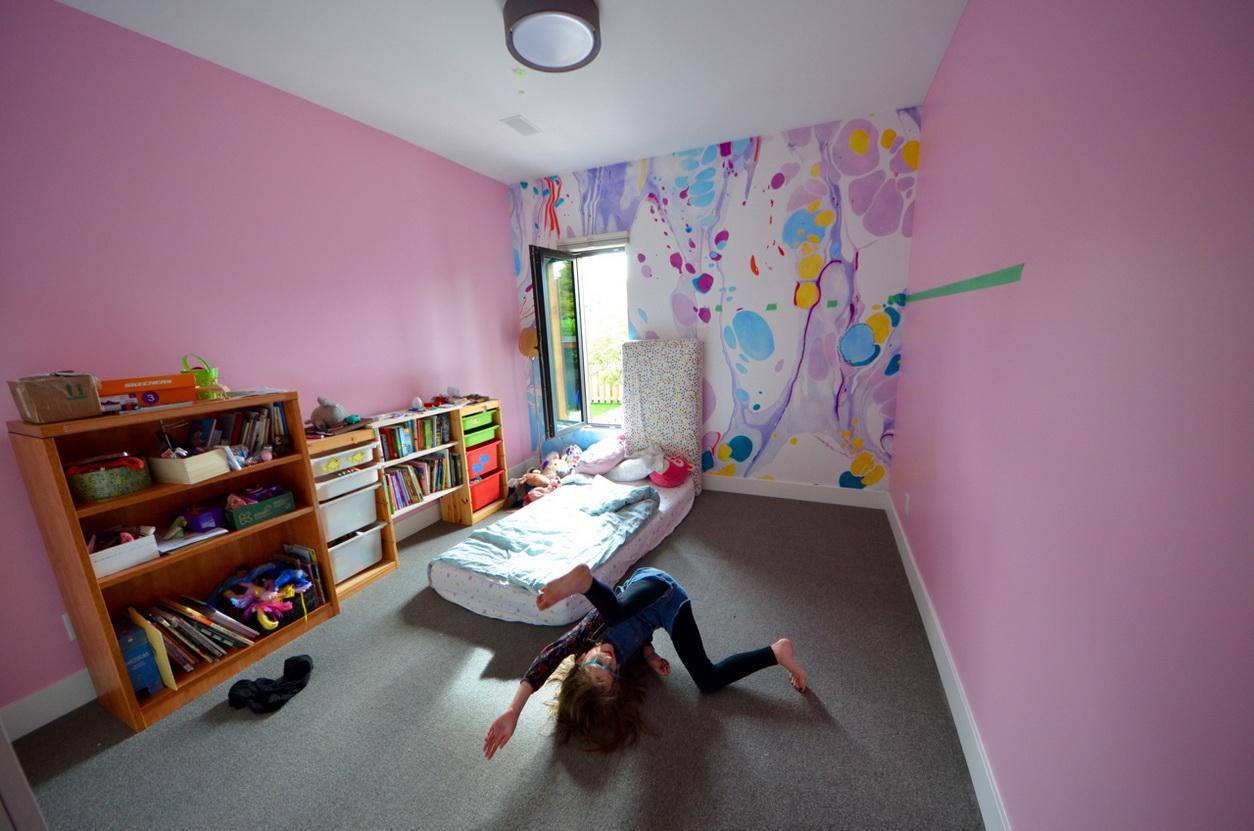
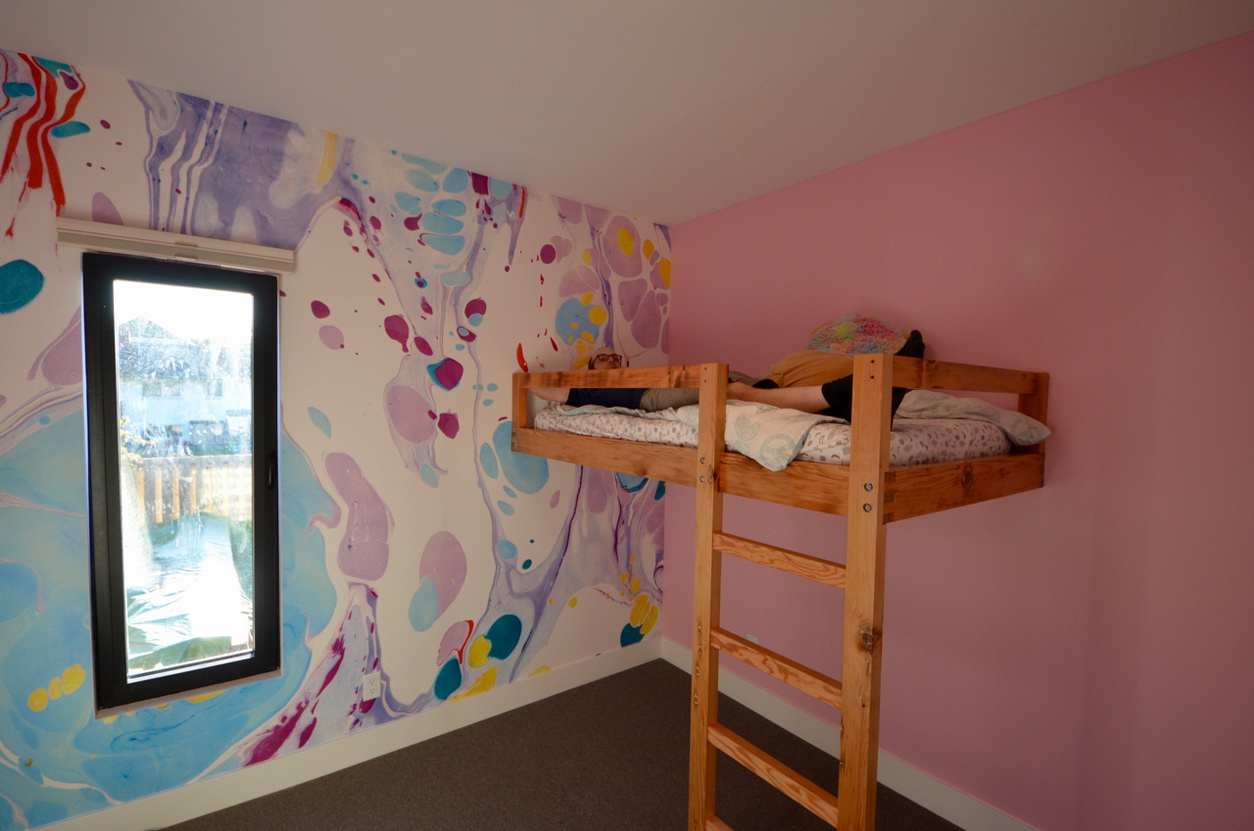
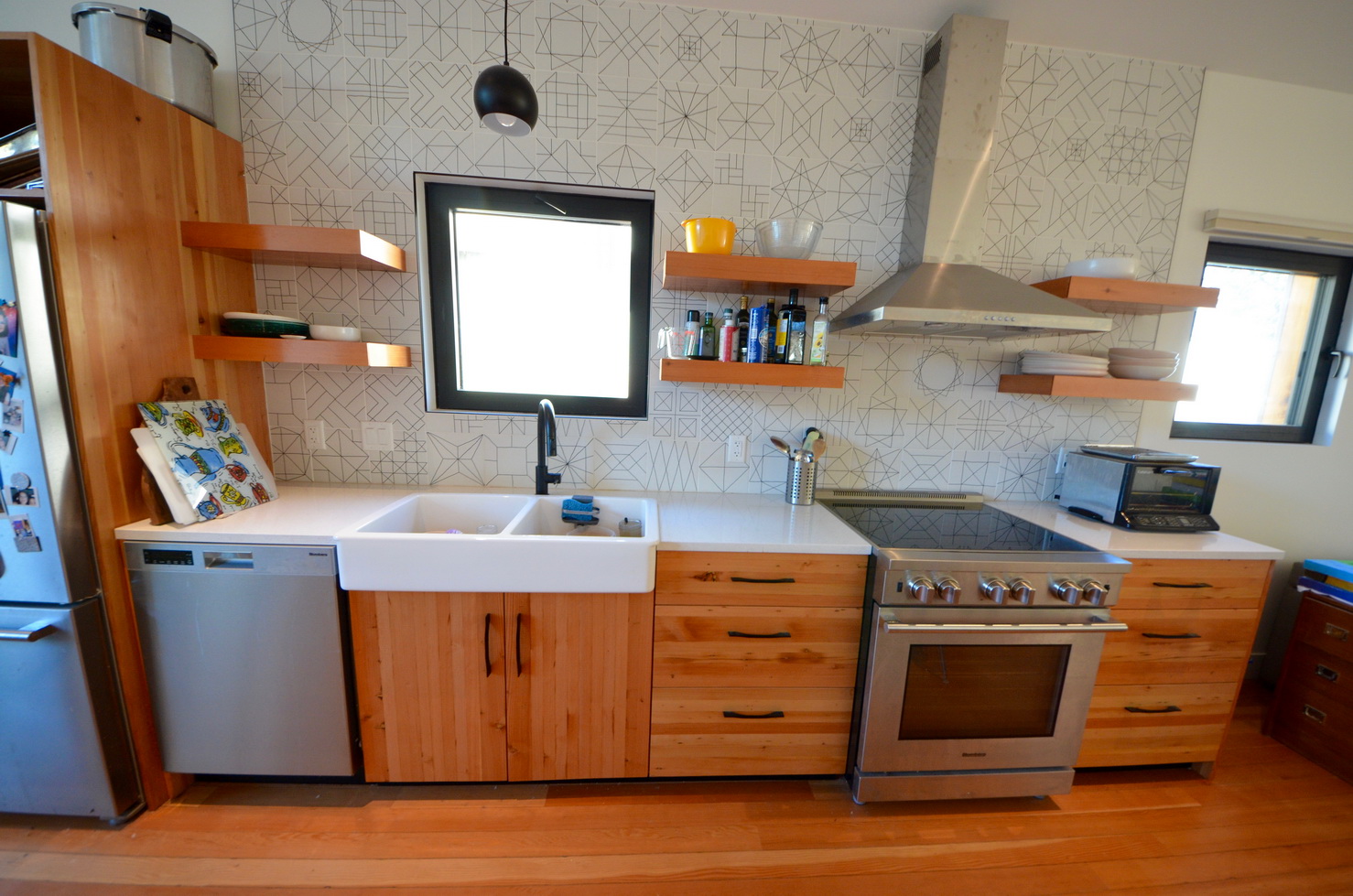
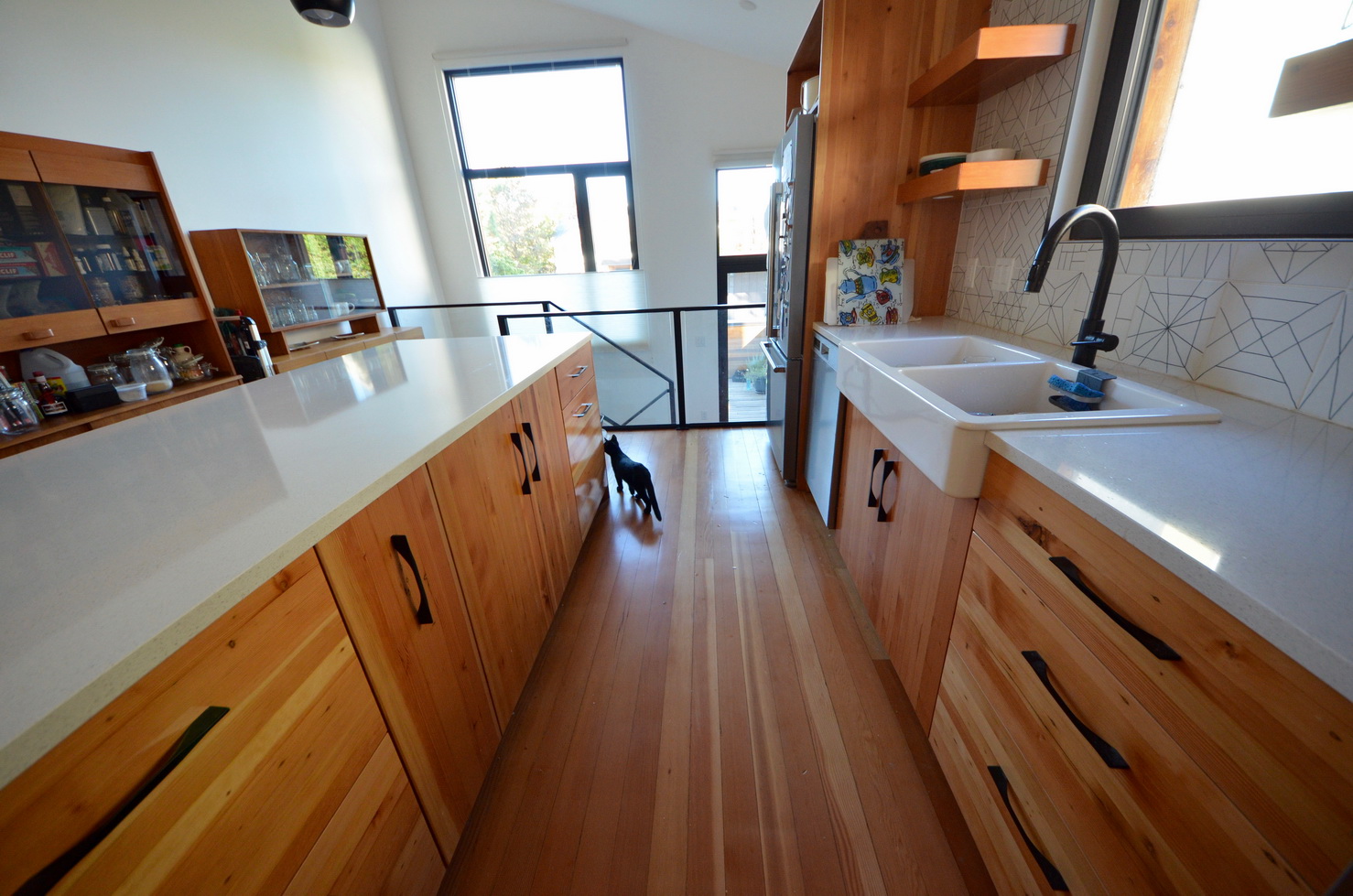
This installment has Matt making a gravity defying bunk bed for our daughter and finishing up the kitchen cabinets. I’d gotten used to pulling kitchen drawers open by the plywood box. Entirely functional, right? Then they got fronts and handles and it was a small revelation: hey that looks good and these handle thingees work pretty well!
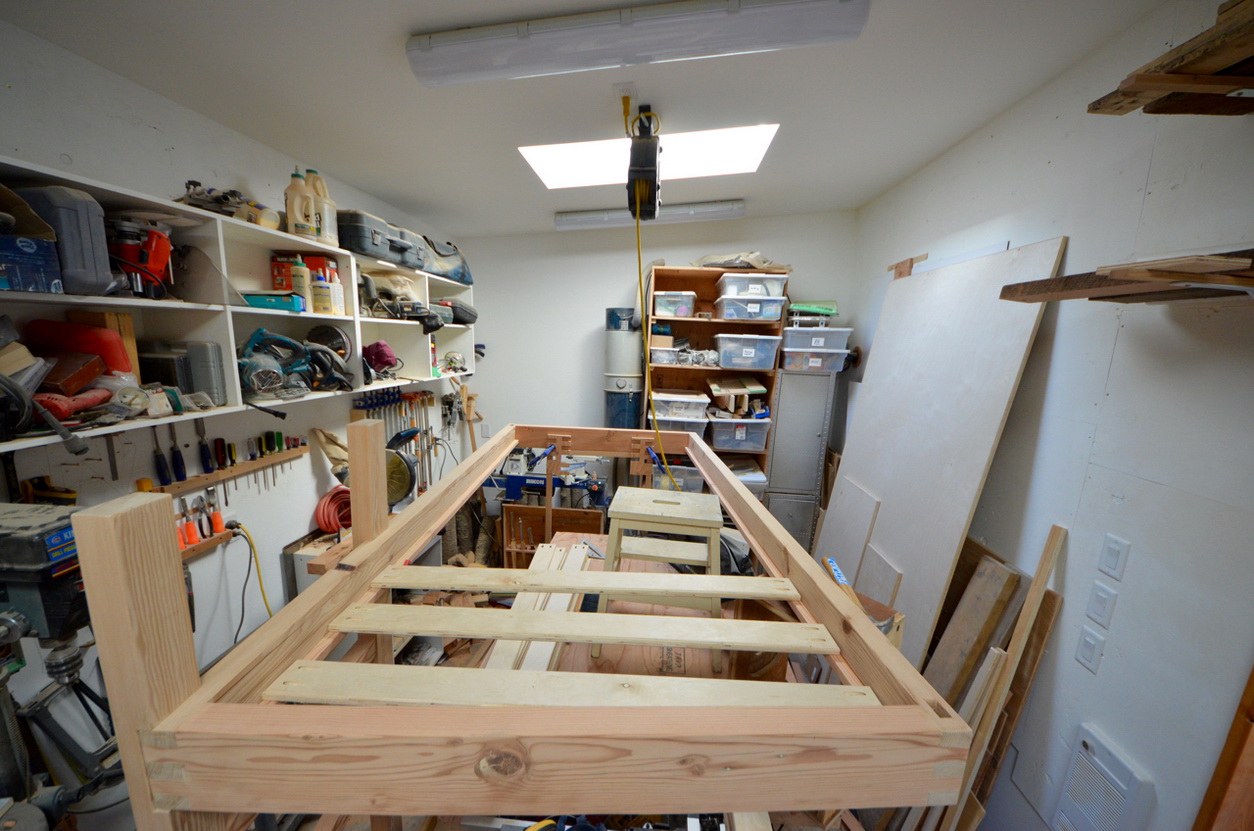
bunk bed taking shape
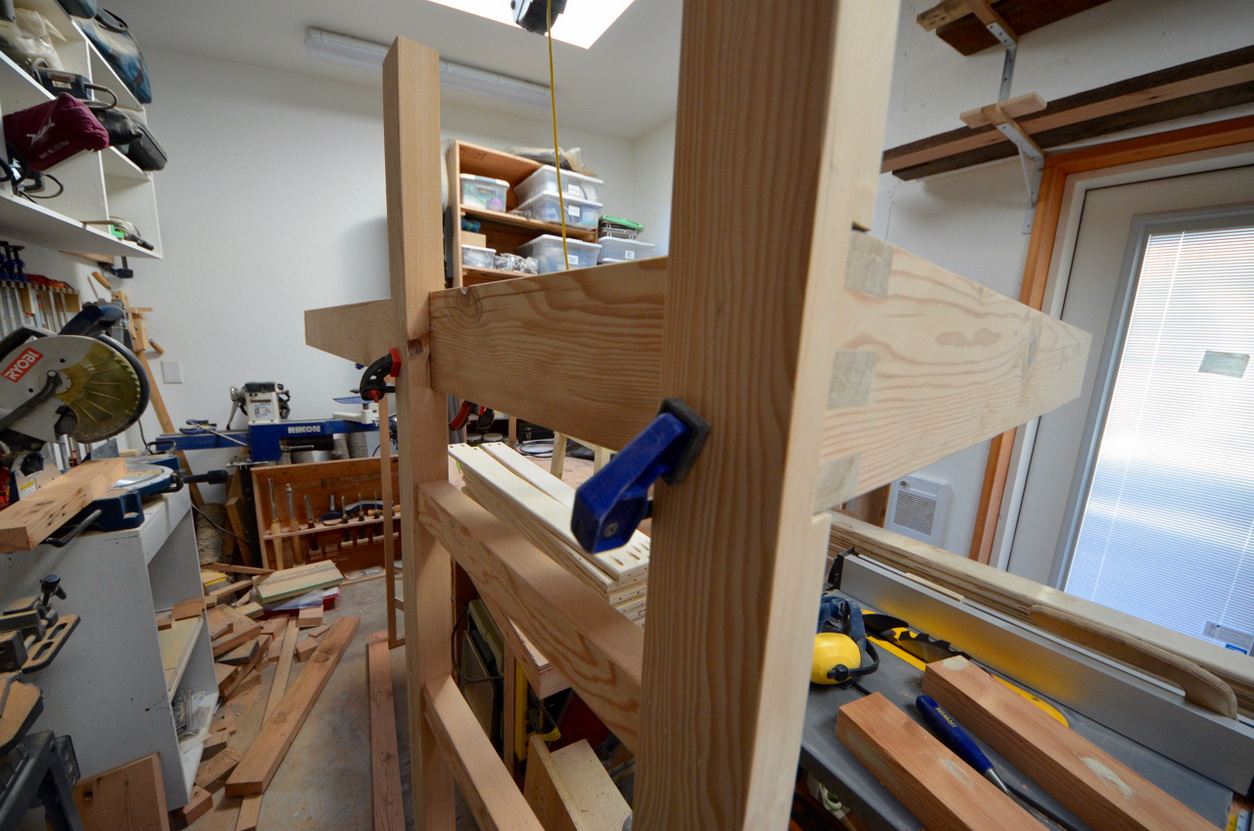
joint detail
of course, before installing the bunk bed, the walls had to be decorated
and the bed takes flight! admittedly I still occasionally imagine catastrophic structural collapse, but at least we’d be falling on a mattress right?
kitchen cabinets!

If you missed the first installment of New Uses for Old Wood, you can find it here.
Filed Under: Construction, Design, Featured Tagged With: reclaimed wood construction

Ongoing Preparations for the Apocalypse

August 13, 2021 by clove Leave a Comment

Tis the season when we are reminded that climate change is real. The Gonzales weather station near our house recorded 39.8 C on June 28, more than 9 C hotter than the previous daily record, and an all-time high for any day. As of this writing there are 246 active wildfires burning in BC.

And yet our provincial government still fails to make a meaningful connection between these impacts and the ongoing logging of our miniscule swaths of remaining old growth forest. Or more likely (and cynically) they get the connection but lack the political will. Some of the municipalities in our region still think there is nothing problematic about cutting deeper and deeper into the wildland urban interface under the belief that owning a detached single family home with a large yard is either a human right or the key to happiness.

So what am I doing about this, other than feeling the mix of sorrow and rage that has become endemic to our current times? Being the optimist that I am, I take solace in the things I can control. Increasing urban green space and growing ultra-local food are two things that keep me believing that each of us can change things for the better (and prepare for what’s to come). I’m also a sucker for fresh berries.

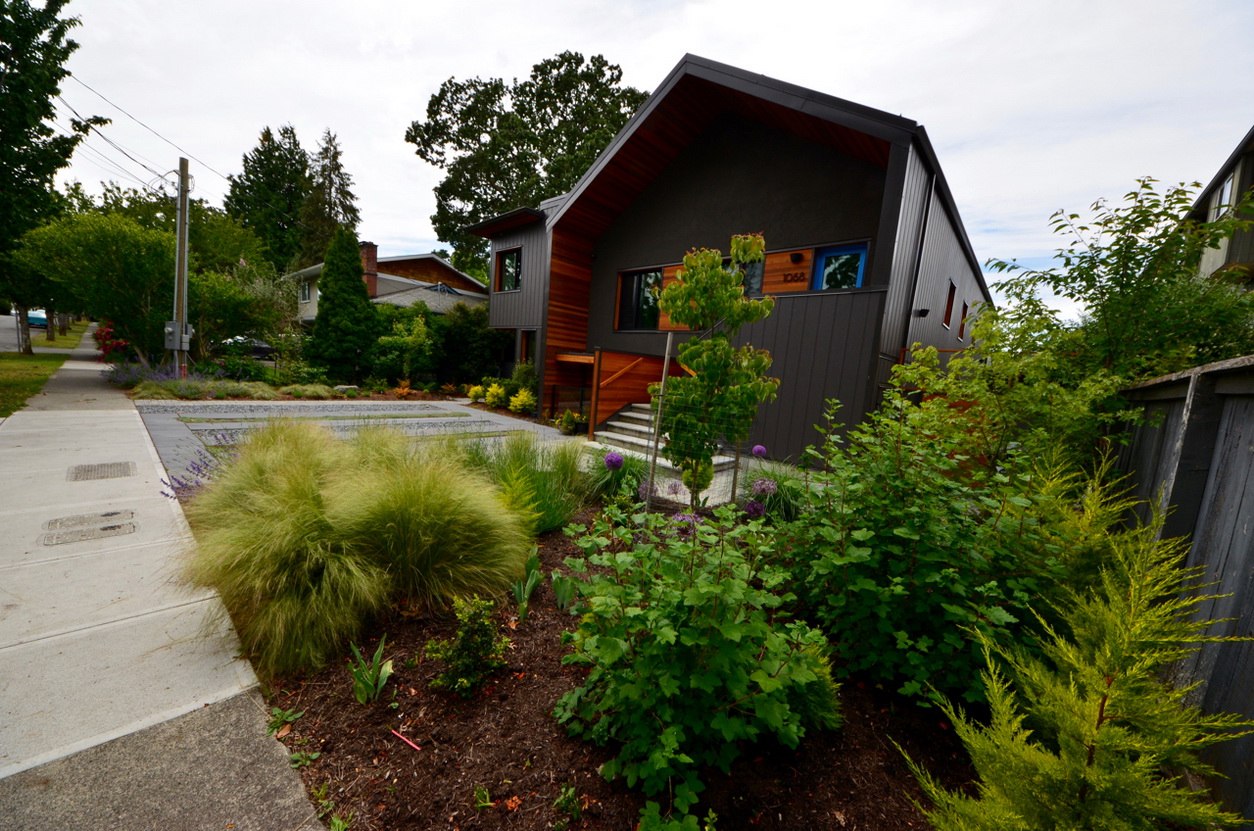
I’m delighted that the lavender and catmint we planted in the front yard last spring are now attracting a small army of pollinators, and I stop to listen to the buzz of bees when I walk past. There’s really no downside to growing green stuff, other than an aching back from all the weeding. If the green stuff creates shade and is also food for bugs, animals and humans, all the better.

the front yard filling in

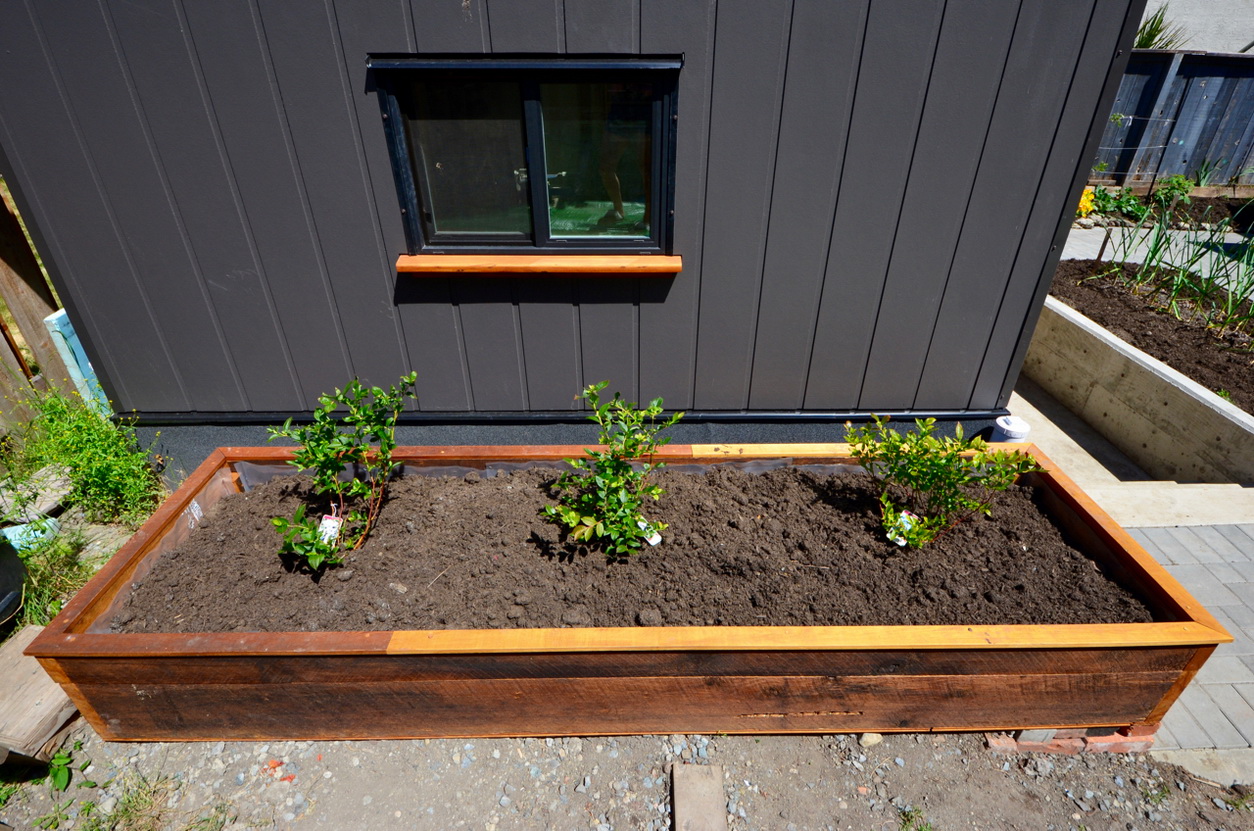
Our backyard greenspace potential may appear modest at first glance. But even with our large woodpile still occupying the space of future veggie beds, I’ve found space for 5 dwarf fruit trees; a 12′ long raspberry patch; a raised bed for blueberries (three kinds!); a strawberry patch, some peas, plus the garlic I’d planted late last November.

I’ve been observing the changing path of the sun as the season has progressed and am pleasantly surprised by the growing potential on the north side of the house. Even the area shadowed by the house gets direct morning and evening sun in summer.

I also planted nasturtiums and blue borage (both flowers edible) as companions to the apple and strawberries, and recently discovered the nasturtium seeds are also edible. Who knew? Most people recommend pickling them as a caper alternative. I ignored this advice and roasted mine. Not recommended if you’re wondering.

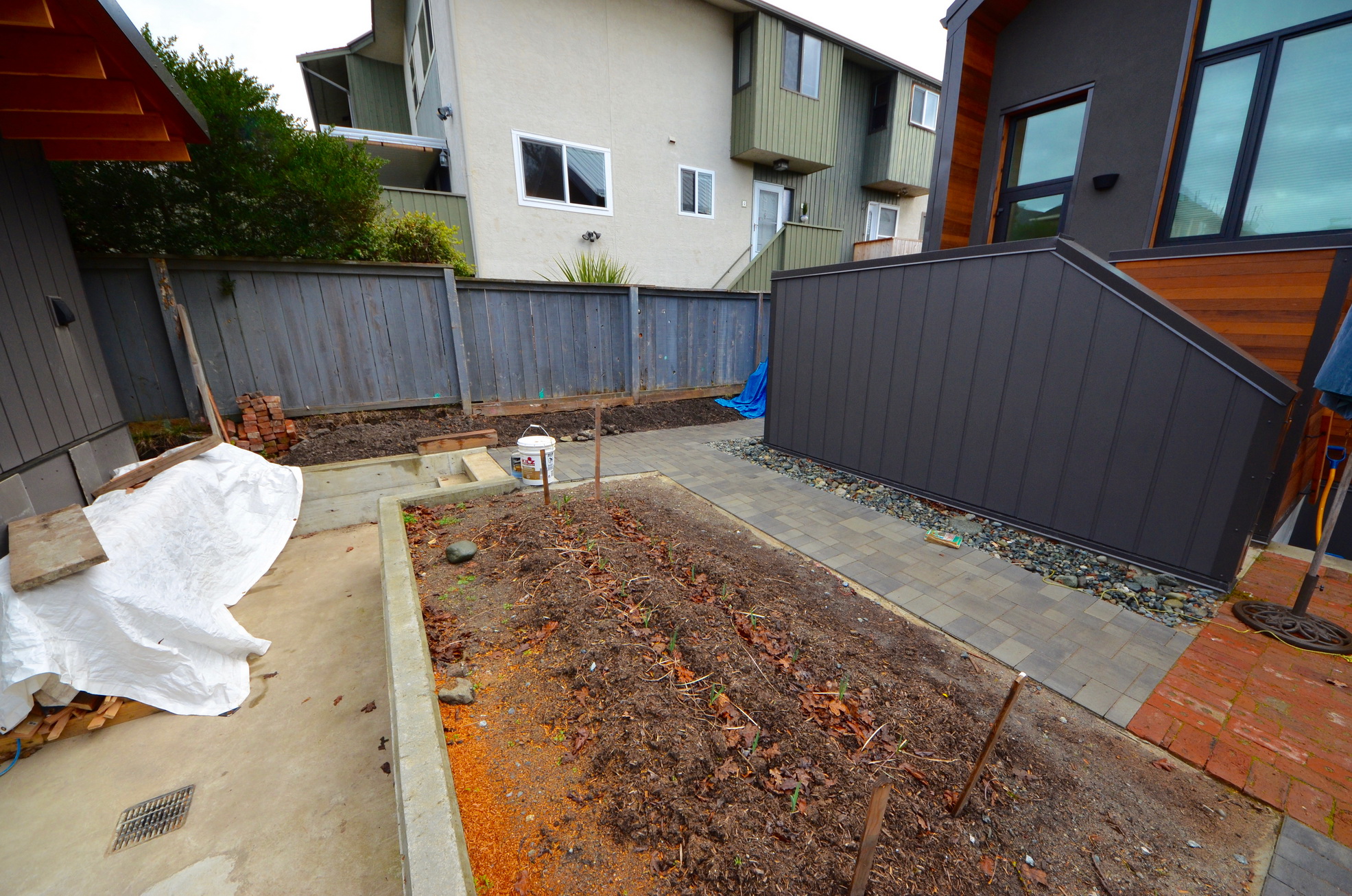
Back yard in late winter, the shoots of the garlics just visible and the only green thing in the back yard at that time
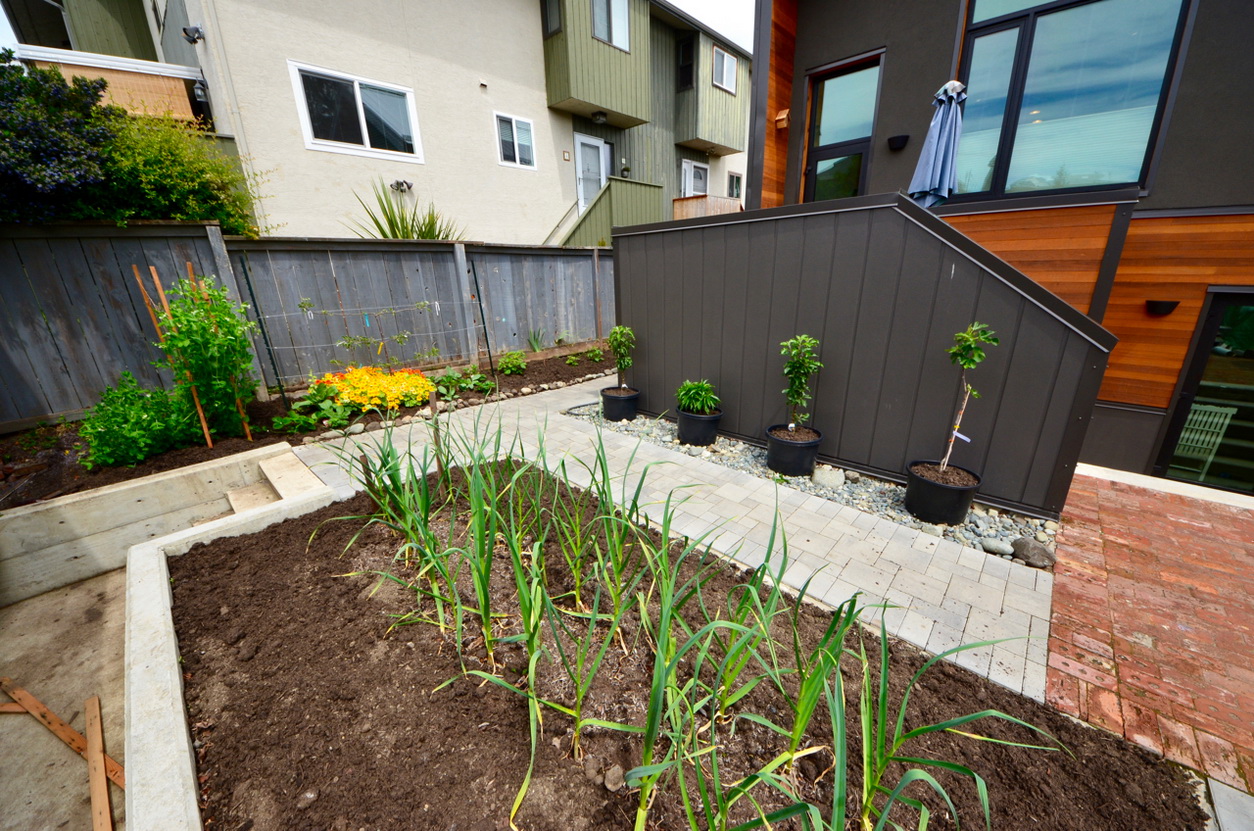
And in late June, we have 4 dwarf fruit trees in front of the deck wall (a fig, a scarlet and a golden sentinel apple and a nectarine); an espalier with three kinds of apples along the north fence; nasturtiums and strawberries below, and peas to their left
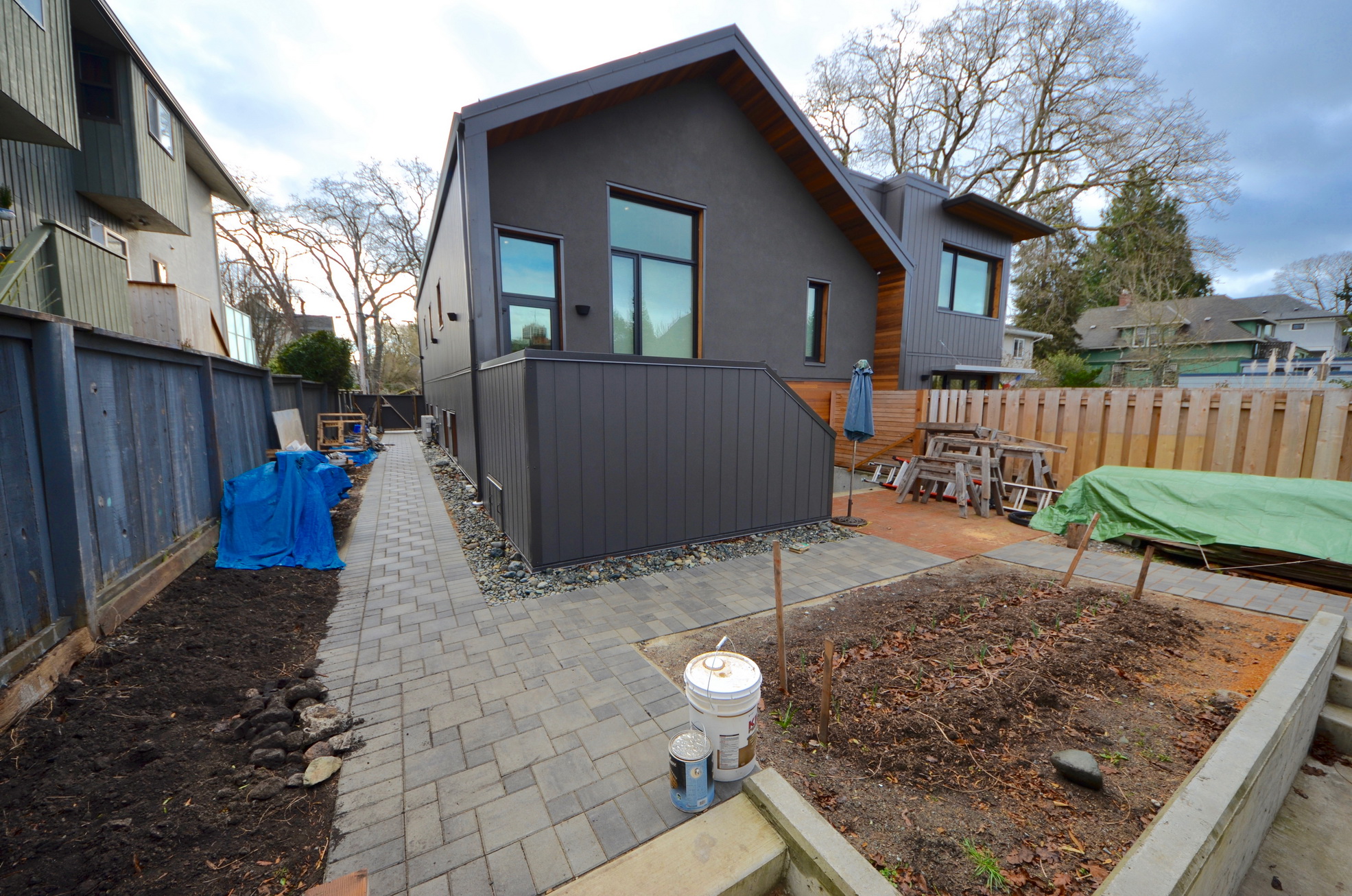
before planting
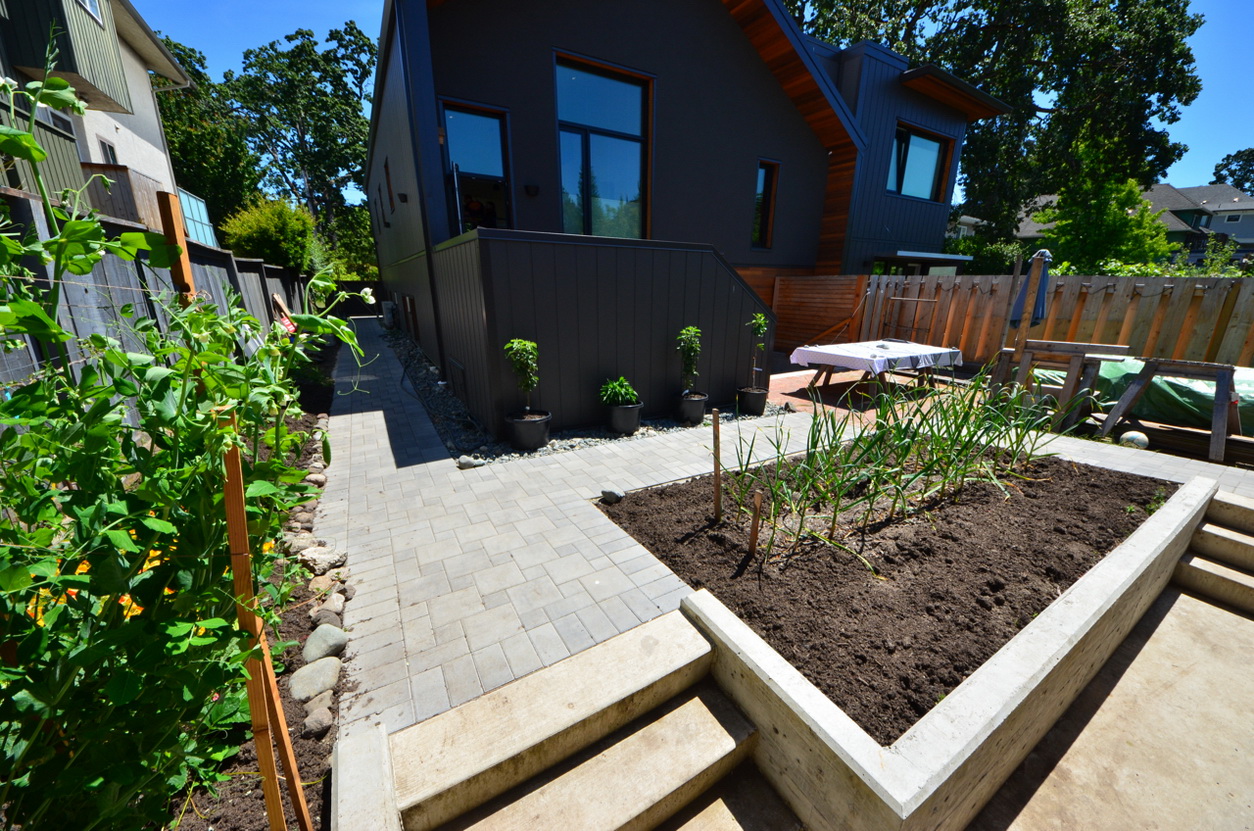
after planting (June)
the blueberry patch beside Matt’s workshop
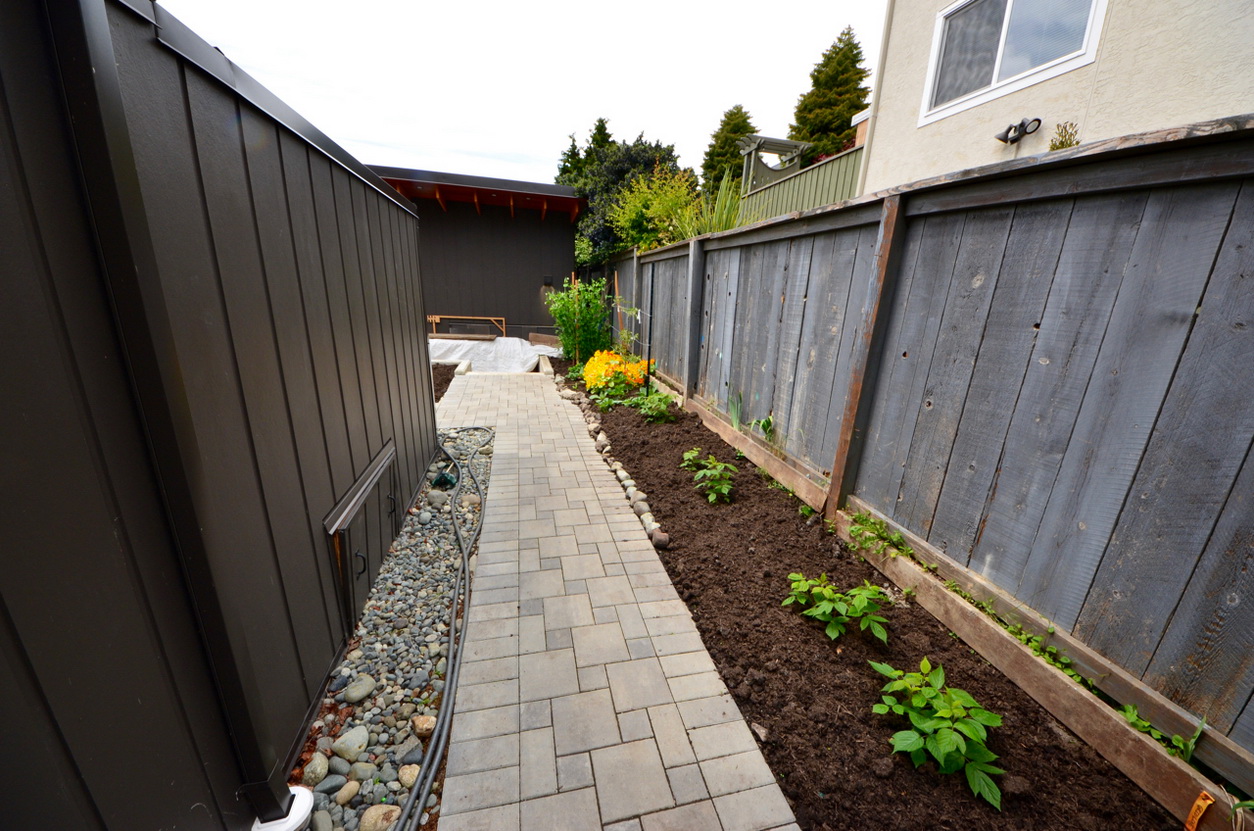
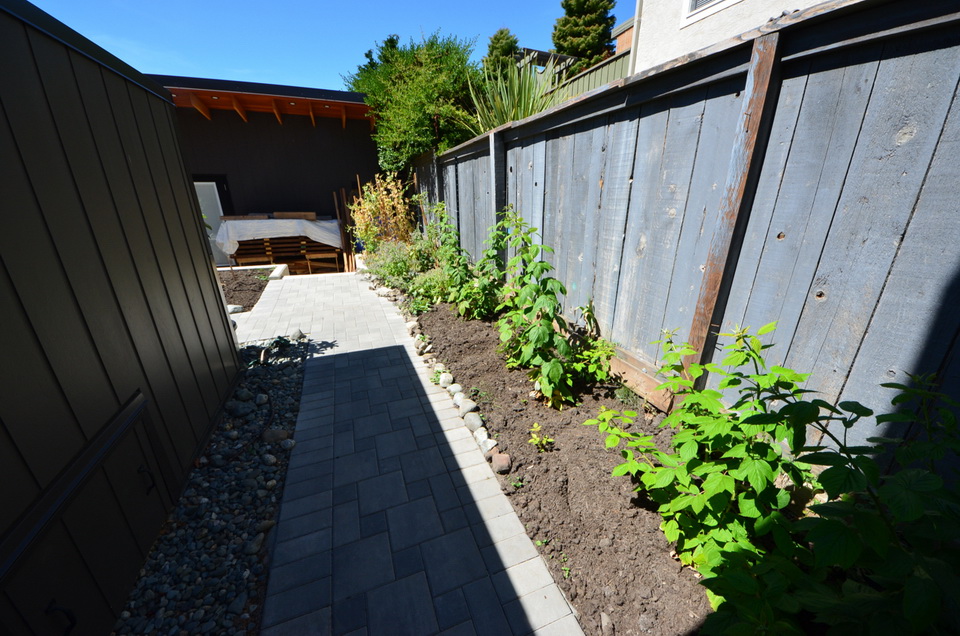
the raspberry patch in June
the raspberry patch in August

Filed Under: Construction, Featured Tagged With: climate change, food security

Things We’ve Noticed – Energy Edition

May 29, 2021 by clove Leave a Comment

Over the past couple of months, I’ve been tying up loose ends on our project. In addition to upping my accounting skills by sorting out the GST and capital gains tax owing for the sale of the other half, I (finally) finished up our Passive House certification documentation, which was tedious if not difficult. As I await what will most surely be a request for more documentation from the certifier, I thought I’d have a look at how our actual energy consumption compares to both the modeled consumption and our project goals.

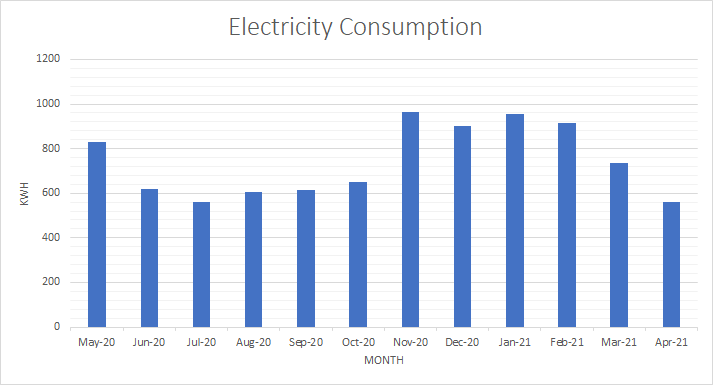
Here’s our latest 12 months of BC Hydro electricity bills (May 2020 to April 2021, for our “half” of the duplex, which includes our place and the small rental suite):

As a crude estimate of heating energy, we can take the lowest monthly consumption (in this case, last July or this April, at about 560 kWh) and assume that is the base – or non-heating – consumption for each month, and everything above that is for heating.

Here’s how this compares to the per unit area consumption in the model:

MeasuredModeled in PHPP
Annual total site energy, kWh/m24731.9
Annual total heating energy, kWh/m212.814.5

So we’re at 12% below the predicted heating energy consumption, but 47% higher than the predicted total site energy. I have a few thoughts on this:

  • The Passive House model notoriously underestimates base load consumption, partly because the system was developed by Germans who use less energy than North Americans. Not that aspiring to be more like our German friends by taking two minute showers and turning off the water while shampooing isn’t worthwhile, but even 47 kWh/m2 per year is very low when you consider that the North American average is more like 220. Even the German average is over 100.
  • May 2020 looks anomalous. My notes tell me that last spring we had the upstairs in-floor heating in the bathroom set a bit too high (it is an electric resistance mat under the tiles).
  • We also had a tenant in the suite through August who controlled his own electric resistance wall heater and tended to prefer relatively warm temperatures. I also note that we have not had a tenant in the suite since September, so these two considerations might cancel each other out, but we’re likely to see some continued variation as we rent out the suite.
  • The model does not include electricity consumed in Matt’s workshop – another reason why some sub-metering would be useful.
  • Working From Home and a bit of Schooling From Home. That would be me, for most of the last year, Matt for half the year, and our daughter for a few months. More lights on throughout the day, plus one or two computers and various power tools in use likely bumped up our total.

Even given these variations from the model, I think these results are amazing. They show that our enclosure first approach has achieved its intent, i.e. to dramatically decrease the heating demand of our home. I also feel very confident about our choices to invest in a very high performing heat recovery ventilator and to spend a bit more for a very efficient CO2 heat pump hot water heater.

Now let’s have a look back to our original project goals as they relate to energy:

  • To follow passive design principles with the potential for net zero energy consumption and zero operating carbon emissions
  • To build three units of housing that consume less energy than the original single family house

Given that BC’s electricity grid is mostly clean, we are allowed to claim zero operating carbon by virtue of being all-electric. In truth, there are still carbon emissions associated with electricity generation in the province – most significantly when we import from carbon intensive sources – but it’s still dramatically lower than using natural gas or other combustion fuels on-site.

Regarding the original house’s energy consumption, recall that our pre-project consumption was ~123 kWh/m2, which is 2.6 times higher than where we’re at now on a per unit area basis. And that was in a home that was unacceptably heated to anything close to today’s comfort standards. Our new neighbours have only been in the other half of the duplex since October and we’ll have to wait until they’ve been in for at least a year to get a total for the whole site. Beyond this, we will be looking to add solar PV and see how close we can get to net zero energy consumption.

Was there a sense of sacrifice to achieve this level of energy consumption? That’s the beauty of building like this. We have way less energy consumption and better comfort and air quality. Yes, I do enjoy finding ways to reduce waste of all kinds. Yes, I did decide that having very warm feet when walking into the upstairs bathroom was not worth the electricity cost and dialed that thermostat back. But, to the horror of my German friends and the water starved nations of the world, I still take long hot showers. What can I say? It’s where I do my best thinking and it’s a tough habit to break. All in all, we feel pretty spoiled.

Filed Under: Featured, Performance Tagged With: Passive House performance

Passive House Suite for Rent

April 17, 2021 by clove Leave a Comment

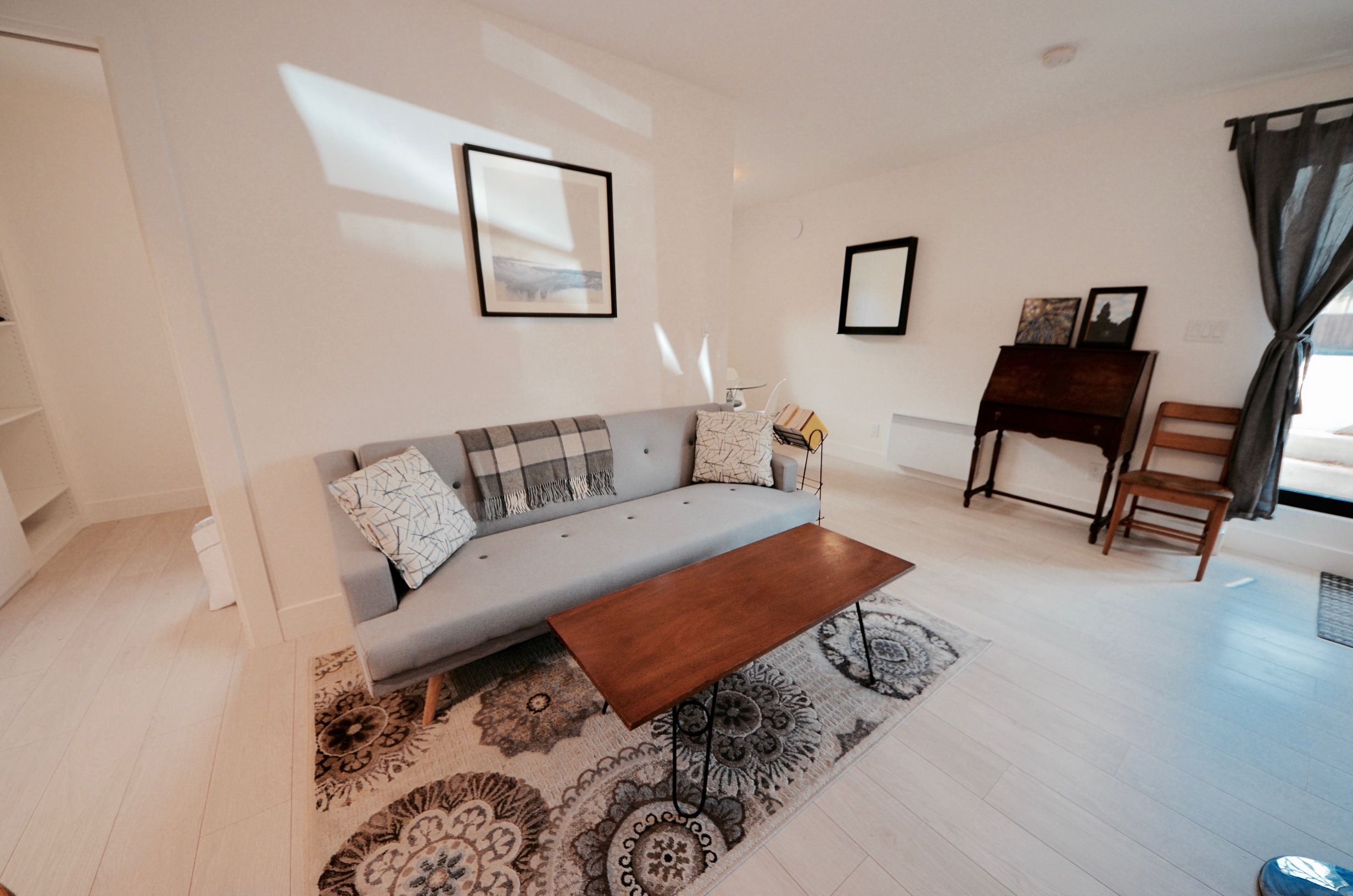
We added a suite as part of our half of the duplex with the idea of supporting multi-generational living. The first of those generations – aka my mom – is currently quite happy to keep living where she is for the moment, so we’ve set it up as a shorter term (min 30 day) fully furnished and equipped rental. If you or someone you know is looking for a place in Victoria for a month or six and wants to experience living in a Passive House, check it out here.

Filed Under: Featured Tagged With: Passive House rental

Things We’ve Noticed – Comfort Edition

March 14, 2021 by clove Leave a Comment

We’ve now been living in our Passive House for about 16 months, although we were still installing and commissioning things early on. We’ve now had a full summer and most of a winter to experience the space and play around with how we run it. Here are a few things we’ve noticed so far specific to summer and winter comfort.

In the summer:

The Passive House software allows a modelled design to have no more than 10% of all indoor hours above 25 C. If you crammed all that time together, it would be over a month of living in a space that’s warmer than that. Our model predicted 2% of hours above 25 (assuming no “free” cooling by opening windows in the evening). Through our first summer, I only saw the interior temperature peak above 25 a handful of times and while not sweltering, I don’t think I would have been ok with a month straight being that warm.

Having said that, we don’t have mechanical cooling, nor do I think we need it. Instead, there are things we have been doing – or will do this summer – to make best use of our dirurnal climate through natural ventilation and to limit the amount of heat coming in.

I played around with our heat recovery ventilator’s boost and bypass modes during the warmest days last summer. Both functions can provide a cooling effect. Boost mode simply increases the airflow. Bypass mode bypasses the heat exchanger, which is useful when the outdoor temperature dips in the evening while it’s still warmer inside. During these times, I often switched the HRV to both boost and bypass to deliver the maximum amount of cooler outdoor air.

Our boost mode airflow changes the entire volume of the house 1.2 times every hour. Given this, I had expected that when the outdoor temperature dipped overnight in our coastal climate, it would have cooled the house quite quickly. This was not our initial experience. A few things I think are moderating this impact:

  • Our Zehnder Q600 was still doing some heat exchange even when in “100% bypass” mode. I’m guessing this is a limitation of the heat exchanger design.
  • Our HRV has seen a lot of construction dust since we installed it. A dirty filter can reduce airflow by 15-20% and when I recently changed a quite dirty filter, our airflow on normal popped up from 157 CFM on “normal” mode to 184 (and from 232 to 265 on boost mode). Something to pay more attention to this summer.
  • I also expect there are other internal gains that may be taking longer to cool on those very warm days. Our downstairs floor slab does get direct solar gain during sunny summer afternoons which likely continues to radiate throughout the evening.

What worked way faster and better was cranking open one east facing and one west facing upstairs window after the temperature dipped in the evening, which created a lovely cross breeze that cooled things down very quickly. On the list for this summer is to get screens installed on those high impact windows so that we can leave them open longer as needed without the wasps and moths also getting in. Sometimes just the sensation of moving air makes all the difference in our perception of comfort. I could see a simple circulating fan being quite useful in houses that don’t have as effective window placement for cross ventilation.

We also spent our first summer with no window coverings and minimal exterior shading. While interior shades are not great for preventing overheating in homes with poorly insulated windows and high solar heat gain, I do expect they will mitigate the late afternoon direct solar gain through our large west facing window. I will be testing this theory this summer, now that we have shades like civilized people. And we remain open to the possibility of adding exterior shading in the future. So lots of “plan b” options – at least in today’s climate – before we would even consider mechanical cooling.

In the winter:

Our main heat source is the Sanden CO2 air-to-water heat pump supplying infloor hydronic heat through our downstairs slab. This works really well, and feels nice on the feet too. We kept the system very simple and did not install any hydronic zones upstairs.

Similar to my comment about summer air distribution, I found that the HRV did not spread the heat from downstairs around the house as much as I’d expected. We do most of our living upstairs and I found as much as a ~2C difference between the upstairs and downstairs temperatures on the coldest days.

We do have electric resistance radiant heat in our upstairs bathroom floor but I’ve been avoiding turning it up too high given the electricity cost. It could make up the difference, but I’d prefer that our heat pump do most of the work given that it’s 2-4 times as efficient as electric resistance. I also noticed – now that we’re getting some early spring sunshine- that direct solar gain through that big west window adds an extra degree upstairs on sunny afternoons. I’ve been idly pondering future options for those cold days without sun, which may include adding a hydronic radiant panel upstairs (fed by the heat pump), or possibly putting a small hydronic coil in the supply air duct.

For now, though, pulling on a sweater is good enough, and I can’t complain about that. My old fleece housecoat, which I would often wear over my clothes in my pre-Passive House days, has hung unused in the closet and is probably due for the donation bin. Thank you, old housecoat, for your years of faithful service, but I just don’t need you anymore.

Filed Under: Featured, Performance Tagged With: Passive House comfort, Passive House performance

New Uses for Old Wood Part 1

February 2, 2021 by clove Leave a Comment

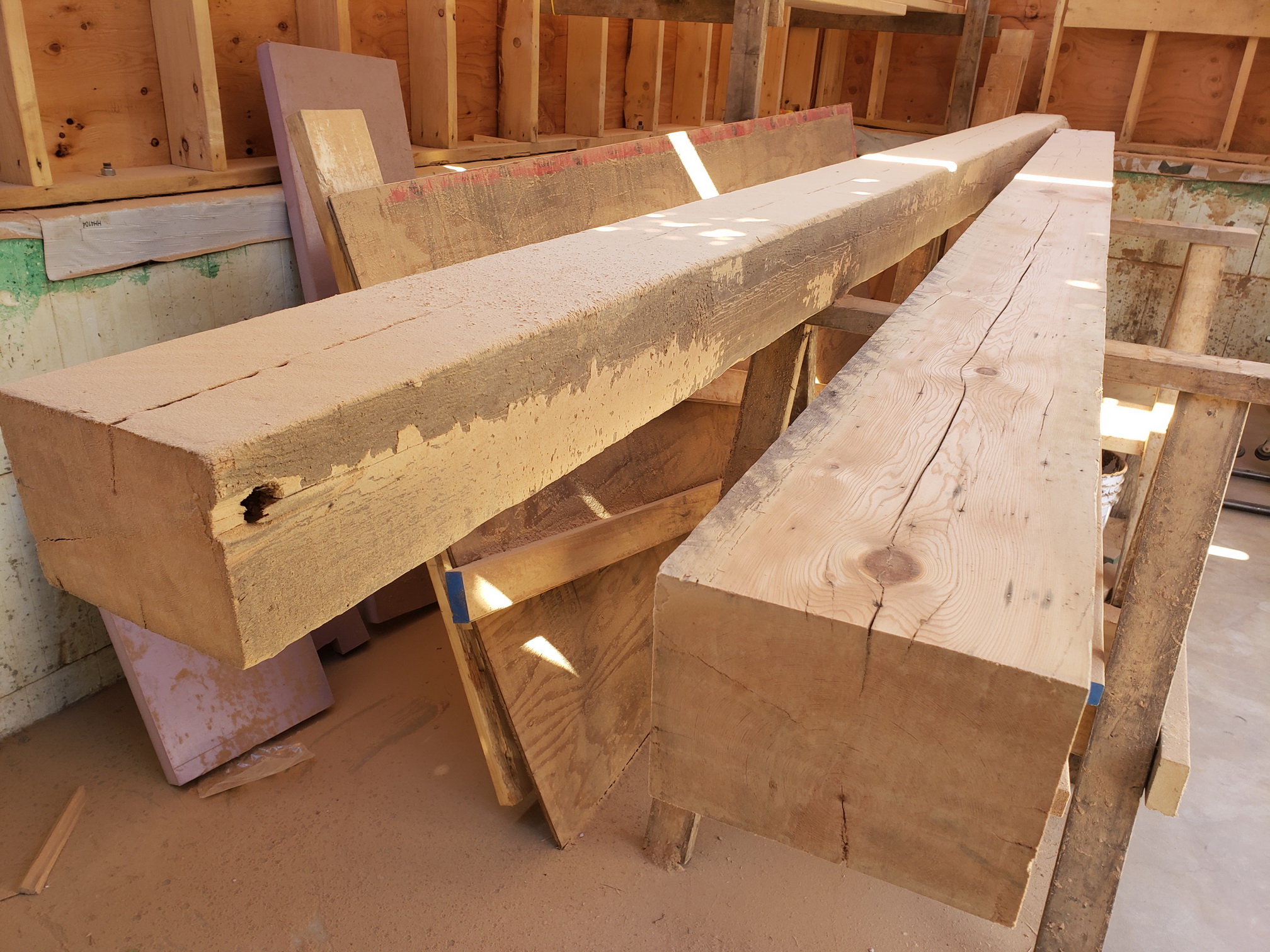
It’s been fun to document the many new uses for the old house wood that Matt and the Interactive crew rescued from the old house. There’s still a lot left and some furniture/cabinet making still to be done, but we won’t come close to using it all. If you know anyone looking for 26′ long rough cut fir 2x10s and 6x6s, let me know.

Here’s where it all started:

look at all that beautiful wood
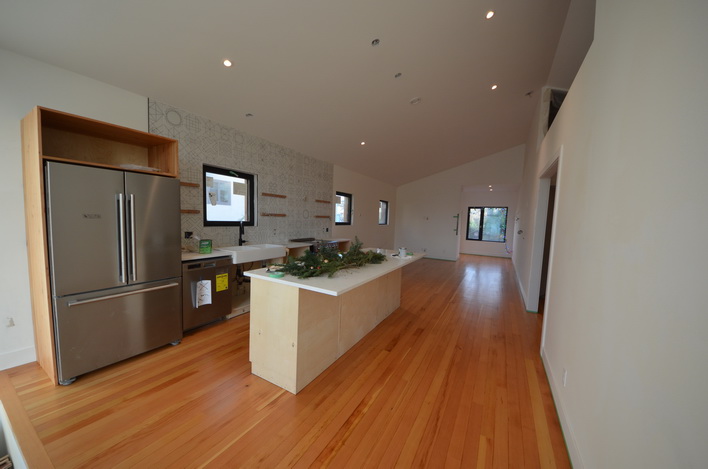
reclaimed fir cabinets in the rental suite by Matt (made from 2x4s)
the other side of the suite kitchen island, faced with reclaimed flooring
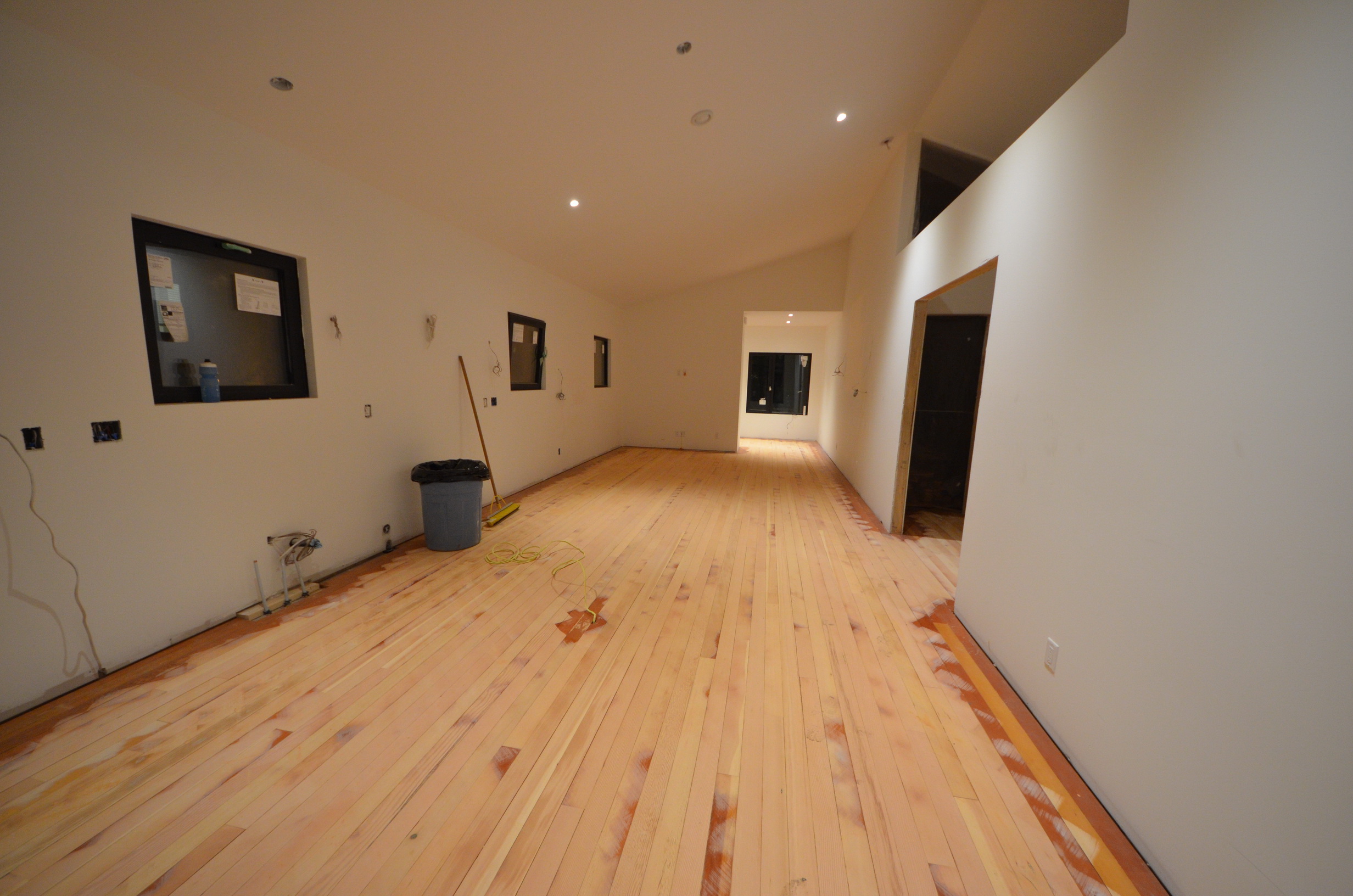
the actual flooring (+ the flooring from our friend Nick’s old house), relaid (and glued down) with its old finish
then sanded
and refinished.
These old beams got some serious sanding
to become this new overhang
old fir, new decking
wood landing in the other half of the duplex
extra flooring used for the workshop soffit
hanging bike rack!
floor bike rack!
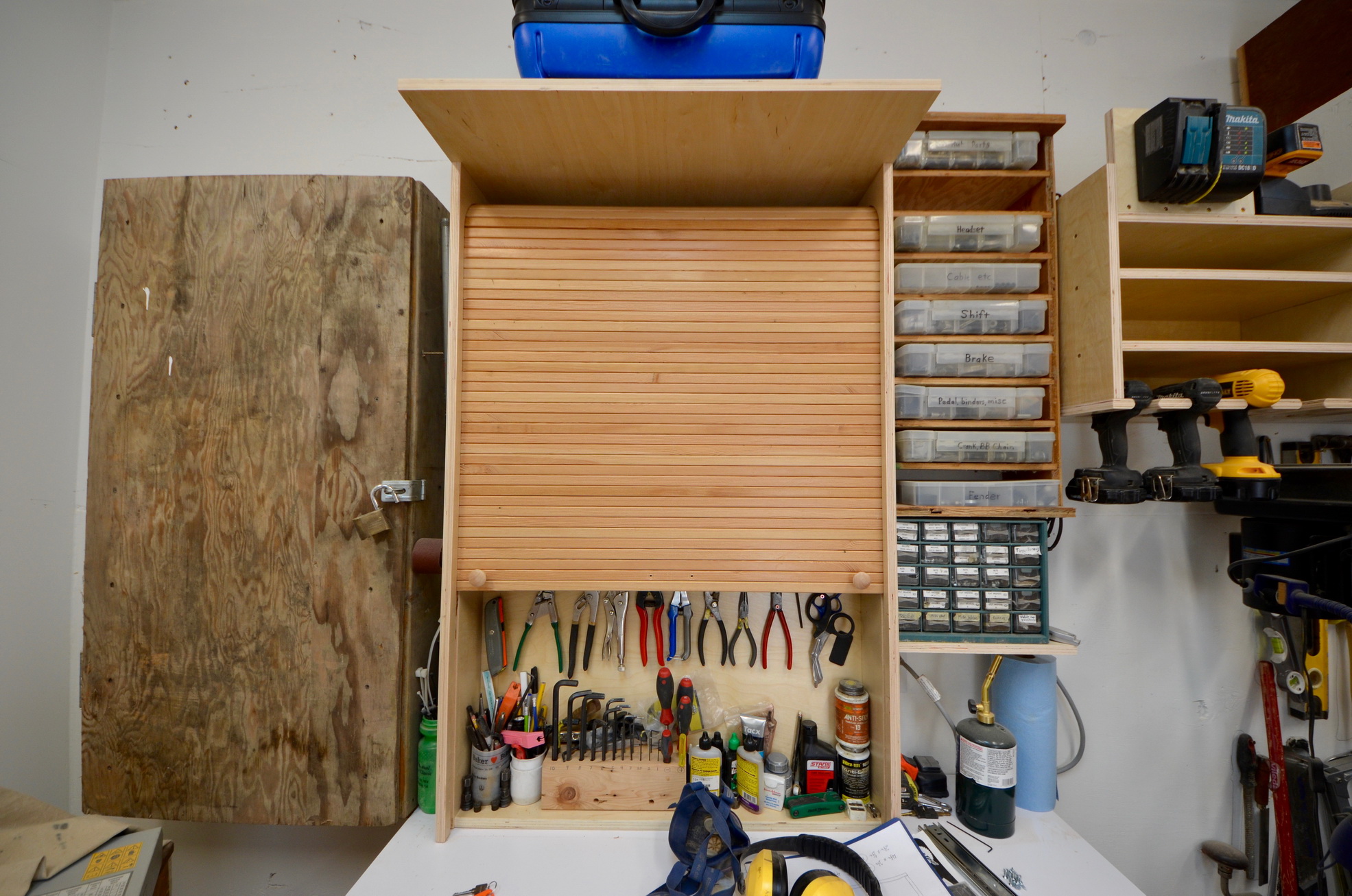
Matt made this nifty rollup tool cabinet cover using old 2x4s

Filed Under: Construction, Featured Tagged With: Passive House construction, reclaimed wood construction

Wither To From Here

January 2, 2021 by clove Leave a Comment

Happy 2021! As the new year ticks over, some may feel hopeful that 2021 presents a fresh slate, although we would do well to remember that actual life doesn’t work like that. I have to say that it’s been difficult to compartmentalize house project updates when so much crazy sh*t has been happening all around us, although I also have to acknowledge that my readers don’t necessarily want to hear my opinions on the state of US politics, sexism, racism, unchecked capitalism, the wanton destruction of our planet or any other intersecting problems that have boiled over in the past year. I’m no expert. I’ll just say that as difficult as many of last year’s stories have been, it’s about time the sh*t is hitting the fan.

OK back to compartmentalizing…

As we shimmy through the denouement of the project proper, here’s where we’re at and what’s to come…

Matt finished his workshop! He has wished for a workshop as long as I’ve known him (about 11 years for the record). He’s made do in our previous places, whether the ‘bike room’ or an uninsulated garage packed with garden tools and other random junk. Never a purpose built workshop. This is a big deal for a maker of things. He promised me he would sit on the floor and cry when it was done and I promised to collect photographic evidence.

Well I didn’t get the tears, but I got some celebratory posing:

Here it is again, starting to take shape:

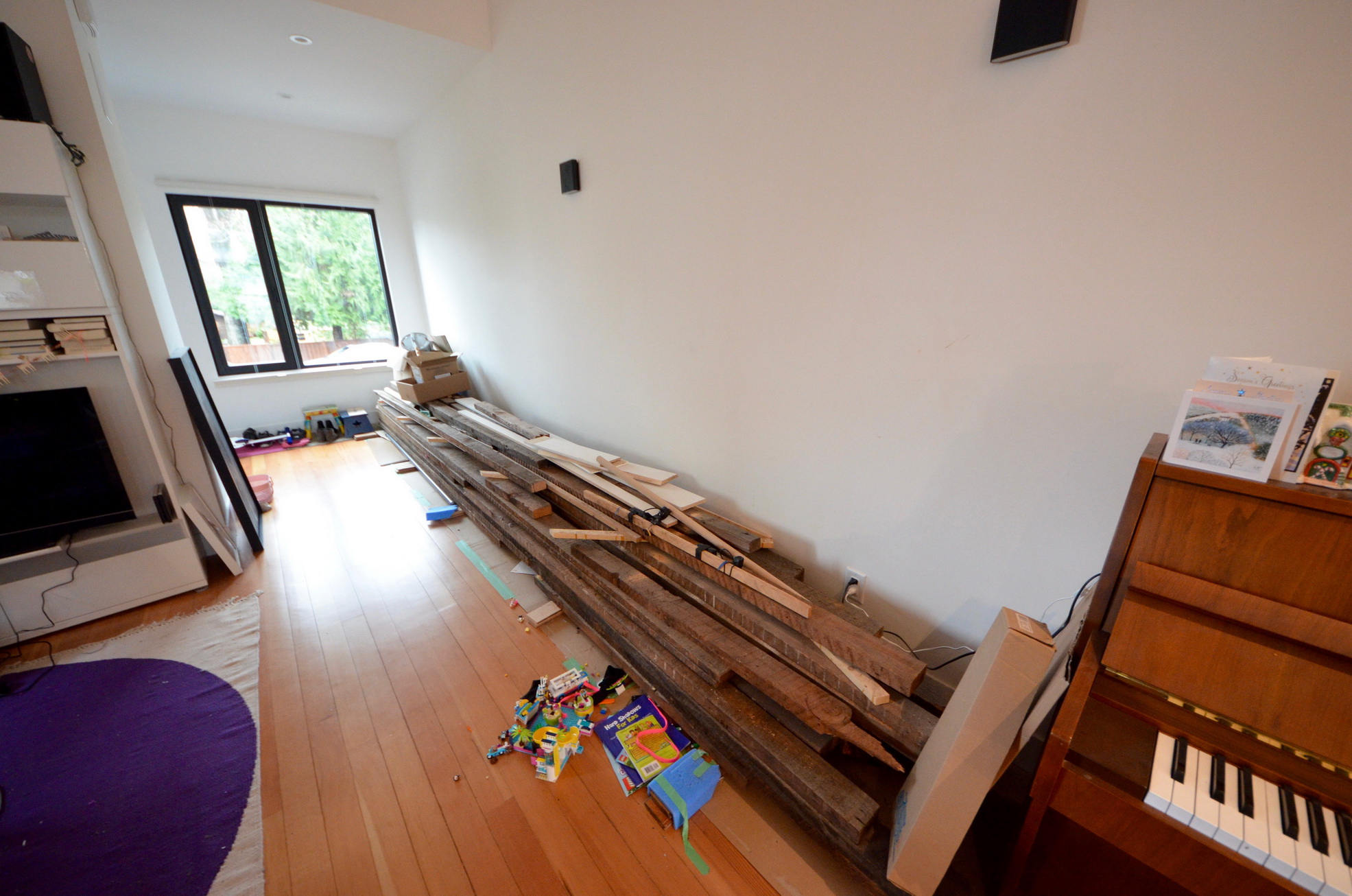
Now that Matt has a proper place to work, we can move most of the stuff that’s currently in our downstairs flex/guest room and second bathroom into the workshop and finish up those spaces for their intended uses. Then Matt can pick away at our remaining millwork and whittle down this large pile of old house wood that is stacked in our living room:

Beyond the millwork (on Matt’s list), there is still plenty to do (on my list):

Certification: The Passive House Institute likes their documentation. I need to do a final model update and submit for certification, which will mean uploading all the evidence (calculations, photographs, product data sheets etc) and likely a few rounds of back and forth to get them everything they need to – hopefully – issue our official plaque.

Monitoring: I will start with some simple utility bill analysis of where we’re at with energy consumption compared to the model. However, I also want to do proper sub-metering, especially since we have the rental suite within our metered consumption, along with Matt’s workshop.

Solar PV: We only roughed in the conduit for solar PV in the original build to save on our initial costs. Our siting is not perfect for solar photovoltaics, mainly thanks to an enormous and beautiful Garry Oak tree in our neighbour’s yard that brings shade in the summer and also overhangs a good chunk of the south flat roof area. Our next step will be to have an analysis done to optimize the number and placement of panels. My current guess is that we won’t generate enough power given the available exposed roof area to fully offset our electricity consumption, but it will still make a healthy dent in it. And the longer we wait, the better the technology gets, right?

Stuff We’ve Noticed and Living in a Passive House updates: Readers may be interested in how it’s all working out and what’s it’s like living here. Posts on our ongoing observations are in the works. And if you have specific questions you would like answered, fire away.

Beyond this, we’ve been mulling over ideas for a next project. Given the especially eye opening nature of 2020, I’ve been thinking a lot about what a meaningful next project might look like. I’m sure I am not alone in pondering ‘what can I do’ beyond behaving like a proper human being among other human beings and respecting that we do not in fact live on a planet of infinite resources.

Matt made a plea that we wouldn’t start anything new for a year after finishing here. I think I convinced him that what made this project especially stressful was the multi-year disruption to our living situation, moving in and out and back into a construction site over a couple of years. Granted, he has a point. I would like to enjoy not being constantly stressed about it all for at least a few months. We have some ideas though…

Filed Under: Featured Tagged With: Passive House construction

Show Me the Money

November 28, 2020 by clove 2 Comments

Back in the spring, I sent the half-duplex listing to my Granny so she could see pictures of the place. “You’ll be a millionaire!” she said in response to the list price. To which I laughed heartily.

It can be hard to imagine where all the money goes. One can look at what was paid for the land, run some rough numbers and conclude that every developer must be raking in the millions. One would be mistaken, perhaps especially in our fair city in which it’s so easy to feel one is being punished for daring to build anything but a standard single family home.

Even as the person in the middle of it, I was ignorant about how much everything was going to cost in the end. While Interactive gave us periodic budget updates, we were continually making choices about products and finishes and there were all these other items like legal costs, interest costs and consultant fees that kept ticking up the total. My final cost guess crept upwards as we neared completion, and eventually, when the end was in sight, I had to tear off the bandaid and assess its totality.

So here it is.

People often ask: how much more does it cost to build a Passive House? That’s actually a very difficult question to answer because there are so many choices made along the way that affect the final cost and only some of them are directly related to Passive House. Do we go with a cheaper laminate flooring or spend more to refinish our old hardwood floors? Cheap toilets or fancy toilets? Vinyl of fiberglass windows? And to truly know the difference, for every “Passive House” choice, you would also need to cost the code minimum option. This is difficult to do in practice as there is often not just one alternative. There are also elements that could arguably cost less, like designing a very simple building shape, or installing a smaller heating system – again, very difficult to cost an alternative. So I’m not going to answer this question.

People also often ask what it costs per unit area. This I can answer, at least for our project.

When we toss around $/SF construction costs, we are usually talking about hard construction costs, which is what it costs for the builder to create the structure and its finishes. It excludes things like landscaping, design costs, permitting fees, borrowing costs etc. which can all vary widely.

Hard construction costs include everything we paid Interactive for (including all materials, labour and contractor markup of 10%, less GST), plus owner supplied items like appliances, windows, vanities, and mechanical equipment.

Total floor area of the building (including all three suites) is ~4270 SF (not ‘conditioned area’ but actual built square footage).

Here we go:

ItemTotal cost Cost/SF
Hard construction costs, including contractor markup, less GST$1,380,000 $323
Landscaping (approximate)$40,000 $9
GST on hard costs$71,000 $17
Soft costs (city fees, structural, architectural, surveying,
insurance, legal, etc)
$121,000 $28
Cost of borrowing (progressive mortgage interest
(which rolled in our original mortgage), lines of credit, family loan)
$97,500 $23
Total (*totals do not add exactly due to rounding)$1,711,000 $400
Less extra unnecessary costs from stop work order,
and special costs like existing house deconstruction + hazmat and rezoning
-$82,000 -$19

So about ~$400/SF all in. Factoring in the original mortgage on the property, we were $2M in debt come the end of the project. No wonder I’d been feeling so anxious.

Folks in other regions may gasp at these numbers, but it’s actually pretty middle of the road around here. Altus Group’s 2020 Canadian Cost Guide pegs the low end of regional hard construction costs for custom built single family at $430/SF and we’re well under that benchmark.

I’m not even going to mention my original budget estimate because it was embarrassingly naive, but I do recall at one point aiming for $300/SF including soft costs. Local construction costs have reportedly increased 10% every year for the past 5 years, and Interactive definitely got some surprisingly high quotes in our hot construction market. So there were some external factors influencing the change over time, along with our choices and changes along the way. I would say that reconciling the cost for the level of finish we expected with the lowest end option was one of the biggest areas where our early estimates diverged from what we actually did.

I wheeled and dealed with my industry friends as much as I could to get good prices for owner supplied items and Matt put in a ton of labour, but balancing these savings were higher costs for some discretionary items, for instance:

  • Higher end finishes (e.g. solid core interior doors) – nothing extravagant but everything is solid and durable. I didn’t price alternates here, but I think one could easily shave off $50k in finishes if one needed to go cheaper. Although having said that, Matt is constructing most of the millwork on our side using our old wood and that ‘cost’ is not included.
  • Refinishing the original fir floors – this was $$$ even though the material was “free” (i.e. Matt’s labour to pull it all up, stack it, store it, move it multiple times). About $9k in expert labour for relaying and refinishing. Sure looks beautiful though, with avoided embodied carbon benefits to boot.
  • Fiberglass vs vinyl framed Passive House windows and exterior doors – this was a difference of about $15-20k. We went with the fiberglass because the material is more durable, has a leaner look and is (as far as I can tell) less damaging environmentally.

So after my hearty laugh with my Granny, I told her that we would simply be less in debt after selling the other half. Which is OK. We have a great new home that is built to last and to perform extremely well, in our ideal walkable location surrounded by incredible neighbours. We accomplished what we set out to do – it just cost more (and took longer) than we’d hoped. Par for the course in the construction world, right?

Matt’s workshop ever closer to completion (costs not included above)

Filed Under: Featured, Financing Tagged With: Passive House construction costs

A Couple Big Things

September 26, 2020 by clove 6 Comments

With the caveat that “big things” are entirely relative in the context of our current global apocalypse, two big things happened in the past several weeks to signify that we’re (actually, maybe) almost done with our project.

Big Thing #1

We got this coveted piece of electronic paper:

Yes, we’ve been living here since last Christmas, but we wouldn’t be able to complete the sale of Suite 3 until we had the official Occupancy Completion Permit.

This was one of the weirdest non-events of the whole project. Our neighbours Len and Gail spent 18 months attempting to get this for their character rebuild. The city inspector we had for most of our project – and who we also shared with Len and Gail- seemed to revel in making us do more and spend more. Even if his demands seemed unnecessary or were even incorrect, we had to weigh the time and expense of fighting versus just swallowing the pill for the sake of carrying on.

By the time we got to the end, this inspector was on medical leave; we got a new one and subsequently sailed through the last few inspections, including the final.

Of course, though, it being the city, it could never be quite that simple. I had sent our inspector’s final emailed report, which said that all units were safe to occupy, to our lender in order to close out the progressive mortgage. It was only after they asked for the official permit that I realized we needed something different. I called the City and learned that someone had decided not to issue the official document because our accessory building permit was still open. No one communicated this to me; it just sat in limbo for a few weeks until I realized it was missing. Fortunately, a phone call to our new favorite inspector cleared that up (yes, they had withheld it in error) and our permit was emailed within about 30 minutes.

On to big thing #2!

Now this was an event. We reached an accepted offer at the end of August, with 7 business days to remove conditions. On the last day on which conditions could be removed (and we could therefore be confident the sale would happen), I made a triple chocolate mouse celebration cake. But because it takes all day to make this thing, I had to start well before knowing whether conditions would in fact be removed. Worst case it would be a pity cake.

When our realtors Ally and Dennis shared the news as the final layer was setting in the fridge, I thanked them and said “phew”. It would be a celebration cake after all. As amazing as this news was, though, our initial reaction was subdued. Surely, this couldn’t actually be the end. The natural inclination of a body in motion is to remain in motion. A body in a state of anxiety is inclined to remain in a state of anxiety.

The financial uncertainty of the project has been the predominant source of my underlying anxiety. The sale is relief to this anxiety. We didn’t do as well financial as we’d initially hoped, but hey, we didn’t go bankrupt! A couple blocks away is a house for sale that is half reconstructed. Presumably they ran out of money – which I’ve learned, probably means that they didn’t have the money when they needed it – regardless of how good the end-game looked. It happens more often than we might think, to developers big and small.

There are so many externalities that impact the financial outcome of a project that have nothing to do with one’s ability to solve a problem or wield a hammer. Construction costs have reportedly increased 10% per year over the past 5 years in Victoria. So to have our final cost inflate to 150% of what we’d initially planned for is not surprising (full financial debrief coming soon).

Now that I allow myself to think about it, the fact that we didn’t lose our shirts may have simply been the result of working with people who were invested in helping our project succeed. I’m not sure what would have happened if we had chosen a builder who insisted (or needed) to be paid immediately on invoicing. Or with a lender who was not willing to be flexible. Or extended family who were not able to help out.

Development is difficult and risky. I completely understand why many people working in this field are not actually spending their own money. More typically, there is an investor in the background who has the means to spread their risk across multiple ventures, and then pay someone else to actually do the project so they don’t have to think about it too much.

—

So we’ve sold to a couple (+labradoodle) we’re excited to have as neighbours, at a price that is in the range of what I had expected. We’ll still be left with a giant mortgage, but we can handle the payments and we’ll be able to pay off our other debts. And as we begin to emerge out the other side of financial purgatory, the air is noticeably lighter, and the laughter and silly dances are enjoying a welcome resurgence.

Filed Under: Construction, Featured, Financing Tagged With: Passive House construction

Yes, the water is hot!

August 23, 2020 by clove Leave a Comment

Some of you may be curious how our Sanden CO2 combi heat pump system is working out.

The Sanden unit is an air-to-water heat pump that pulls energy from outdoor air to heat water. We’re using it to heat both the water supplying our radiant slab (to keep the place warm in winter) and to heat the water at our faucets. Hence the “combi” system.

Here’s a basic run-down of its major parts and what they do.

Cold water is run directly to the outdoor unit:

which uses CO2 to pull heat out of the air in a reverse refrigeration cycle and then heat the water. The warmed water is then fed into the insulated storage tank in the mechanical room:

If there’s a call for hot water from our laundry, a faucet, or the shower, the water from the tank directly supplies those fixtures.

If there’s a call for heat from the radiant slab (as determined by a thermostat), this little green machine kicks into gear:

This is a “Taco X-Pump Block”, a box containing two small pumps, a heat exchanger, and controls that enable ‘plug-and-play’ combi systems. When there’s a call for heat from the thermostat, the circulator pump moves hot water between the tank and the X-Block’s heat exchanger, while the other pump circulates the water through the hydronic system, also passing by the heat exchanger. This allows heat transfer to the closed loop hydronic system without mixing with the domestic hot water.

So how’s it working?

One of the reasons that CO2 works so well as a heat transfer medium for a domestic hot water system is that it loves a high “lift” – in other words, it can turn really cold water into really hot water. Amazingly, this heat pump can pull heat from air as cold as -15 F (-26 C brrr) and, according to its specification, it can heat water up to 175 F (79 C) (although I expect it would need warmer than -15 F air to get the water that hot). AND – it can do this extremely efficiently, producing up to 4.5 times as much energy as it takes to run the equipment. Compare that to, say, a natural gas boiler, which always produces less useful energy than it consumes.

We’ll have to do some more detailed monitoring to test the efficiency claims, but I can report on whether it’s keeping up with our hot water demands. The short answer is: with ease. Our 119 gallon tank (the biggest option) is serving both our home and our small rental suite and we have yet to run out of hot water.

The trick with a combi system is sharing the load between heating and domestic hot water demands. The big question (at least in my mind) is how to most efficiently provide hot water when we want it for a shower, while also providing sufficient heat to the radiant slab when it needs it.

175 F is pretty darned hot – WAY hotter than we’d ever want the water coming out of our taps. In our fiddling with the system controls, we adjusted the supply temperature as high as 160 F and we’ve since dialed it back to a more standard 140 F, which is plenty hot enough for the nearly-scorching shower lovers out there.

The reason we initially dialed up the supply temperature was to see if we could meet a call for heat from the slab and, at the same time, get really hot water at the faucets. It did seem this was possible in a highly insulated home like ours, based on our limited late winter testing, but it’s not a very efficient (or necessary) way to run the system. We would be heating and maintaining a tank full of water way hotter than we need it to be most of the time.

A couple of friends nearby have similar systems in their passive houses. They’re both using programmable thermostats to top up the heat in the slab overnight when there is no demand for domestic hot water, and then just let it coast during the day. This strategy makes great use of the thermal storage effect of the concrete slab. It takes a while for a slab to lose its heat, so once it’s up to temperature, it will stay there and take very little input to keep it there – especially in a Passive House. I could demonstrate this by doing some math, but, well, it’s a summer weekend and I just don’t feel like it.

I’m confident that the system will tick along nicely this winter using a programmable thermostat to prioritize slab heating overnight and domestic hot water use during the day, while keeping the supply temperature at 140 F. Stay tuned when the temperatures start to dip again and we get to see it all in action. I might even pull out some equations.

Filed Under: Featured, Performance Tagged With: Passive House performance; Sanden CO2 heat pump

  • 1
  • 2
  • 3
  • …
  • 9
  • Next Page »

Who is Stretch Developer?

Stretch Developer is written by Christy Love. In partnership with my husband Matt, we are challenging ourselves to create the kind of homes we want to live in and see more of in our community. Home is the incredible Victoria, BC, Canada.

Sign up!

Sign up to receive email notifications of new posts.

Recent Posts

  • New Uses for Old Wood Part 2 September 26, 2021
  • Ongoing Preparations for the Apocalypse August 13, 2021
  • Things We’ve Noticed – Energy Edition May 29, 2021
  • Passive House Suite for Rent April 17, 2021
  • Things We’ve Noticed – Comfort Edition March 14, 2021

Blogs We Like

Green Building Advisor Blogs

Musings of an Energy Nerd

Treehugger

Talk to ARYZE

Recent Posts

  • New Uses for Old Wood Part 2
  • Ongoing Preparations for the Apocalypse
  • Things We’ve Noticed – Energy Edition
  • Passive House Suite for Rent
  • Things We’ve Noticed – Comfort Edition
  • New Uses for Old Wood Part 1

Tags

budget building permit cabinet construction climate action climate change community engagement construction deep energy retrofit design design progress development permit duplex duplex + suite energy consumption energy efficient design financing financing passive house finding land food security home inspections infill low energy design neighbourhood engagement net zero passive house Passive House comfort Passive House construction Passive House construction costs passive house for sale Passive House performance Passive House performance; Sanden CO2 heat pump Passive House rental Passive House systems passive house testing performance pro forma property search tips reclaimed wood reclaimed wood construction rezoning roof row house small lot development small lot subdivision ultra low energy

Copyright © 2026 · Metro Pro Theme on Genesis Framework · WordPress · Log in


Loading Comments...