Stretch Developer

Taking urban development into our own hands

  • Home
  • About
  • The Project
    • Finding a Property
    • Design
    • Approvals
    • Financing
    • Construction
    • Performance
  • Blog
  • Contact
  • Rental Suite

The Quest for Simplicity

September 29, 2018 by clove Leave a Comment

As our beloved hole continues to take shape, the more technical among our readers may be wondering how things are looking on the Passive House modeling side.

As currently modeled in the Passive House Planning Package (PHPP), we are just squeaking by on the certification requirements. We had a Design Stage Review done by our certifier, Brittany, around the time we submitted for our Building Permit in the spring. The Design Stage Review is meant to be done before we start digging a big hole; and ideally, to give us some assurance that if things go according to plan, we are likely to achieve certification. Or, conversely, we would know early enough if any bigger changes were required. The review left me feeling confident in our design but with a long list of comments to respond to. Many of these comments involved refining conservative placeholder values for things like thermal bridging.

If I’m perfectly frank, I’d rather have a tooth pulled than spend a whole Saturday on PHPP updates. But there’s also the fact that things are still in flux, and while I want to know the energy impact of design changes, I am resistant to the notion that PHPP is our ultimate decision maker. There are design questions that absolutely impact the passive house model (and its predicted energy use), but are also influenced by other factors like practicality, cost, and aesthetics. PHPP doesn’t care about any of these things.

One thing that the model and I both care a lot about is simplicity. My strong inclination is to remove design complications, which by extension, tend to also remove modeling complications.

Here are the design questions we have been working through over the last while. We’re tackling each in the priority that Interactive needs answers to keep the project on schedule. I will tweak values in PHPP to test the impact, but will officially update them when we are satisfied that we have made good choices based on all of our criteria. With a bit of synergistic karma, our quest for simplicity will also lead to a certifiable passive house.

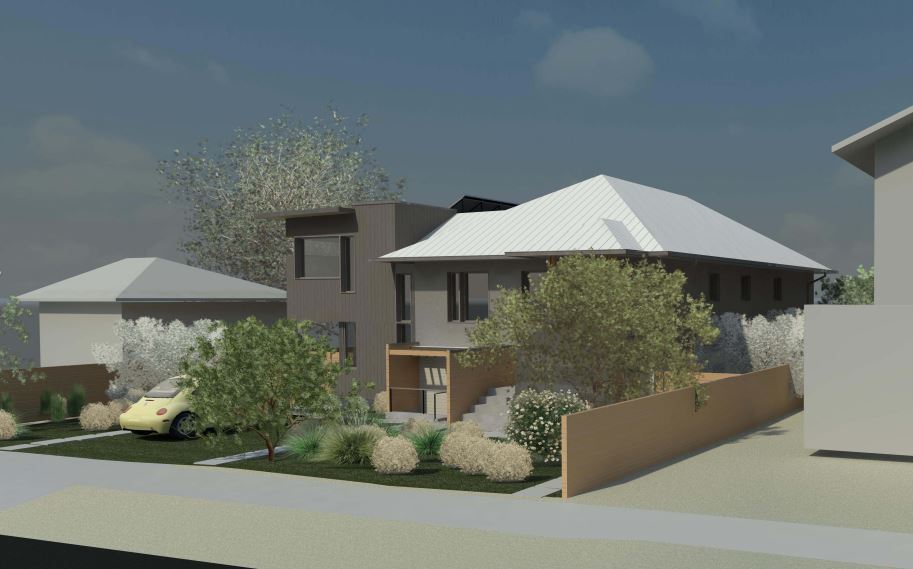
Roof Shape: Since we have to rebuild it anyway, we’ve chosen to do away with the hip roof on the ‘existing’ half. It’s a dramatic aesthetic improvement in my opinion but also a major simplification.

new gable roof (with the same floor plan)

old hip roof

Modeling the original hip roof was a less than satisfying experience. I could not completely capture the intersection of multiple hip roof slopes with the low slope roof of the new half using simple geometry and the dimensions provided on the drawings. And Interactive would have to build this! A gable roof is so much simpler to model and build.

The downside of this change is that the City needs to approve it. We are told it will only take a few weeks, but we have to submit a modified Development Permit package for the planning department’s review AND a revised Building Permit Package for the code inspection side. Good times.

Windows and Doors: We’re confirming final details of our Cascadia Universal Series fiberglass window and door order, which includes committing to the Solar Heat Gain Coefficient (SHGC) for the glazing. This is the value that determines how much heat is allowed through the windows versus reflected away. Higher is better in the model because it allows in more ‘free heat’, but lower is better to prevent overheating, and I think lower is ultimately the better way to go given our climate trends. I’m leaning toward using the lower value (Cardinal 360/180) on the south and west windows and the higher (Cardinal 270/180) on the north and east.

Much more fun than picking a SHGC for glazing is picking custom colours for our front entry doors. Thanks to our kindergartener’s astute design sense, there will be a purple door!

Ventilation: Each half of the duplex will have distinct heat recovery ventilation systems. We had been mulling over whether to pay for the more expensive Paul Novus units that have better heat recovery than the Zehnder units. This makes a difference of about 1 kWh/m2 heating demand, which is not insignificant when the maximum allowable is 15. I’ve got the less efficient Zehnder units in the model now, but this dilemma is likely to resolve itself even more favorably when the new Zehnder Q-series units become available in early 2019. They have vastly improved efficiency at much lower cost than the Paul units. Whoopee.

Heating and Domestic Hot Water Heating:  We have chosen to go with Sanden CO2 heat pumps for domestic hot water heating and in-slab radiant hydronic heating on the ground floors. These are air-to-water heat pumps that use CO2 as the heat transfer medium instead of something like R410-A. This technology has so much potential because most other refrigerants have several hundred to several thousand times the global warming potential of CO2. And the thing that doesn’t get talked about (and as far as I can tell has not been studied) is that typical refrigerant-based systems leak refrigerant like crazy. Anecdotal evidence suggests that 80% of the refrigerant that gets added to a system leaks out into the atmosphere.

The limitation of CO2-based systems is that they can only do heating, whereas other refrigerant based systems can provide both heating and cooling. We’re not currently planning to add mechanical cooling and we’re hoping that by the time the climate here becomes California, we’ll have sufficient shade trees to limit our exposure.

I’ve chatted with a few people who have experience with a Sanden “combi” system, including Peter J from Cascadia Architects. He has a functioning system in his Passive House home and shared a few tips for making sure it works properly without overheating the house – like heating the slab overnight and then shutting it off during the day and having a couple of supplemental heat sources for the few very cold days.

And further to the simplicity theme: by using polished concrete floors on the ground floors, we can embed the hydronic tubing; do one concrete pour and save on other floor finishes. It also makes for a clean modern look that we quite like.

And a Bunch of Little Things: I’m keeping a running markup of all the little things that occur to us the more we stare at the drawings – like moving a toilet location; combining the laundry and mechanical rooms to remove a wall and a door; shifting a window so there is room for a single bed along one wall. So basically thinking carefully about what it will be like to live in the space and making sure it works.

We’re quickly approaching the point where we’ve firmed up the bigger system choices. I will then do another update of PHPP, after which we’ll have a very good idea how the numbers will work out. Our decision-making will then shift toward things like kitchen cabinets and countertops and away from things with an appreciable impact on energy demand.
Filed Under: Design, Featured, Performance Tagged With: passive house, Passive House construction, Passive House performance, Passive House systems, ultra low energy

Construction Progress

September 14, 2018 by clove 1 Comment

Construction Progress: a more harmonious pairing of words I have yet to encounter during our project!

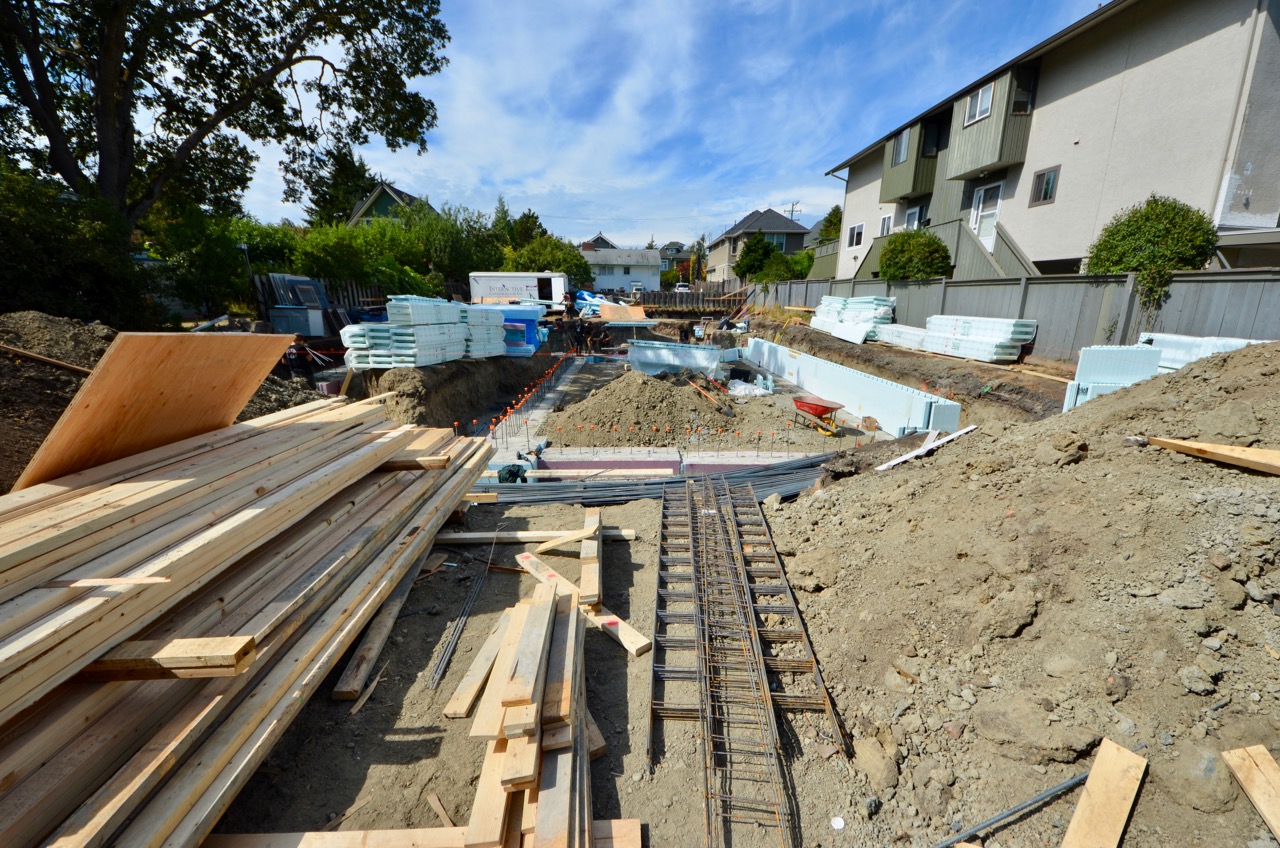
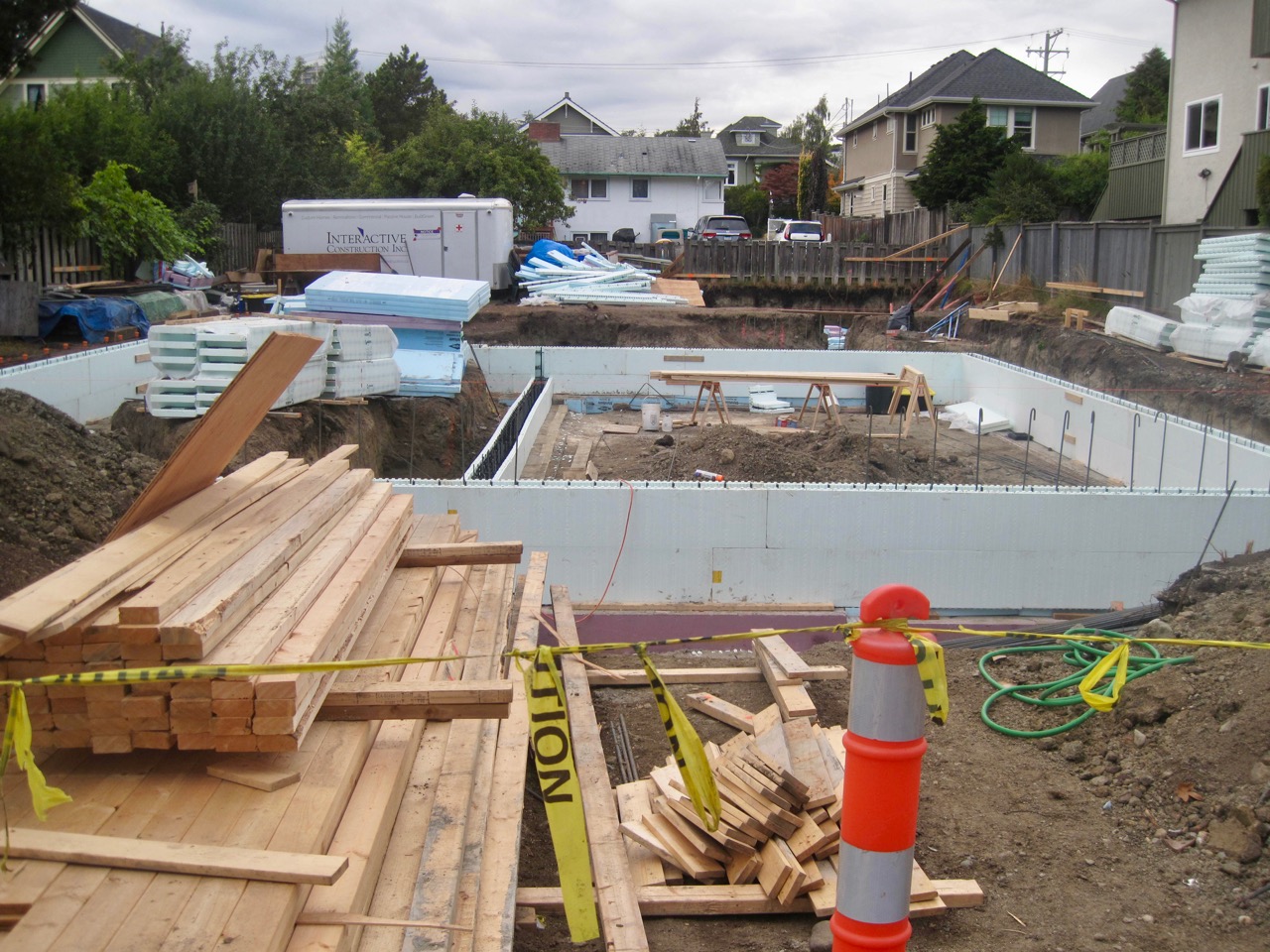
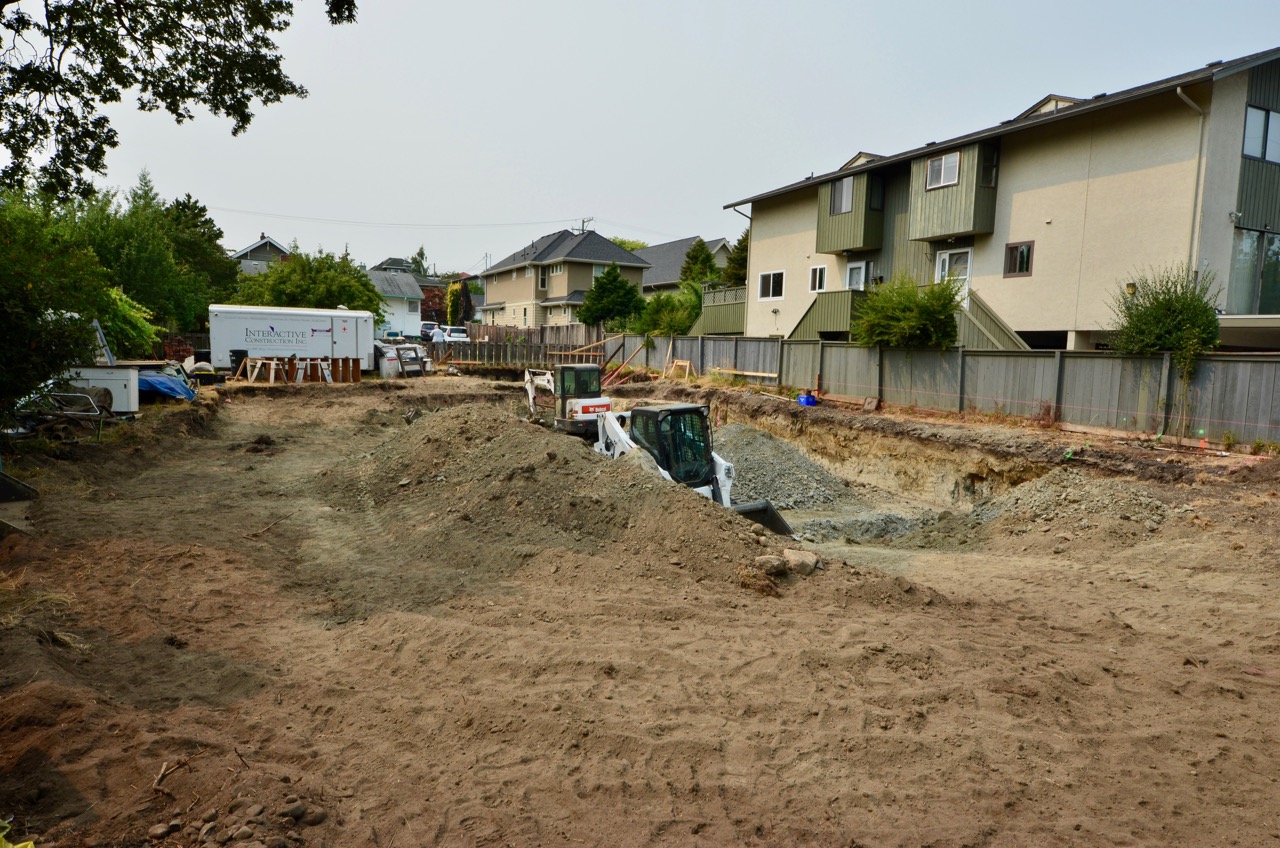
Here are some images from Interactive’s below-grade work over the last couple of weeks.

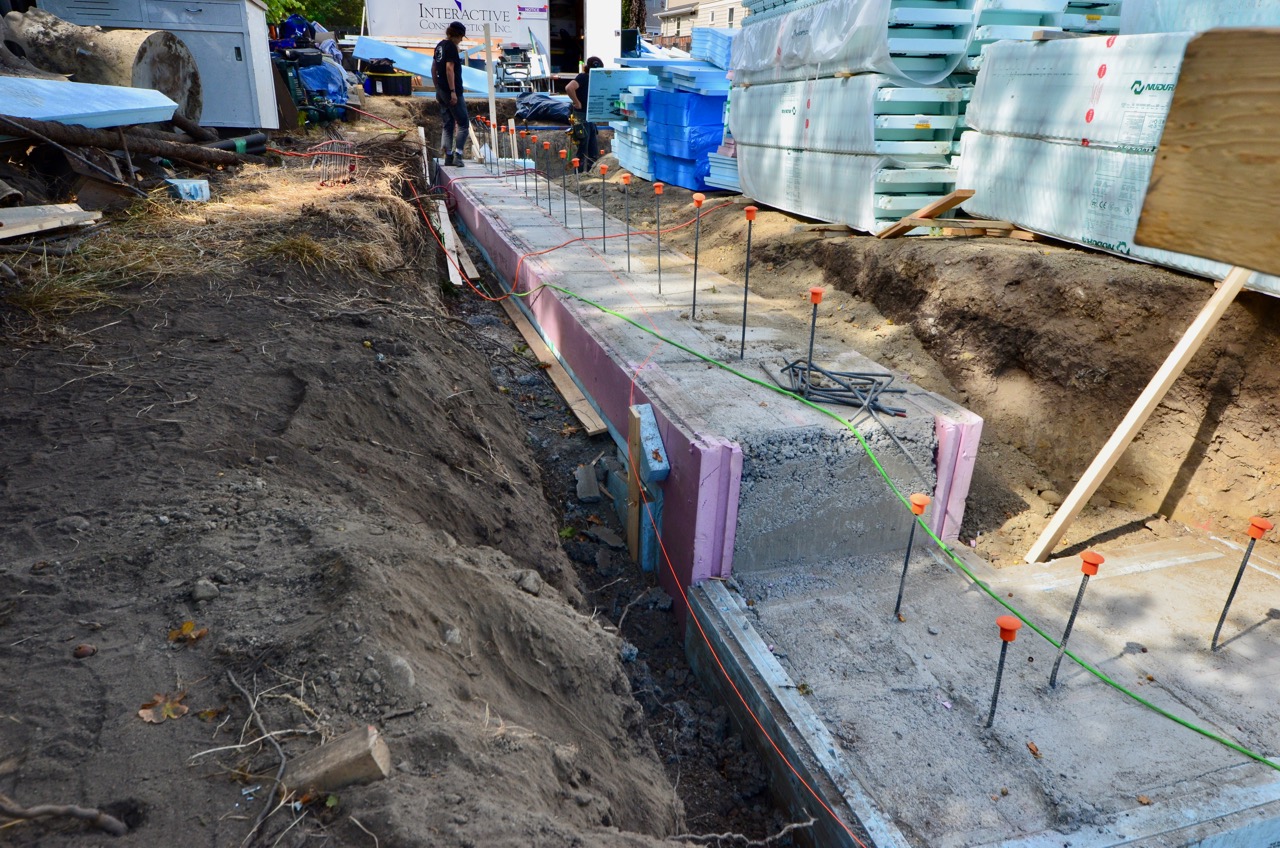
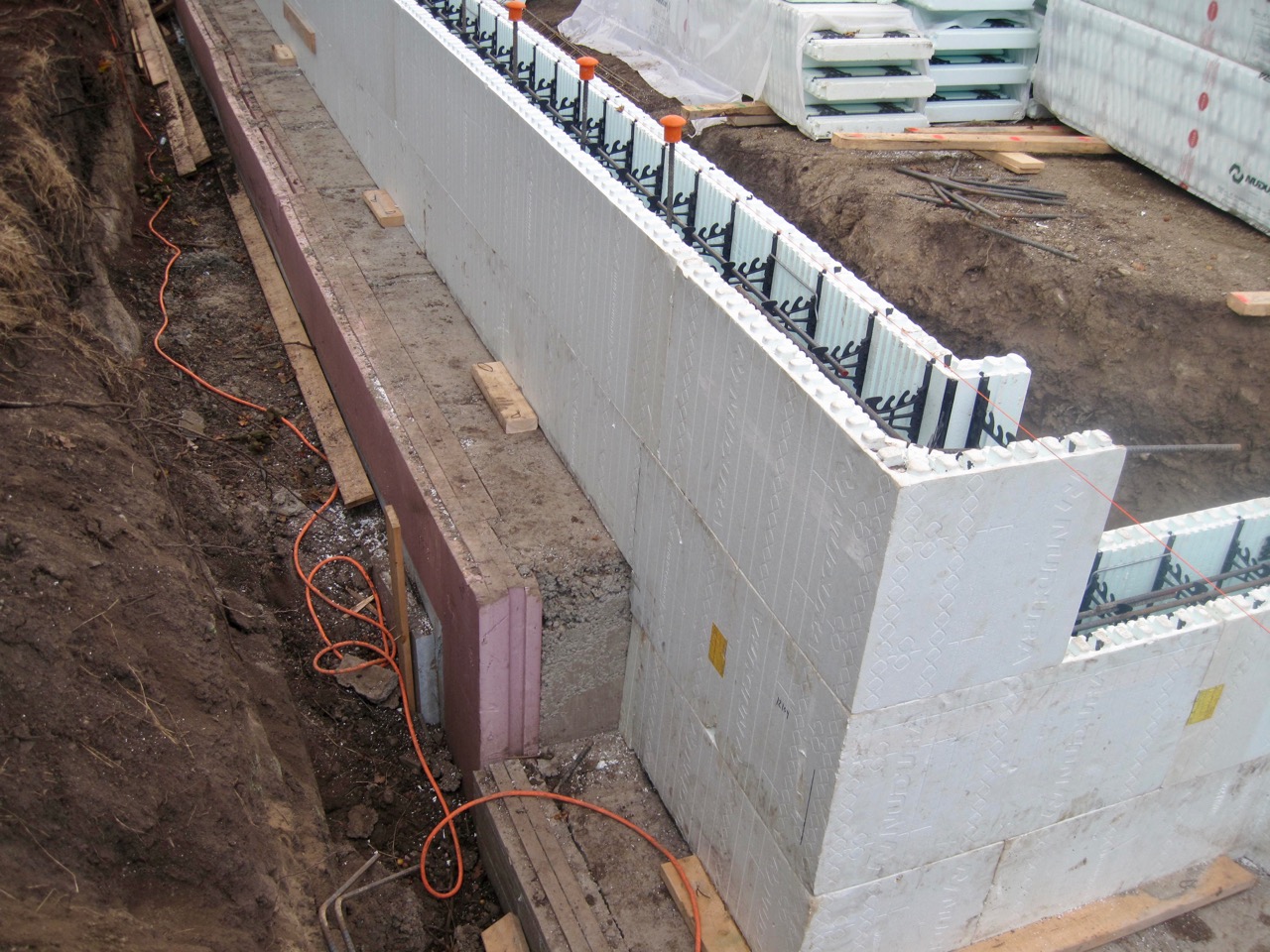
Footings are poured into a 6″ thick foam form and prepped for the Insulated Concrete Form (ICF) foundation walls

ICF forms going in

ICF forms going in

More ICF forms!

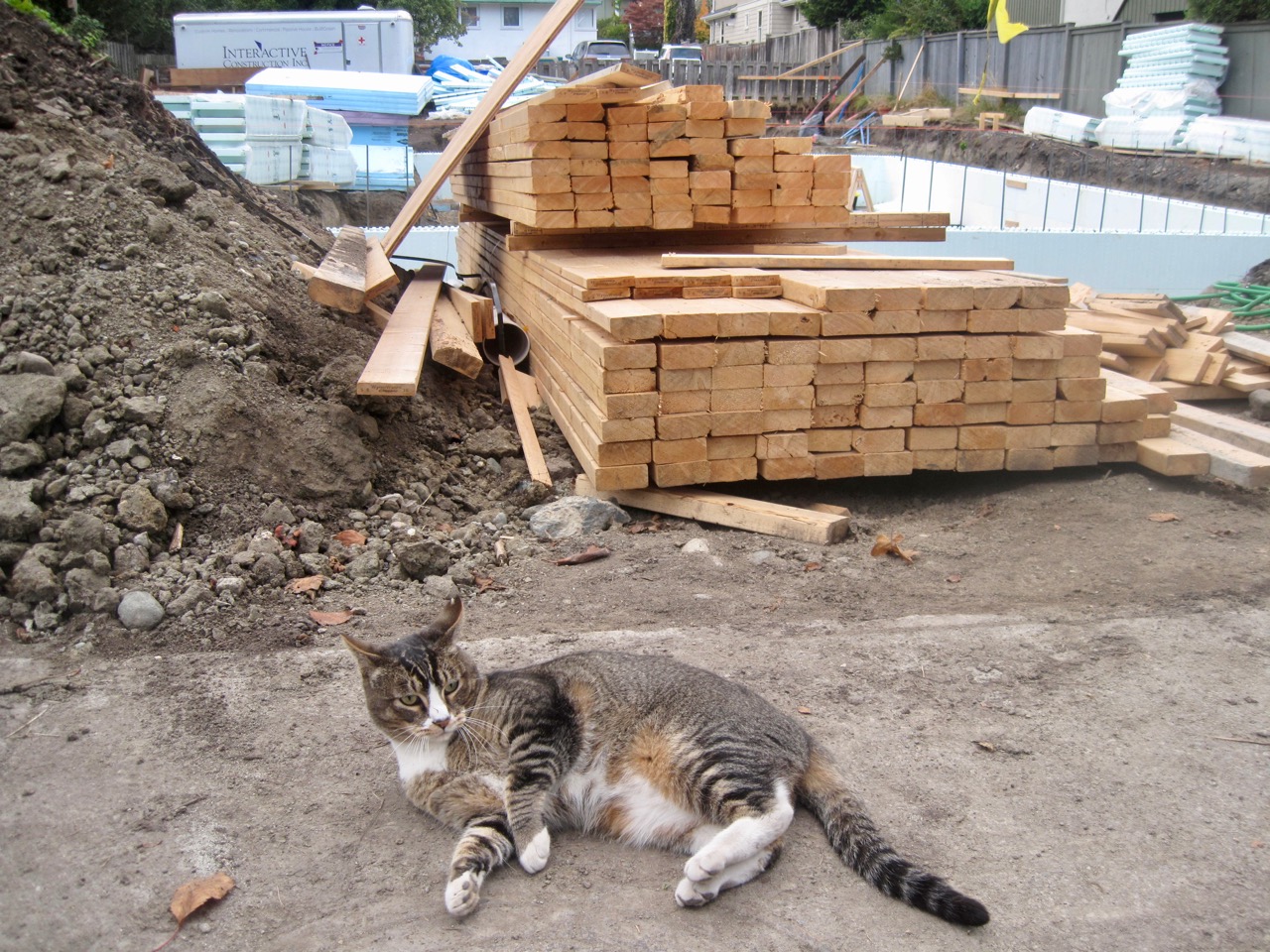
Fergus, after hours security cat

Filed Under: Construction, Featured Tagged With: Passive House construction

She’s Coming Down…and Woah, Progress!

August 24, 2018 by clove 2 Comments

After hearing from our structural engineer that we can’t keep our existing roof, and that we need to make significant modifications to the existing floor joists and structure to meet current seismic code; after being put on hold indefinitely by the company scheduled to do the house lift, and after considering other related complications, Matt and I made the difficult choice to disassemble what remains and reuse it for other purposes.

Not how we had imagined or hoped things would go, but given where we are, we are confident this is the most practical choice to keep the project moving and manage our costs. Learning has been a big part of this process, and we likely would have taken a few different turns along the way knowing what we know now.

A number of considerations tipped the balance:

  • The cost of the house lift and modifications to the existing structure is considerably more than building new. And that’s not accounting for all the weird little things that will crop up along the way when working with an existing building, like, say, the walls being crooked and not fitting on the new foundation and below grade walls. And there just isn’t much left to lift! We would be spending a lot of effort and cost to move around four walls and a floor.
  • Disassembly allows us to keep moving. With no lift/move required, the excavation company can come in with their bigger/faster/more available excavation equipment and start right away.
  • Disassembly allows us to use the beautiful old growth fir floor joists, planks, and framing for any number of visible features, like interior doors, cabinets, shading features, soffit, and other wood accents. Matt can also likely build his entire workshop using this material. If kept in place, the wood would have been 1) drastically modified by new structure and 2) covered in drywall.

In short, it was a move toward simplicity. Sometimes you have to make the most practical choice, emotions aside. And Matt and I are heartened by the fun possibilities in re-using the old wood in new ways. We intend to keep the same design, although we are considering the possibility of switching from the current hip roof on the ‘existing’ half to a gable roof, also for simplicity.

And…Progress!

Wow, it’s amazing how quickly things can happen when you remove a barrier! This thing might get built yet.

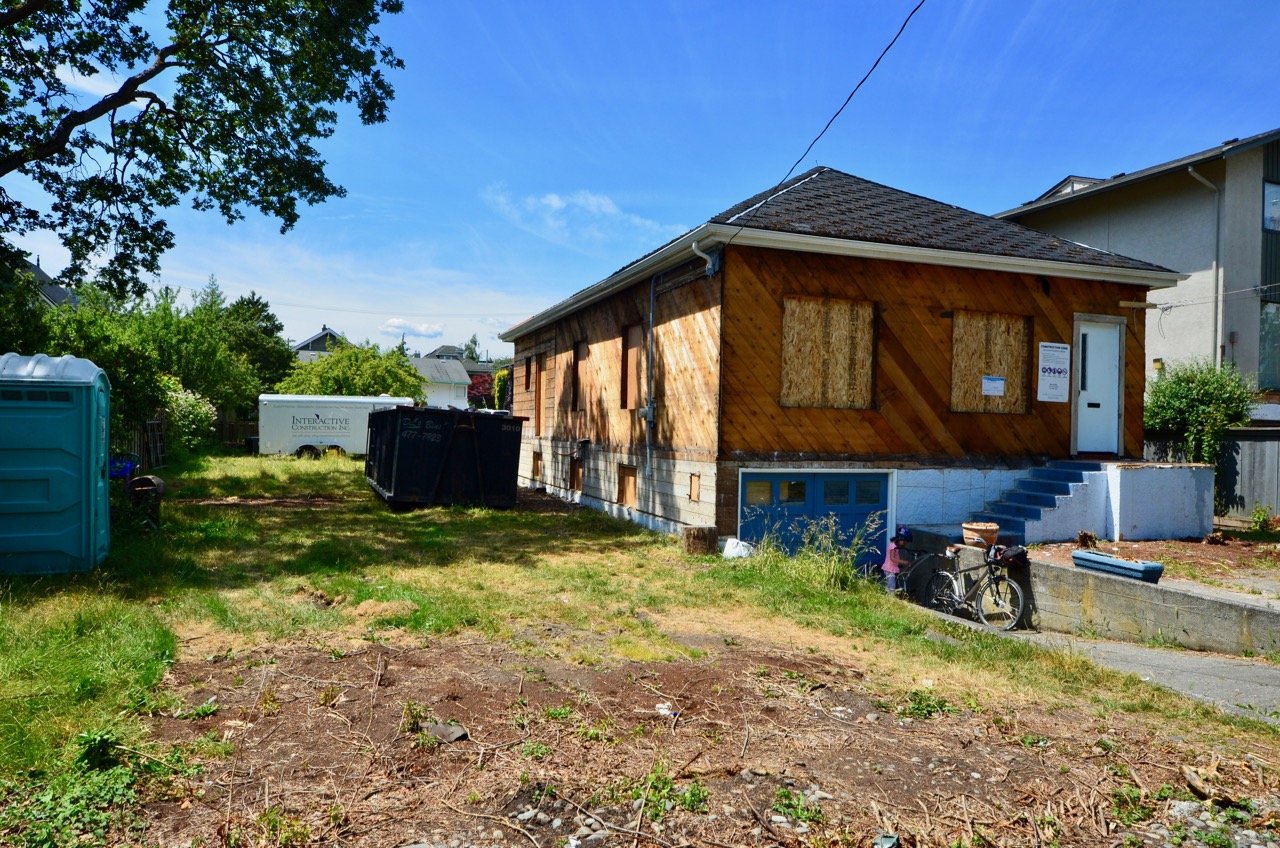
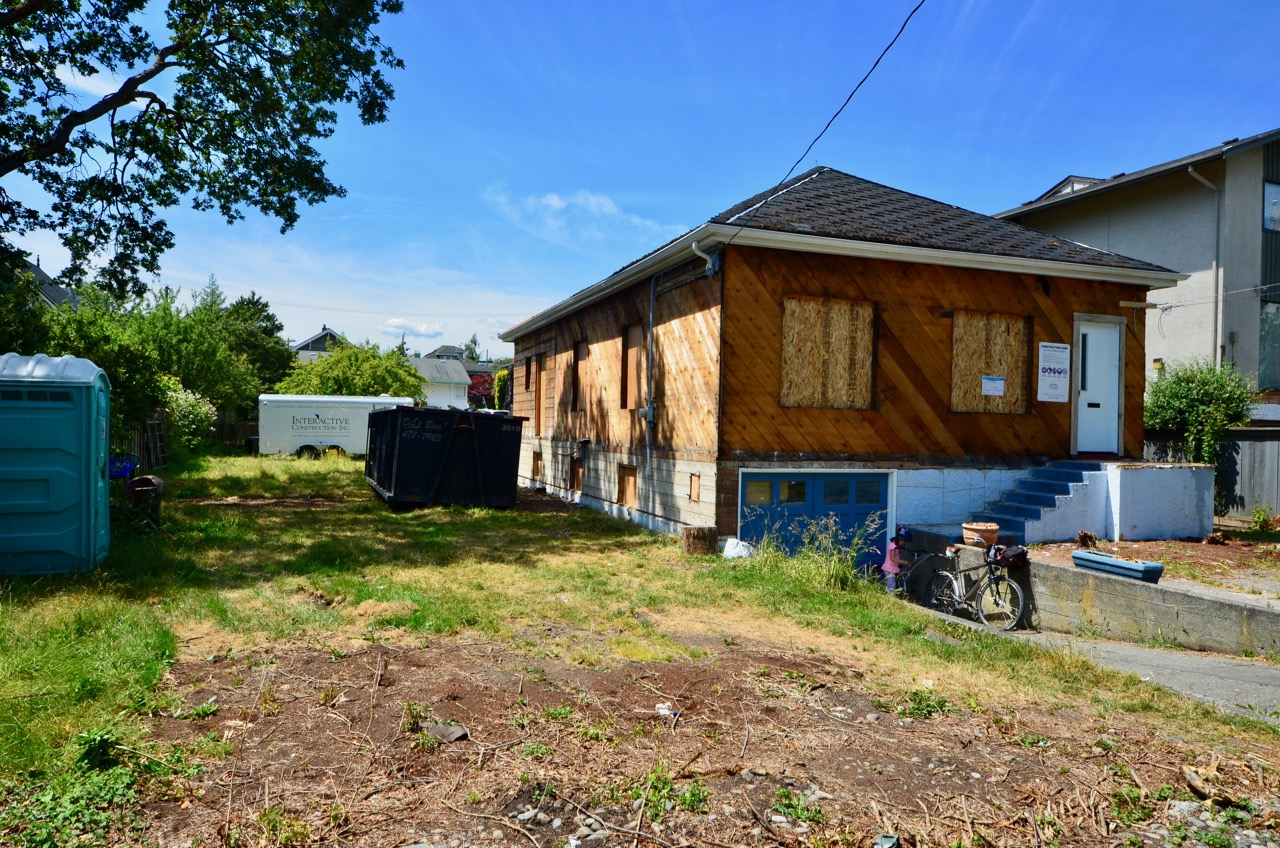
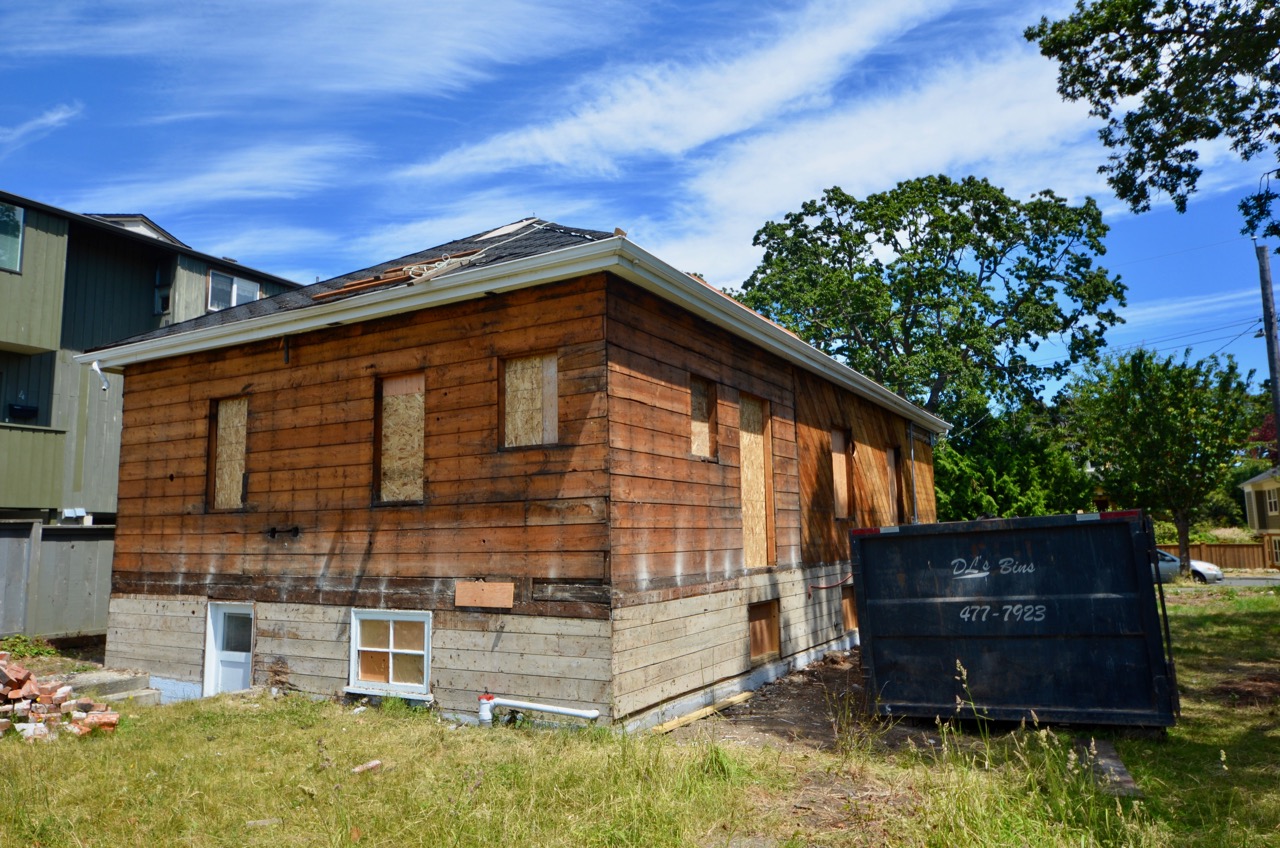
Here was our house just before we made the call:

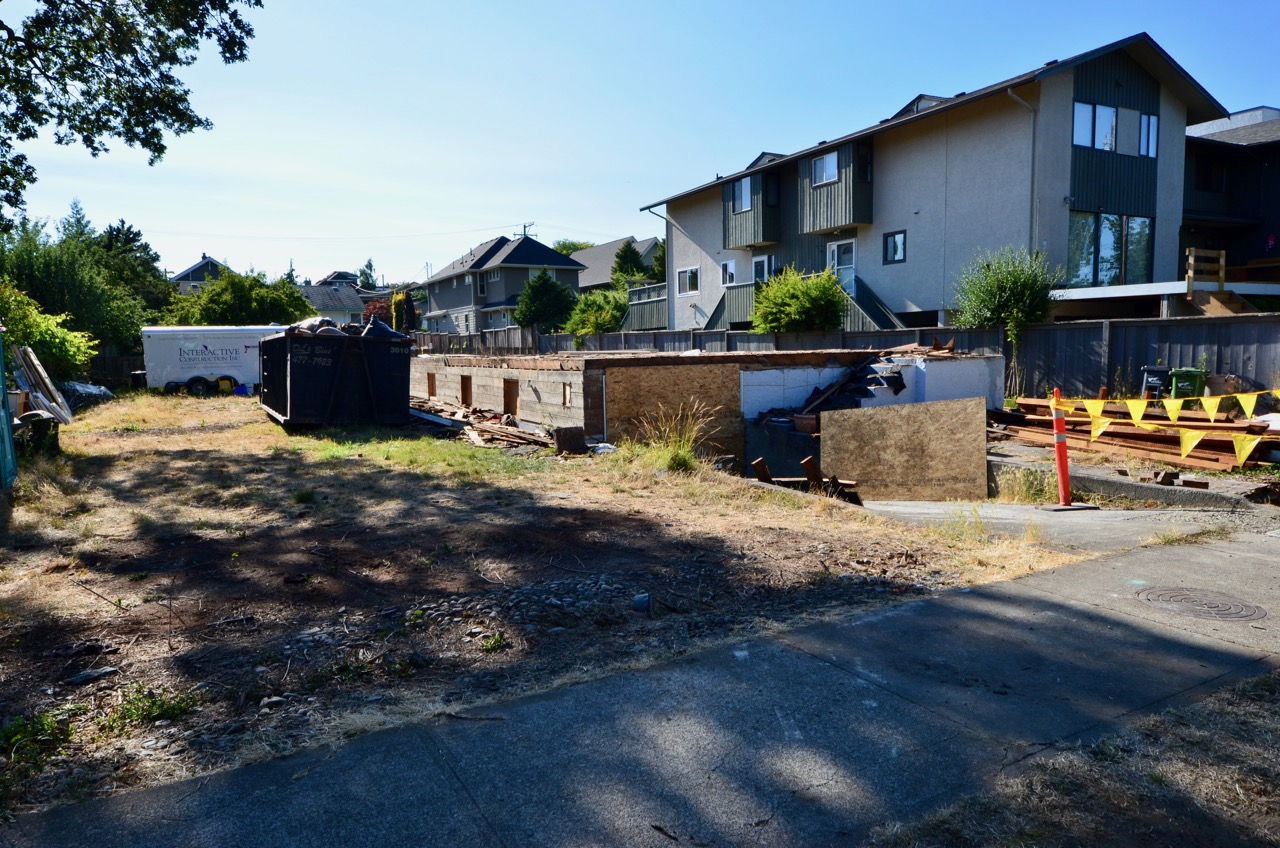
Then we had our meeting with Interactive and they got right to work, spending two days removing the roof and walls carefully enough to keep and stack the good wood, leaving us with just the basement:

And by the end of the week, we were down to this:

Then Level Lift came in with their machines to remove the rest and prepare the ground for the new foundation:

I have to say, progress feels good.

And in the spirit of Konmari, we wish to thank our old house for its service and acknowledge its time on the block and in our lives. We are grateful to have landed here and to have lived in this house before its transformation into something new.

Filed Under: Construction, Featured Tagged With: construction, passive house

Is it Worth It?

July 13, 2018 by clove 1 Comment

We stopped by to check on things the other day, and arrived as our neighbour Patrick stood contemplating our house, his pair of pugs snuffling in the grass.

“Is it worth it?” he asked.

Was it worth keeping the existing house? His question hit squarely on the low-level malaise I had lately been nursing about the amount of our house that was left and would be left when all was said and done. Much less than I had expected or had wanted to believe.

All the Little Things

If we could ignore all the steps that led to this moment, the answer might be no, it’s not worth it. Recall, though, that our original plan was a small lot subdivision. In this scenario, we wouldn’t have even touched our existing house until the new one was built and sold. We would then have had numerous options for improving our house incrementally. Melding the two together appeased some of our neighbours and led to a more interesting design, but it also required a more complex and immediate transformation to the existing house.

Our structural engineer came on board late in the process and said we can’t keep the existing roof. We don’t know a lot about structural engineering, but now that the roof’s underside is fully exposed, we see surprisingly little wood up there. So we will now be building a new roof to match the shape of the old roof.

The framing of several interior walls – the location of which dictated our new layout – was also removed during the strip out process. After peeling off the drywall and the wallpaper and the planking, there just wasn’t much left.

$$$

Similarly, if we were to consider only the cost of keeping an old house like this and carefully rebuilding around it, the answer to Patrick’s question would most certainly be no. Two of the three builders who bid on our project more or less bluntly told us that it would be easier (read: cheaper) to build new. The careful deconstruction to save parts of the building, or even to thoroughly salvage a house being demolished, takes time (read: money). Granted, Matt has done a sizable chunk of the manual labour, and even with a full demo and new build, we would still pay hazmat and some demolition costs.

Our next step is to lift and shift the shell of our former house, which is now delaying the project as we wait on the sub-contractor who will do this work. Again, more time and more money we would not be putting out if we just built from scratch.

And Still…

Call it sentimentality if you like, but our house has become more than an “it” now that we’ve lived in it for a few years and have painstakingly peeled away the layers to reveal its bones. It (she?) is more like a person with a history etched by many hands over the years.

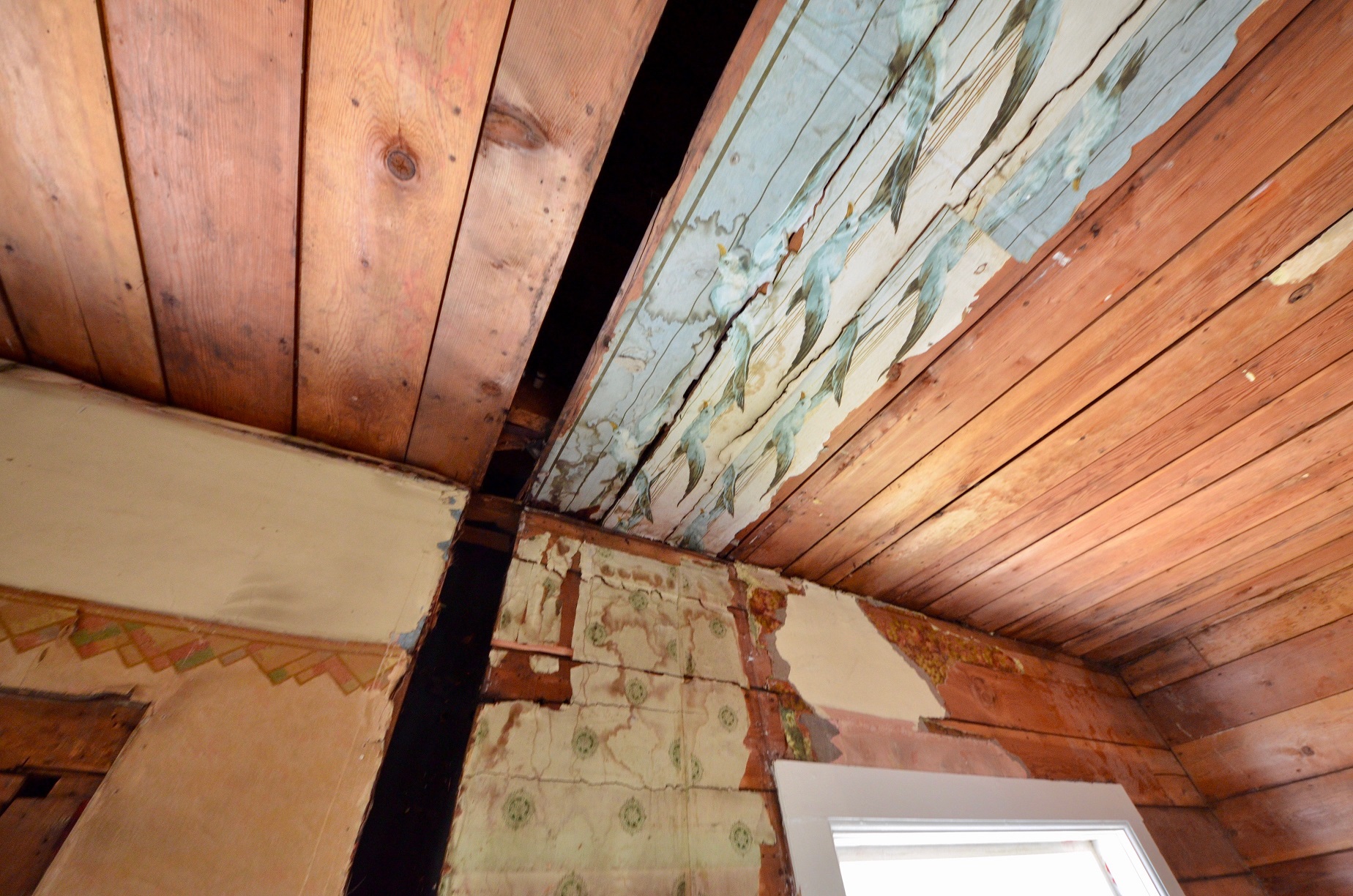
This house has stood in this place for over a hundred years. The sun has passed over it tens of thousands of times. Generations of people have walked their dogs past its front yard. Early owners added on the kitchen and bathroom, extended the roof, and shingled over the original lapped siding. Someone added bird wallpaper to the ceiling. Someone else painted over it.

Therefore…

In answer to Patrick’s question, I say no…and yes. We remind ourselves that our decisions are not informed purely by cost, as painful as that can be to our bottom line. It feels right to us to keep everything we can. I only wish we could have kept more of it. And I think what it comes down to is that, by the time you strip all the guts out, there actually isn’t much to a house.

If we’d found rot, the situation would have been even worse. But what is there is in great shape and we can be thankful for that. We can leave much of the exterior sheathing, walls and floor in place.

And so, here we are, our house waiting to be lifted, shifted, and placed back down on her new super-insulated, seismically resistant foundation.

We’ll keep and reuse many of the materials that we did remove, like:

  • good wood planking that Matt can use to build us a kitchen worth of cabinets and probably a kitchen table to boot
  • brick for outdoor landscaping
  • fir flooring that we can relay in the downstairs suite

We found new homes for many other things:

  • Our neighbour, Peter, spent a painstaking couple of weekends carefully prying off enough of our cedar shingle siding to patch the hole left when he removes his own chimney.
  • Another neighbour, Mike, left a note requesting the basement garage door when it’s ready for removal.
  • Someone we found through usedvictoria took the old oil furnace to replace his broken down one.
  • Another friend took our hot water tank for his reno project.
  • Any scrap wood put to the curb was scooped up almost instantly. Even the old built-in dishwasher was eventually picked up.
  • Interactive donated all the wiring and copper plumbing to Power to Be, to fund programs bringing people with barriers into nature.
  • We’ll donate the older but still functional appliances.

These parts and pieces of our original house will live on, their histories morphing as they are re-used by us or usefully absorbed or into other people’s homes. That is worth something too, right?


Filed Under: Construction, Featured Tagged With: construction, infill, Passive House construction

After Hazmat, There is Wallpaper (Lots)

June 20, 2018 by clove Leave a Comment

We spent three winters in our existing house before starting construction. Even during the strongest wind storms, our house stood surprisingly firm – nary a shudder or creak – and now we know why!

After the hazmat crew stripped out the asbestos and lead containing materials (found in paint, drywall, duct sealant tape, and vinyl flooring), Ty and Brittany from Interactive and Matt have been peeling back the layers to prep the house for its lift and rebuild.

Underneath the drywall, we uncovered up to five layers of wallpaper –  even on the ceiling! Under that was some sort of wallpaper fabric, then fir planking. We even discovered a second roof – left in place when the house was extended out the back – and the original exterior lapped siding behind the kitchen wall.

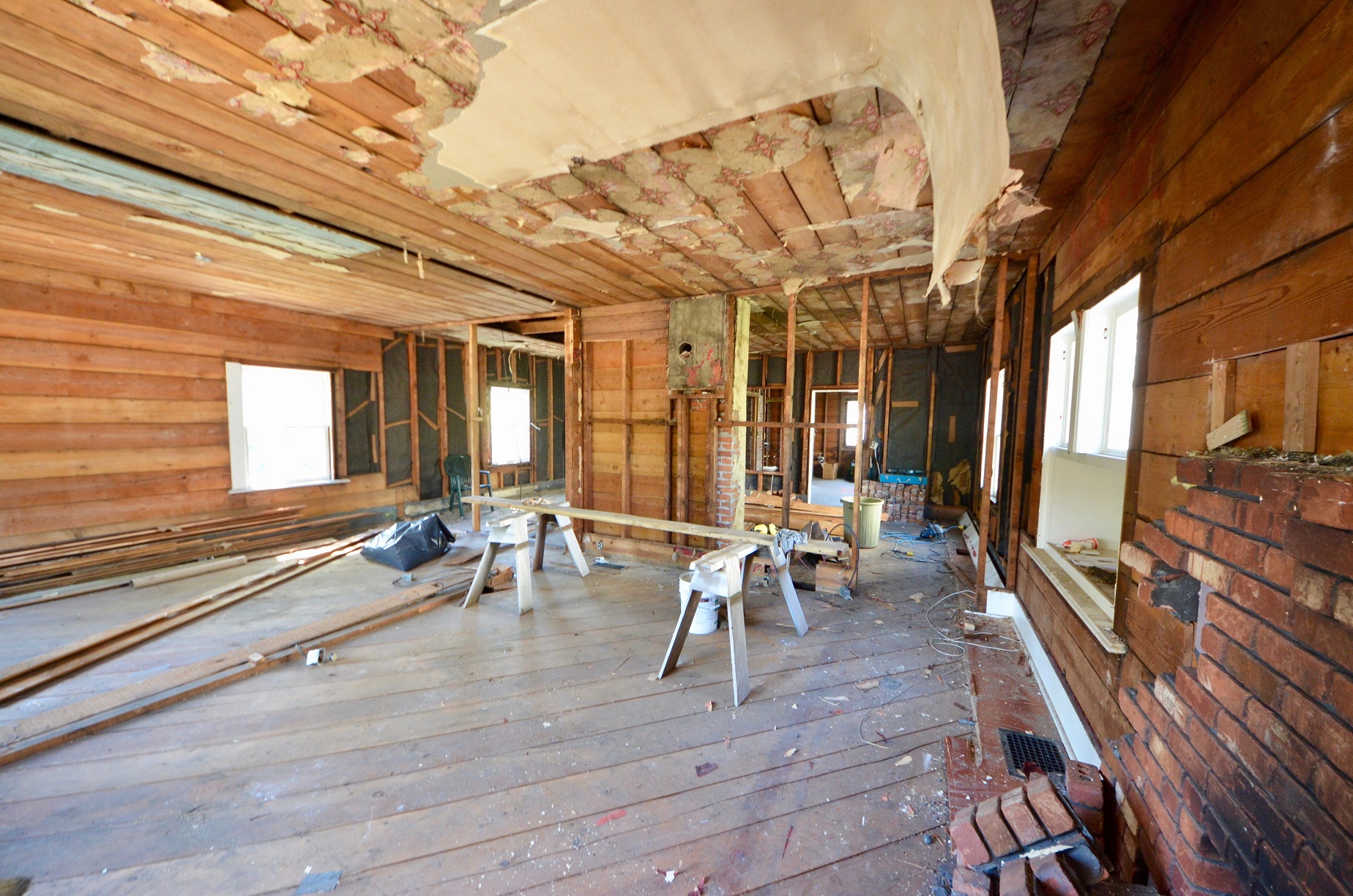
Here are some shots of the work in progress from the inside.

bird wallpaper  – on the ceiling!

looking into the house from the front doorway

original exterior siding from before the kitchen and bath were added out the back

look at all that beautiful wood!

Filed Under: Construction, Featured Tagged With: construction

Hooray for our Building Permit*

June 12, 2018 by clove 4 Comments

I was joking with a friend that every milestone we reach on our project comes with an asterisk. Like when we finally got our financing approval, which was an incredible relief, right? Except…the financing isn’t actually enough, and we’ve immediately had to get to work on other ideas to cut cost and access more capital.

So here’s today’s version.

We finally got our Building Permit- hooray! Bring out the confetti and chocolate cake!

But*

First of all, it took a really long time and, second, I’m still getting over the sticker shock of what it cost us. Confetti doesn’t quite capture the mood, and we probably can’t afford that chocolate cake anymore.

how long it took

The City strives for a 20-day turnaround on permit reviews, although I was warned when I submitted that City staff are slammed.

The day I actually submitted in early March was already my second attempt. I had been turned away by an initial scan in mid-February that revealed a few obvious inconsistencies with how the City wants things presented. So the permit process actually began for us nearly 4 months ago.

After officially submitting, City staff took 30 business days to review. So 6 weeks in real life. Every application wends its way from pile to pile and desk to desk. Engineering looks at it, parks looks at it, plumbing looks at it, and so on; each person adding their comments. Reviewers in two departments- Building Inspection and Plumbing Inspection- asked for a few changes, which took us 6 business days to turn around. The City then took another 24 business days to review those changes, our application once again passing across every desk. All told, it took 54 days of City review time to get our Building Permit, and 3 1/2 months in total time, including revisions on our end, since our first attempt to submit.

We do have to appreciate that the current level of construction activity in our fair city is unprecedented. Those who have worked in the industry here for decades say they’ve never seen it this busy. All you have to do is look around at all the cranes and holes in the ground to sympathize. City staff are working really hard with a daunting workload.

Still, it’s hard to not get frustrated by all the little details that have slowed things down and ultimately cost us money (our first construction loan advance is charging interest as I type!).

Here is one of the main details leading to the request to resubmit:

Our new neighbourhood plan specifically calls out ‘duplexes with suites’ as a desirable building form, meaning that the two main halves of the duplex can be titled separately, but the suite will always be a rental within one half. However, this building form does not exist in a code official’s mind because the building code does not specifically address it. As a result, while we intentionally designed it as a duplex + suite, the permit folks felt compelled to reclassify it as a “triplex”. This then required us to remove reference to certain parts of the building code, add extra fire separations, and change a few other details on our drawings. It is also likely to mean all manner of headache around shared ventilation and hot water systems further down the road – i.e. more cost to us.

Which leads us to…

how much it cost

The real asterisk dampening our ‘hooray’ moment is how much it cost to get our permit. We’re now pretty used to everything taking longer than hoped or expected. I suppose we’ve now also reached a point where we might as well get used to everything costing more than hoped or expected.

I had anticipated $10k for the permit itself (1.4% of construction cost, less plumbing and electrical, which are separate permits), plus ~$7,500 for a landscape deposit. This deposit is to ensure we actually do the landscaping work we promised as part of our Development Permit application. I’m not thrilled about this deposit, but it is described on the City’s website, so I’ve had a couple of months to get over it.

So how the heck did I end up writing a check for $50,784?!

There were two surprises that cha-chinged us up to this unpleasant total:

  1. We pay for new city services up front in order to get in the queue for the City to do the installation (three to four months behind, by the way). So, $24,600 for new storm, sanitary and domestic water connections for each half of the duplex. We had expected to pay for this, but hadn’t realized it would be up front.
  2. They took an $8,000 deposit for ‘new engineering works’. I had to call someone to learn what this was, because the staffer who initially helped me didn’t know, and neither did the staffer she called over who knew more than she did. This one is to make sure we build the new driveway and sidewalk to City specs. OK…but isn’t that the whole point of the Building Permit itself – granting permission to build something with the expectation and promise that we build it as shown in the drawings?

I’m frankly a little enraged about that one. Are we getting paid back with interest? Don’t know. And because there is no paperwork beyond a line item on my receipt, I fear we will have to fight to get our deposit back.

So there you have it:

  • $16,184 for ‘refundable’ deposits;
  • $10,000 for our Permit proper, and
  • $24,600 for new City services.

I can see why some developers raise the white flag and go to Langford where you can get a building permit in 48 hours for a fraction the cost!

Hey, I have an idea! How about permit rebates or waived deposits for people building ultra low energy projects? We are helping the City meet its climate goals after all, and leapfrogging all the way to the 2030 end of our new BC Energy Step Code. And so far, we’re just another folder on a pile of endless, helpless applications.

Alright, enough complaining.

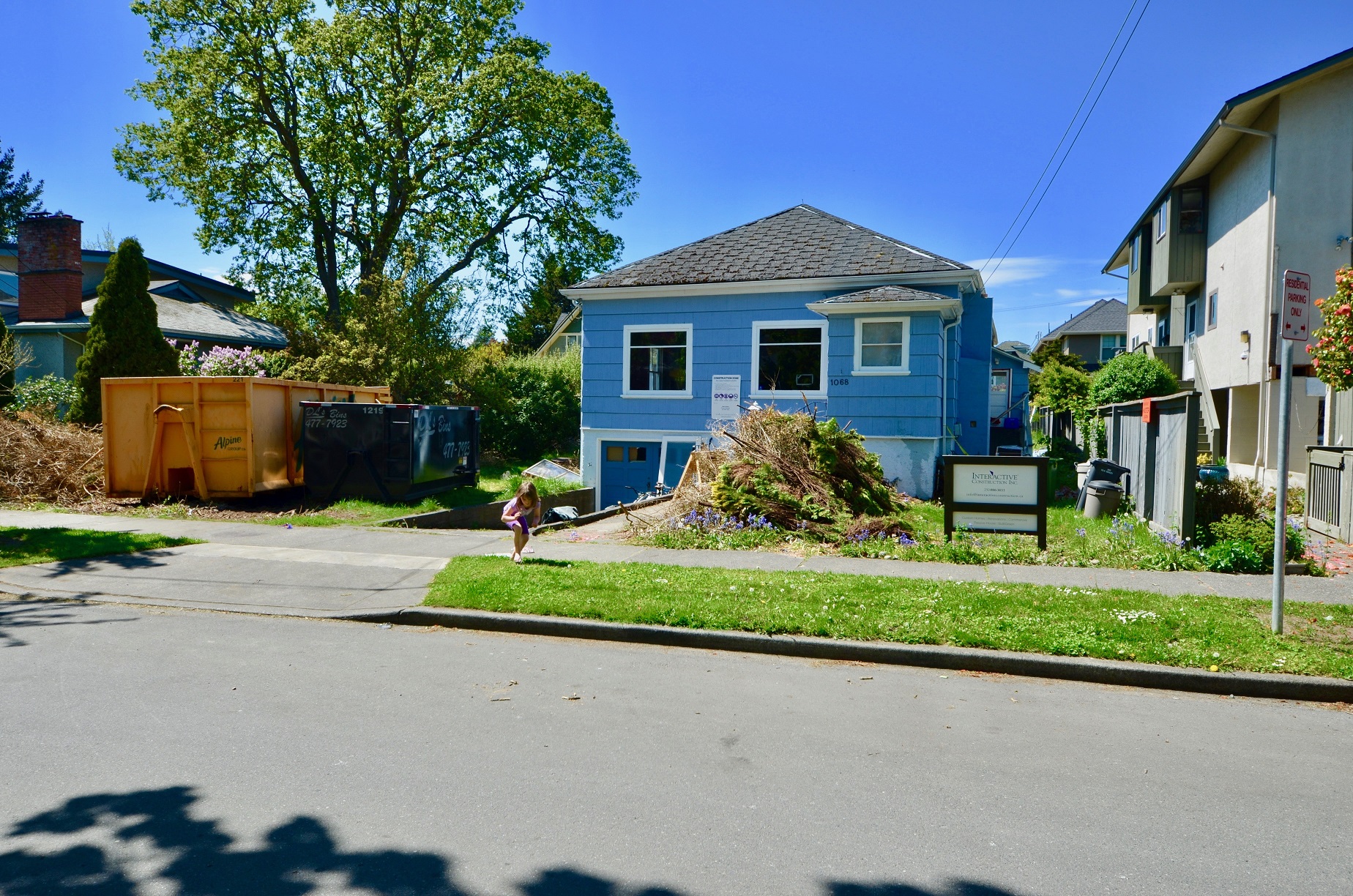
I’ll close out today’s post with a puzzle. Spot what’s different about our house in these two photos. Winner gets a pile of early 20th century bricks!

Filed Under: Construction, Featured Tagged With: building permit, construction, duplex + suite, ultra low energy

House Prep

April 11, 2018 by clove Leave a Comment

As we line up final details to get construction underway, Matt has blasted through several house prep tasks that will save us time and money once our builder is on-site. Matt’s work reminds me what a good team we are. I am the planner and executor of the mostly invisible things that have made our project happen. Matt is a master planner and executor of the visible stuff. I continue to be amazed at how efficiently and thoroughly he gets this type of work done.

While I wrestled with insurance providers, equipment suppliers, banks and schedules, here is what Matt accomplished over 5 days spread over the past couple of weeks:

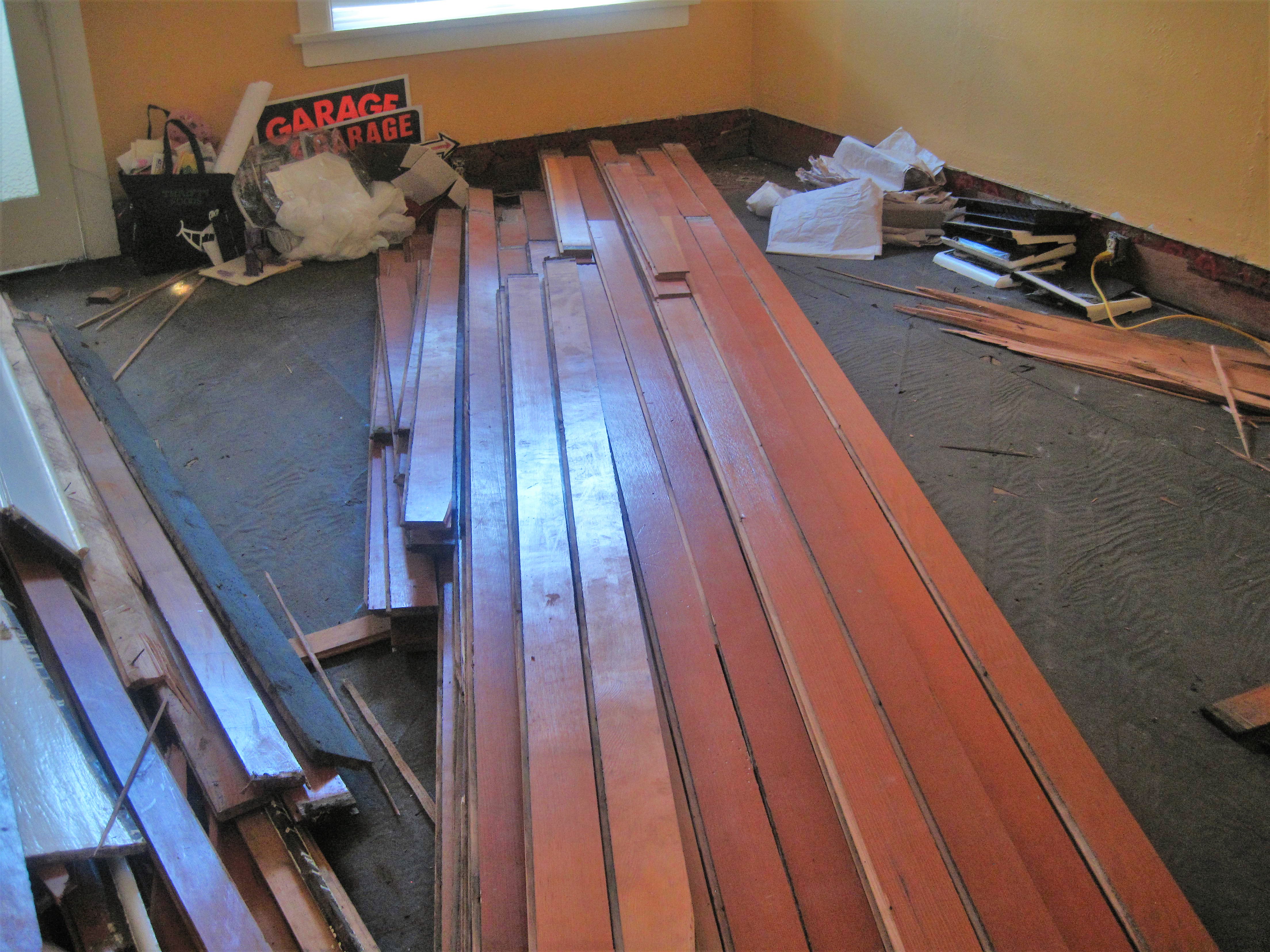
He pulled up about 1000 square feet of fir floor in 4 rooms, which we intend to re-lay in the downstairs suite. This job took a solid three days of bending over, prying and pulling. The great news is that we have mostly room length pieces for relaying. The challenge will be finding a place to store it and keep it stable until we’re ready for it.

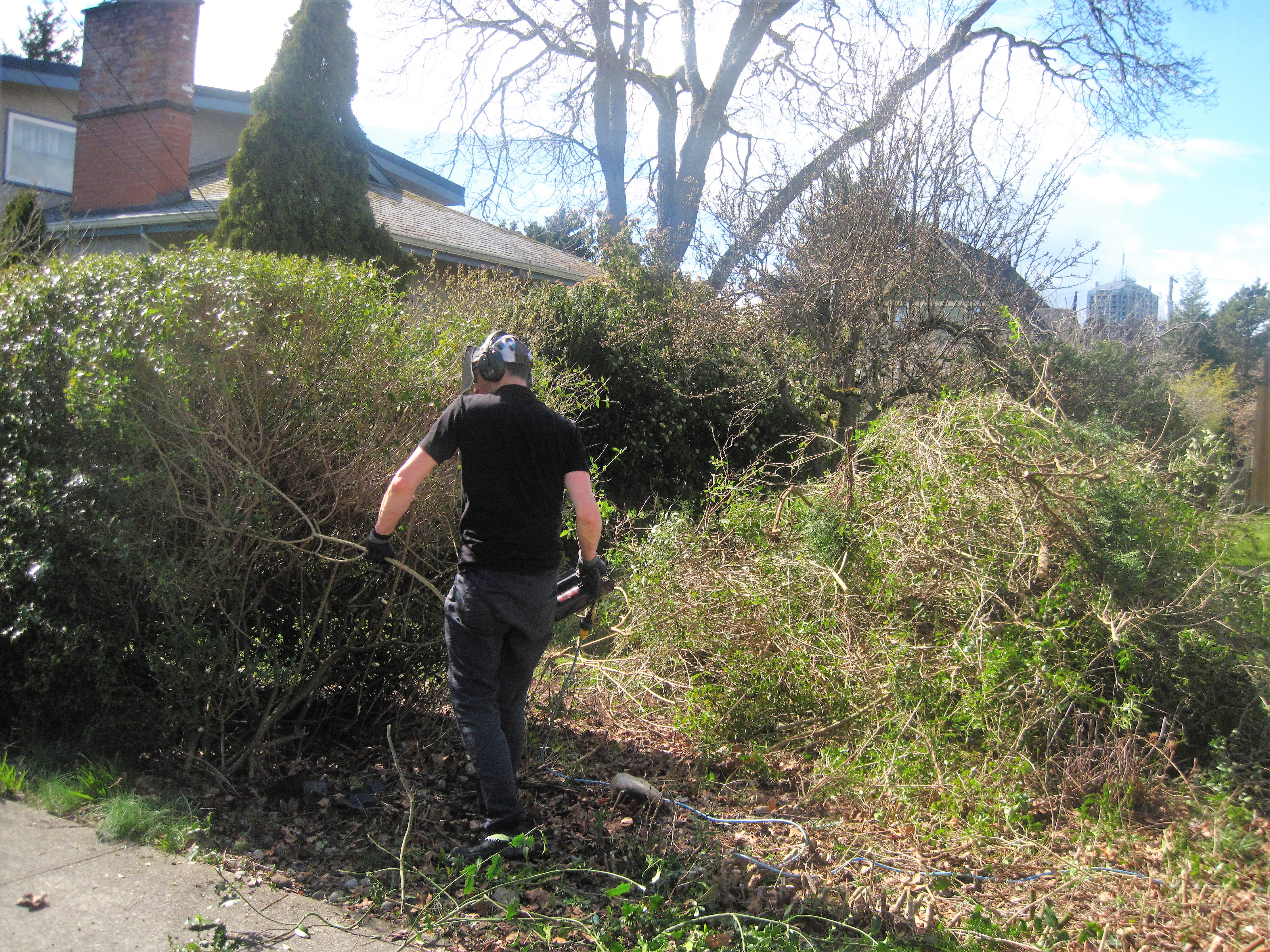
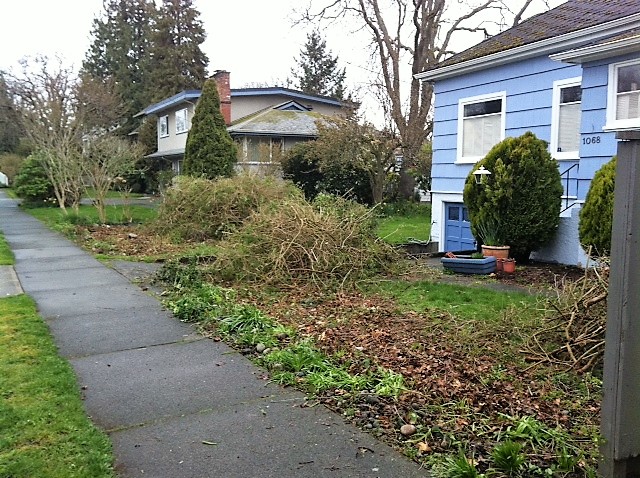
Then Matt cleared out the front hedge using an electric saw. The front landscaping needs to be clear to make space for the house lift equipment (our next big step after interior hazardous material removal).

post- hedge removal

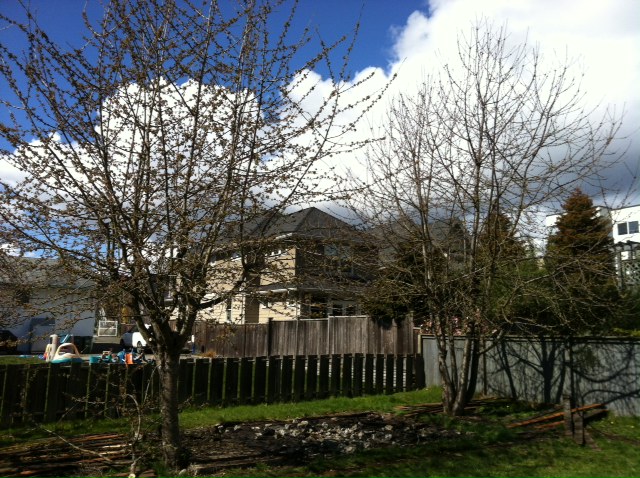
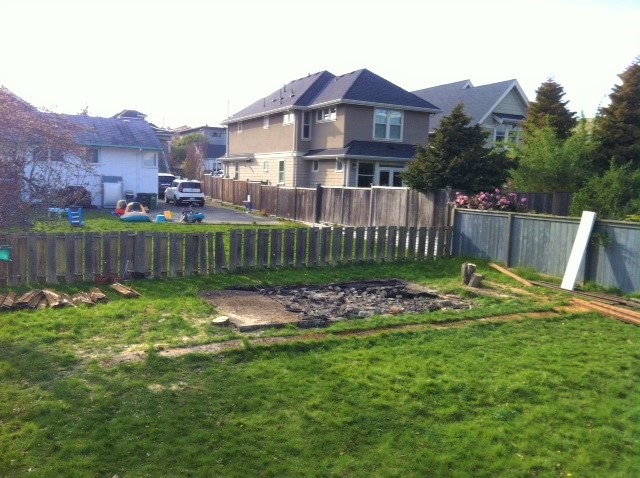
Then he pulled up the weird deck thing (which appears to have been built to cover up a bunch of broken concrete and other junk) and chopped down the two cherry trees in the back yard, where the workshop will go. He borrowed a bigger chainsaw for this job, and did his requisite youtube research to be sure he did it safely. He’ll save the bigger pieces of cherry wood for future wood-working projects. The smaller pieces were scooped up from the curb nearly as fast as we were able to type the words FREE on UsedVictoria. On that note, drop us a line if you are interested in any salvaged materials (wood, cedar siding, old wood windows, bricks from chimneys etc) and we’ll keep you posted as they become available. Will consider trades for labour and truck use!

back yard view pre-tree removal

back yard view post-tree removal

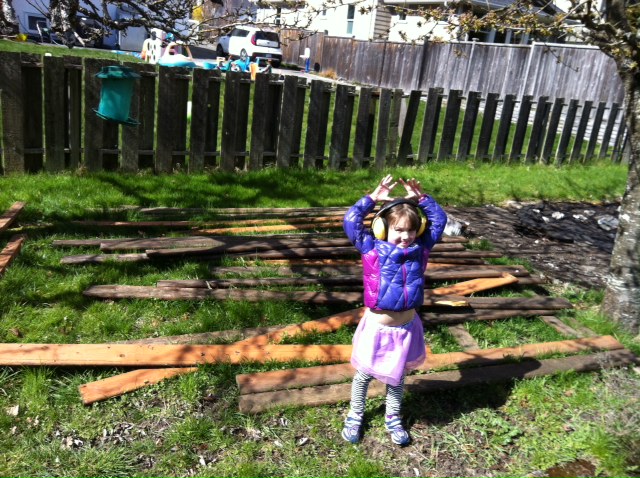
our littlest helper

Filed Under: Construction, Featured Tagged With: construction, deep energy retrofit, passive house

An Historic Moment in our Small Project’s Life

March 10, 2018 by clove 1 Comment

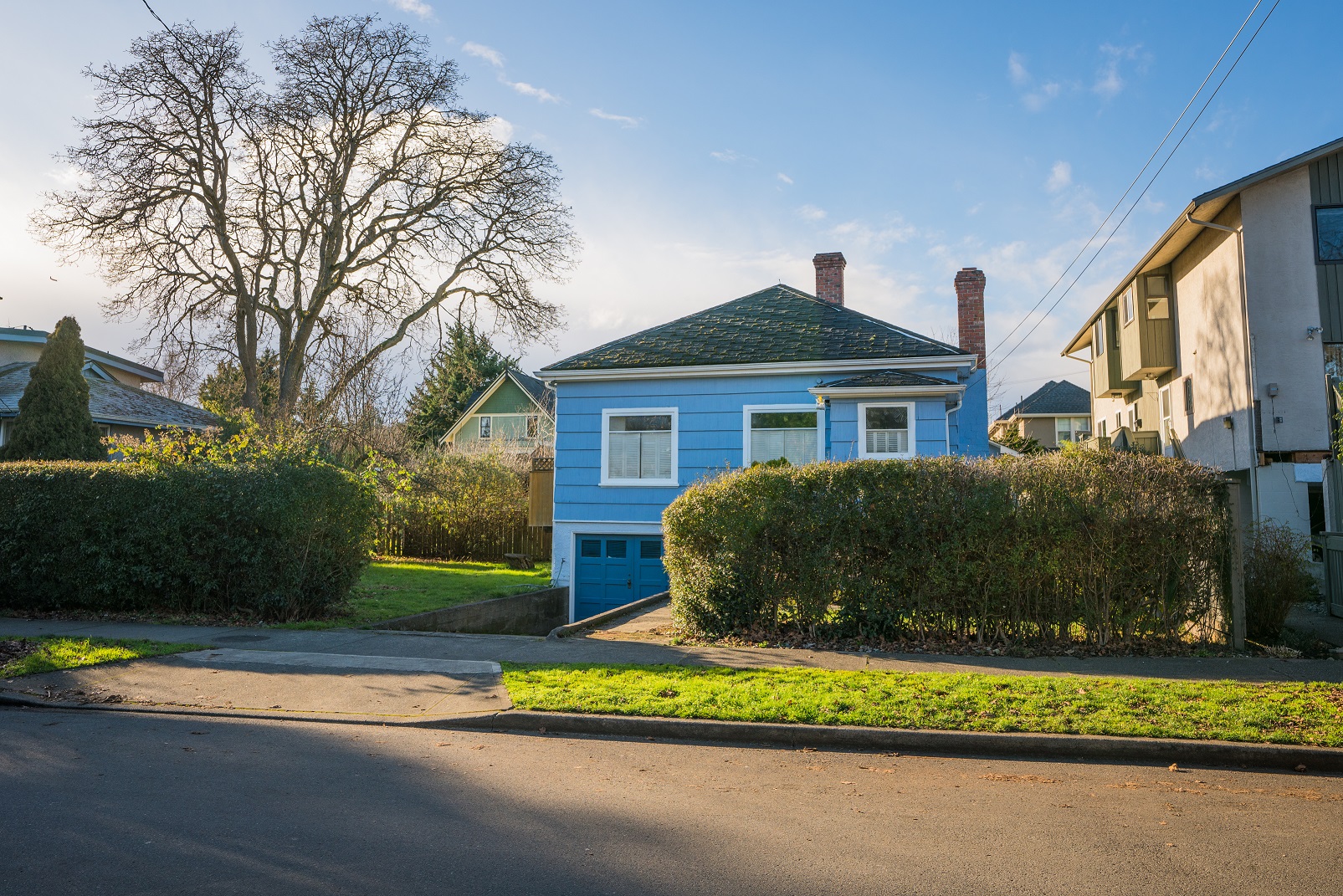
front view

On Monday we finally heard the news we were hoping for: our financing is approved (!), nearly four months after we initiated our application (read the whole story). Then on Wednesday, I successfully submitted for our Building Permit (our second attempt after being turned away on a number of formatting technicalities).

It’s beginning to sink in that our vision may actually be realized in bricks and mortar – or, in our case, mostly wood and insulation. It will become even more real when construction starts within the next month.

2 years and 8 months after we closed on our property, it feels really good to have arrived at this moment. There are many things that could hinder us from finishing construction, but there is now nothing that will prevent us from starting. And as we’ve grown accustomed to overcoming challenges every step of the way – from losing out three times before finally landing the winning bid on our house, to facing combative neighbours, to being denied financing (to name a few!) – I’m feeling confident that we will be able to resolve the ones to come as well.

In the spirit of pretending we’ve just won a big award, I’d like to take this opportunity to thank the many wonderful friends and co-conspirators who have helped us get this far: our many supportive friends and neighbours; our creative design team (Mark, Kate, Jonathan, Ian), our enthusiastic and flexible builder, Russ; helpful city staff and a progressive City Council; our friends in the mortgage business pointing us in the right direction, and our dogged mortgage specialist (thanks Paul!) who was willing to keep working with us despite our early setbacks. Thank you thank you thank you!

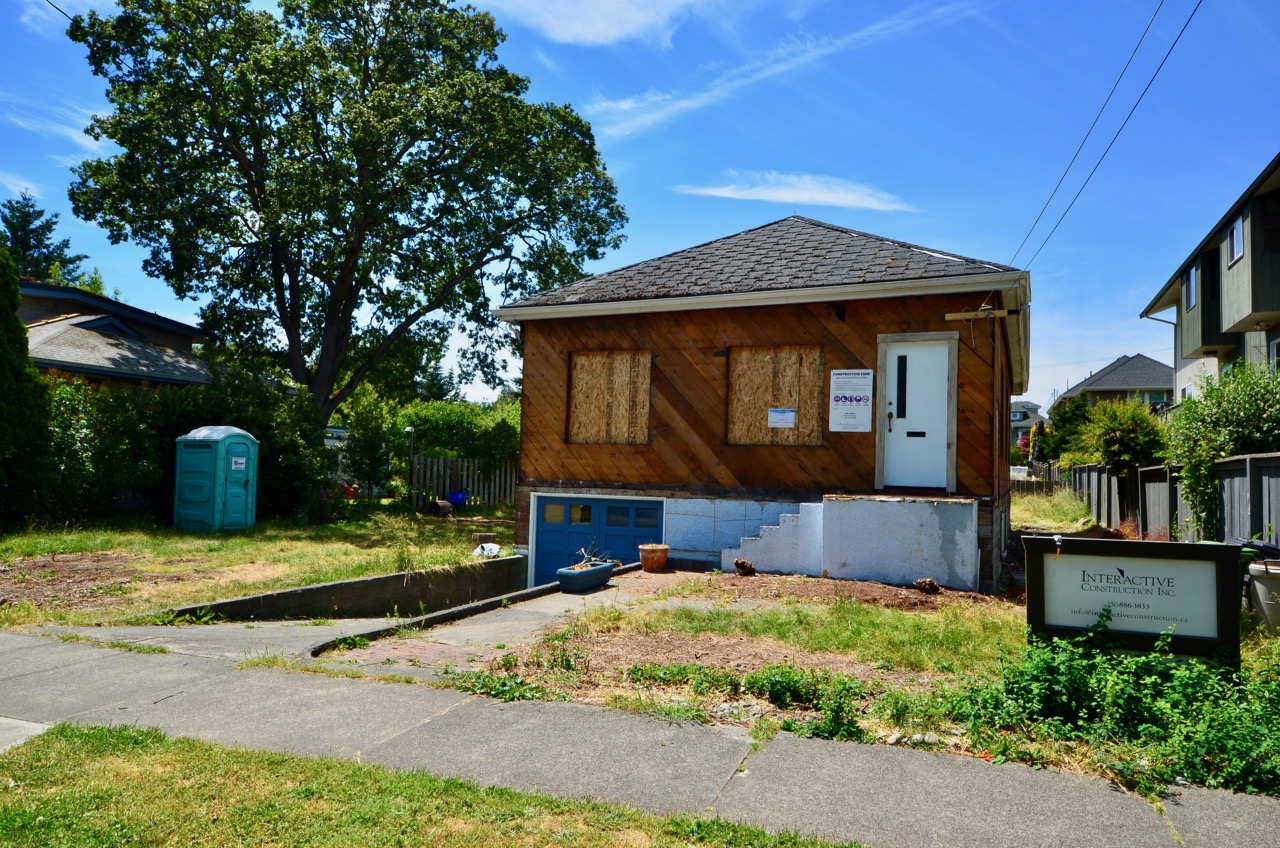
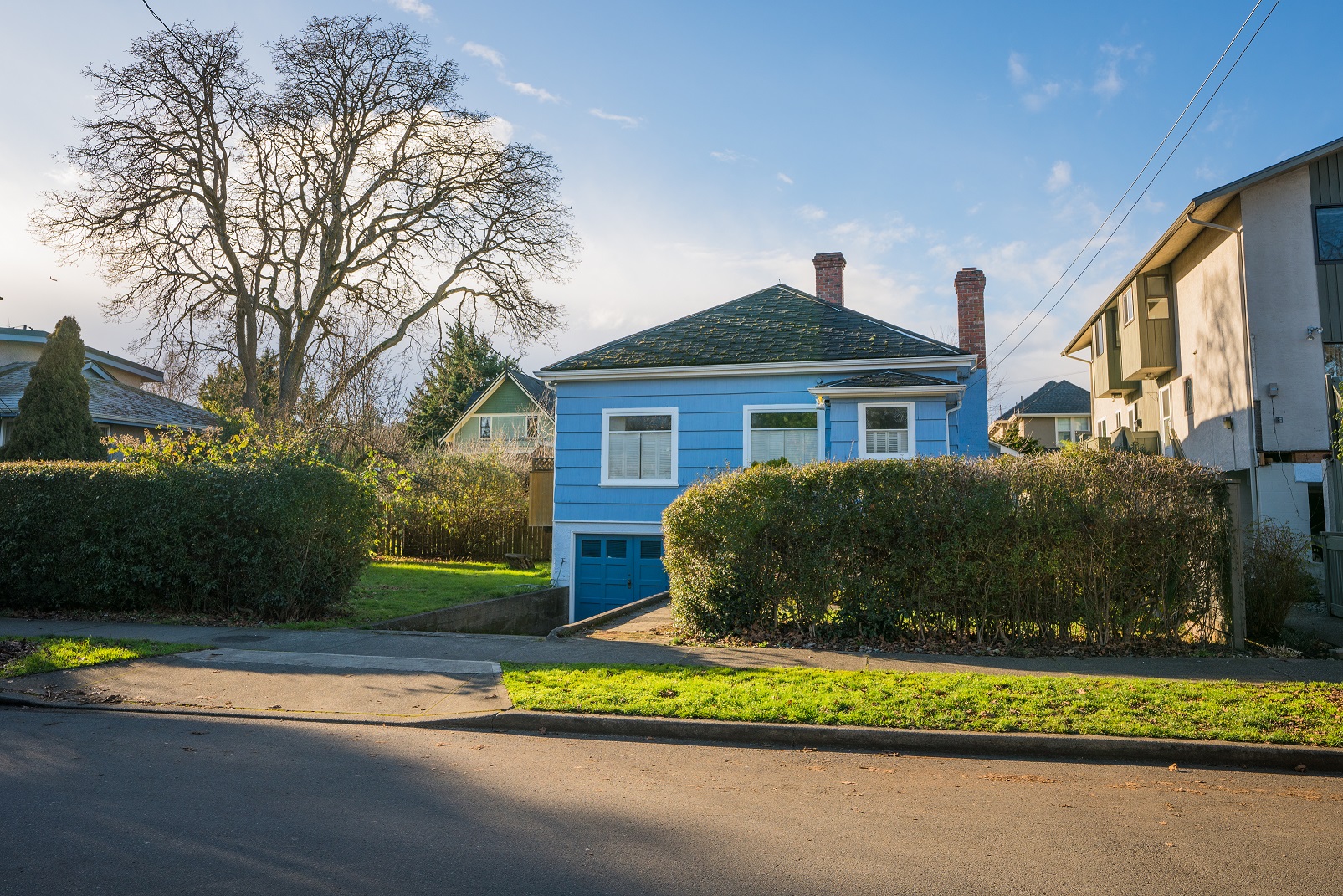
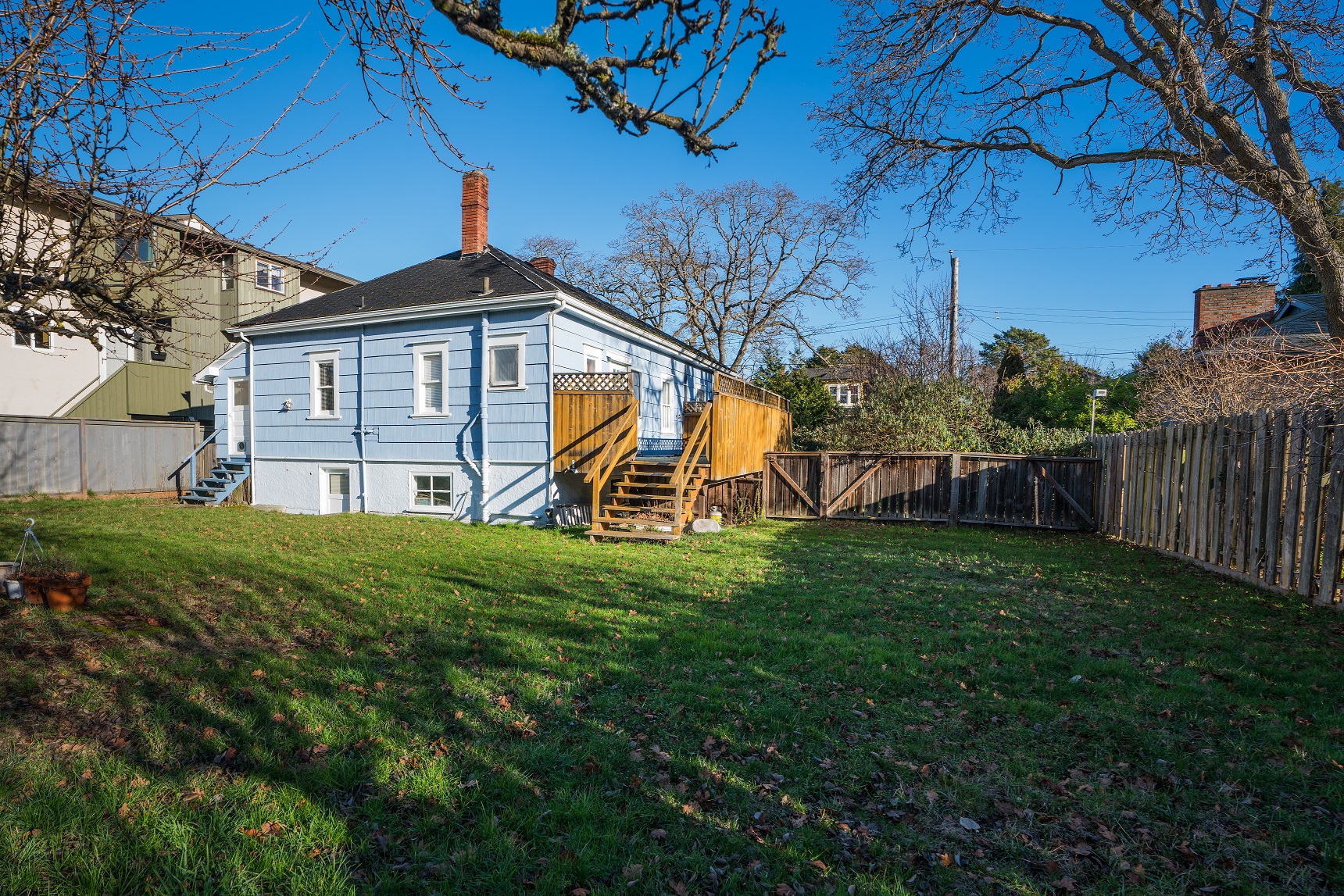
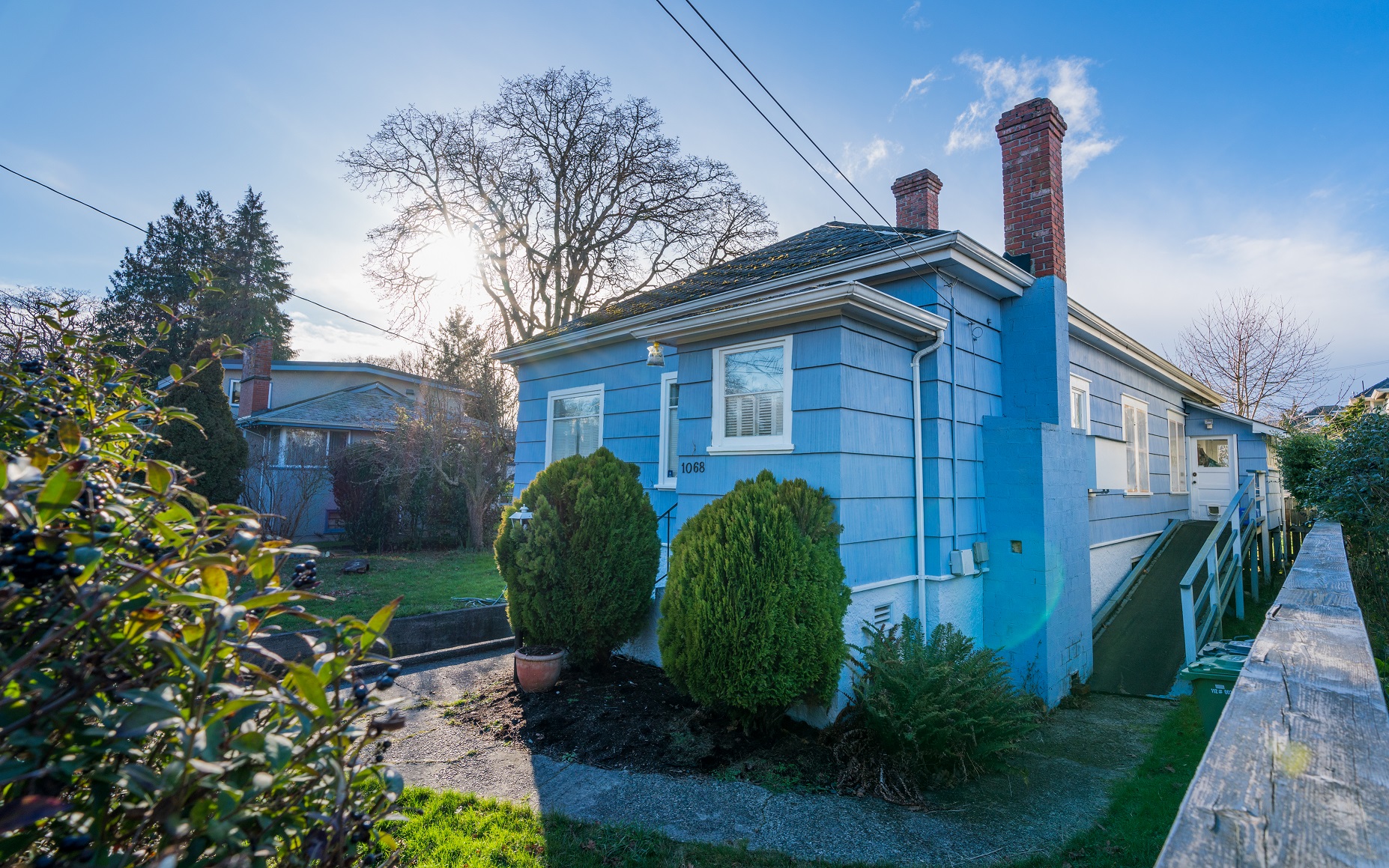
To mark this moment before steeling ourselves for what’s to come, I thought I’d shared some last photos of our house in its current form. Thanks to my friend and co-worker Chris George for snapping these beauties.

rear view

front corner view

what’s to come

Filed Under: Featured, Financing Tagged With: infill, passive house

Financing School of Hard Knocks

March 1, 2018 by clove Leave a Comment

Several weeks ago, I drafted a post proclaiming that I felt like a million bucks. I’d just talked with our mortgage contact at our preferred lender, who had said things were looking good and our loan application just had to get past the analyst. A couple of days after that, in the midst of last-minute prep for moving out of our house, I got an email listing all the reasons our application was being rejected.

My heart sank. You have got to be kidding! Dreaded visions floated through my head: paying rent + mortgage for months…moving back into our frigid house immediately after moving out…cancelling our contract with our builder…redesigning the whole thing. This was my worst case scenario: someone who doesn’t even know us, hasn’t even had a conversation with us, has decided our project – and by extension, *we* – are not good enough.

Why we were rejected

After I got over the shock (and our move, ugh), I revisited the email, made some phone calls. Time to get analytical and solve this problem. First order of business was fully understanding the reasons they were rejecting us.

We’d specifically gone to this lender, not only because we are members and heard they have the best program for residential construction loans, but also because they’d financed most of the Passive House builds in town. So imagine our surprise when one of the reasons we were given for rejection was the fact that it was a Passive House!

Hang on, what now?

In analyst words, the project was “overbuilt” because it cost more to build than the appraiser gave it value for, and there is a “limited market” for Passive House. Despite me sending along precedents for both rent and sales prices for very similar products now out in the market, the appraised value came in too low. As a result, the assessed value was less than the value of the land plus the cost to build. Hence our project was “overbuilt”.

Given these risk factors, the analyst wanted to reduce the percentage of the final assessed value they were willing to lend (the loan-to-value ratio, or LVR) from 80% to 70%. These things together meant that to even consider moving forward with them, we had to come up with a $234k gift letter (not a loan – specifically a gift) from a rich relative (specifically a close relative, not just a rich friend – sorry, rich friends), because we had insufficient equity/liquidity to pay for the amount exceeding the assessed value. With me so far?

All lending is not created equal

An important distinction: this is a residential construction loan we are talking about here. This type of mortgage is evaluated in the same way as a normal residential mortgage. They qualify us based on our ability to carry the full cost of the mortgage long-term. The interest rates are the same as a traditional residential mortgage and therefore attractively low, but the rules for qualifying are also more rigid and prescriptive than a commercial loan.

While we would really like to fit into this category due to its low cost, our project is a bit of a round peg fitting a square hole. It’s a residential project in the sense that we will renovate the one half and live in it as our primary residence, but it’s also part spec build for the new half (which we will either sell or rent).

Further complicating things, one of the quirky requirements of the residential construction mortgage is that we have to have a certain percent equity (say, 25%) in the final appraised value of the project. So we’re in this delicate situation of wanting the appraised value to be high enough to be more than the land value + cost of construction, but not so high that we don’t have the required equity.

A commercial lender will consider the final appraised value and our cost to build, but is less concerned with our long-term carrying capacity. So in the commercial lending scenario, we need to have a certain percent equity (say 25-30%) in the land value + cost to build, but not in the final appraised value. In their world, the higher the final appraised value, the better.

Now what?

In the weeks since, we met with our wonderful mortgage broker, Scott Travelbea, who helped us brainstorm a few new ideas, but agreed that if we could make it work with this lender, it was really our best bet. He also gave us the name of a private lender he liked, so I gave him a call. I had a great chat with Len, who was very generous with his time and knowledge. He said he could find any number of investors who would be willing to finance our project at any stage and in any amount (he actually googled me. I’m more than just a number on a screen!). That was encouraging to hear. The scary part is that we’d be looking at an interest rate of around 10%, plus these mythical fees that add several more percentage points. Len summed up his lending options as: “incredibly convenient and outrageously expensive!”

Len also agreed that our current lender was our best bet if we could make it work, but also suggested I call our lender’s commercial side, and gave me a name. So I did that too.

Mark in commercial lending was also very generous with his time and expertise. Turns out it’s only the commercial lending side that’s aggressively supporting Passive House at the moment. The good news, though, is that, as a result of my prodding and our mortgage contact’s persistence, the commercial side has now shared what it has learned about Passive House with the residential side and I’ve heard rumour that a residential policy is now in the works.

I talked through our project with Mark and he thought it sounded viable, but he also agreed that if we can make it work on the residential side, it would be the cheapest and easiest way to go. The commercial lenders have more leeway and generally more risk tolerance, but that comes at a price, namely higher interest rates (prime + 1.25% for example); each side needs a lawyer; more thorough appraisals are required (which we pay for), etc. So, feasible, but more expensive.

The differences in interest rates result in non-trivial project costs. In the best case scenario (conventional residential), we’d be in the range of $27-30k in interest charges over the course of construction, plus nominal fees. For commercial lending through a major bank or credit union, $47-50k plus legal and appraisal fees. For private lending, assuming (a probably optimistic) 11%, $100k. Yeowch! The private lender could be a great option to make up a very short-term shortfall, but not at all viable for the whole project. We’ve also heard stories of predatory investors who actually want your project to fail and set up terms that are difficult to meet.

Piling up those lessons learned

To sum up this roller coaster in a few pithy lessons learned, I offer the following:

  1. Construction financing is harder to get than a typical residential mortgage. I.E. plan for more time. Three months has proven to not be enough. Four might be if we are lucky. Which means that we needed to plan for a longer gap between when our drawings were ready to submit for Building Permit (i.e. far enough along for our builder to put together a budget) and when we wanted to start construction.
  2. Construction financing is not really conducive to shopping around to multiple lenders at once. There is more pitching and back and forth and getting to know one another. Hence my first point. If one lender falls through, we’re starting from scratch with our next option.
  3. The less cookie cutter the project, the harder it will be and the longer it will take to secure financing. Our project is definitely not your typical cookie shape. Part retrofit/part new build; part primary residence/part spec build, and Passive House.
  4. The best lender today might not be the best lender tomorrow. When I talk with others who have done several development projects, they say things like “Scotiabank is good right now.” Tomorrow it could be someone else. They get rejected by all but one big bank. And that one is like, yeah, no problem! I’ve also heard many people say that the financing world is just “strange” right now. Whatever that means! Again, refer back to lesson 1 and build in extra time.

Throughout this process (and now well-informed by it), we have continued to work with the residential side lender to revise the scope, reappraised, and resubmit the application in terms that the analyst is comfortable with. Fingers crossed round two will be successful!

Filed Under: Financing Tagged With: financing, financing passive house, passive house

We’re Moving!

January 19, 2018 by clove 2 Comments

We have neither our Building Permit nor secured financing, but we are moving February 1!

Because we are raising our existing house and renovating most of the interior, we have to vacate during construction. Plan A was to move to the end of our block and rent our neighbours’ newly created garden suite for a 10-12 month experiment in tiny house living. We were actually very excited about this idea, as well as the fact that we would be a short walk away from our house during construction. But given that our neighbours are also rebuilding their entire house, they’ve encountered enough of their own roadblocks and schedule extensions that our timing no longer aligns.

Plan B, which is really a bit of a miracle given the 0.7% rental vacancy rate in Victoria right now, is to move back into the house we rented when we first returned to Victoria almost 4 years ago. It’s currently empty because it’s part of a whole-block redevelopment proposal inching its way through the public process. It’s a great little house that will fit all our things and it’s literally around the corner from my mom. We also got a discounted rate on rent in exchange for the risk inherent in only being guaranteed tenancy through May 31. I am pretty certain we’ll be able to stay beyond May, but it is possible that we’ll have to move again before moving back into our completed home. Better to not think too much about the prospect of moving 3 times in one year, though. Willful denial can be a very useful strategy to keep us progressing from one step to the next!

Our Building Permit application is ready to be submitted, save for structural drawings that are now being drafted (our structural engineer was sadly delayed due to a personal emergency). I’ve been down to the city a couple of times to check that we’ve included what they want to see, with the intent that once the application is submitted, it will quickly pass through the various departmental reviews. And since we’ve already been through rezoning, I am confident that the Building Permit is a formality. It will happen, it’s the when that could throw things off. The city aims to respond within 4 weeks to a building permit application, but if there is any back and forth over the details, this could stretch out. There is some prep work we can do on the existing house and site in the meantime, though, so I remain optimistic on that front.

The financing is the last big piece of the puzzle that still has me nervous, as it’s really the last point at which someone outside the project can say No and delay it until we find someone else who says Yes. It’s only coming together now because, in order to get financing, the credit union needed an appraisal of the existing house and proposed project. To do the appraisal, they needed a construction budget. For Russ to give us a reasonably accurate construction budget, we needed close to complete drawings. We have all of those things now, and the appraiser has what she needs. All we can do for the moment is pack up our house and have faith that the stars will align!

Filed Under: Financing, Uncategorized Tagged With: building permit, construction, financing, passive house

  • « Previous Page
  • 1
  • 2
  • 3
  • 4
  • 5
  • 6
  • …
  • 9
  • Next Page »

Who is Stretch Developer?

Stretch Developer is written by Christy Love. In partnership with my husband Matt, we are challenging ourselves to create the kind of homes we want to live in and see more of in our community. Home is the incredible Victoria, BC, Canada.

Sign up!

Sign up to receive email notifications of new posts.

Recent Posts

  • New Uses for Old Wood Part 2 September 26, 2021
  • Ongoing Preparations for the Apocalypse August 13, 2021
  • Things We’ve Noticed – Energy Edition May 29, 2021
  • Passive House Suite for Rent April 17, 2021
  • Things We’ve Noticed – Comfort Edition March 14, 2021

Blogs We Like

Green Building Advisor Blogs

Musings of an Energy Nerd

Treehugger

Talk to ARYZE

Recent Posts

  • New Uses for Old Wood Part 2
  • Ongoing Preparations for the Apocalypse
  • Things We’ve Noticed – Energy Edition
  • Passive House Suite for Rent
  • Things We’ve Noticed – Comfort Edition
  • New Uses for Old Wood Part 1

Tags

budget building permit cabinet construction climate action climate change community engagement construction deep energy retrofit design design progress development permit duplex duplex + suite energy consumption energy efficient design financing financing passive house finding land food security home inspections infill low energy design neighbourhood engagement net zero passive house Passive House comfort Passive House construction Passive House construction costs passive house for sale Passive House performance Passive House performance; Sanden CO2 heat pump Passive House rental Passive House systems passive house testing performance pro forma property search tips reclaimed wood reclaimed wood construction rezoning roof row house small lot development small lot subdivision ultra low energy

Copyright © 2026 · Metro Pro Theme on Genesis Framework · WordPress · Log in


Loading Comments...